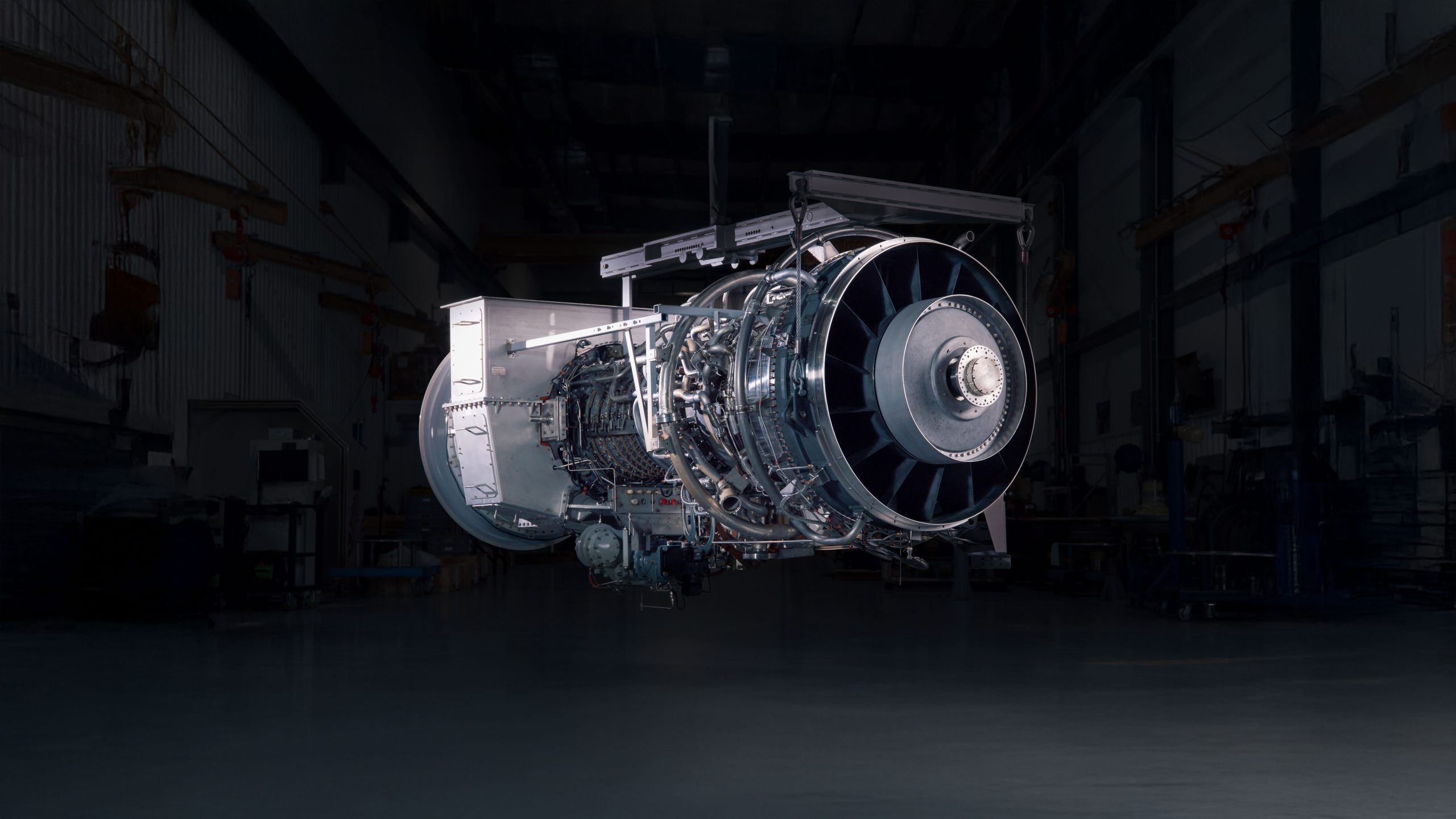
Why are AI data centers using retired jet engines?
On November 3, the New York Times reported that data center developers are buying retired airliner engines and rebuilding them to burn natural gas. TechCrunch described the units as engines "pulled from retired aircraft and rebuilt to burn natural gas." They are not designed as permanent power plants, but they can be ordered, installed and switched on faster than a utility connection.
The bottleneck is the grid, not the generators. The International Energy Agency says developers in the FLAP-D hubs of Frankfurt, London, Amsterdam, Paris and Dublin face connection queues that average seven to ten years. Across the European Union, waits range from two to ten years depending on the country.
The mismatch is structural. A data center can be built in one to two years, while expanding the grid takes much longer, the IEA notes. Grid congestion also carries direct costs: the EU agency ACER put them at €4.3 billion in 2024, before counting delayed projects.
TechCrunch, citing the IEA, put the wait for 100 megawatts in Northern Virginia at about seven years. Audun Martinsen, an analyst at Rystad Energy, told the Times that speed is the whole point. "It's all about getting power as fast as possible," he said, adding that jet-powered units can have "a data center running in 24 months."
The cost of waiting is already visible. In October, Microsoft pulled out as anchor tenant for Nscale's planned data center in Loughton, Essex, after UK Power Networks said it could not deliver enough power until the early to mid-2030s. Nscale said it remains committed to the site and is exploring on-site generation.
Demand keeps rising. The IEA estimates data centers used about 415 terawatt-hours in 2024, roughly 1.5% of global electricity, and grew 12% a year over the previous five years. BloombergNEF now expects 194 gigawatts of US data center capacity by 2035, an 83% upward revision to its earlier forecast.
Policy is adding pressure. On October 21, President Trump said large data centers are "mandated by me to make their own electricity." Experts told MarketWatch that states, not the federal government, hold most authority to impose such a condition.
Which companies are turning jet engines into power plants?
PROENERGY, based in Sedalia, Missouri, builds the PE6000, an aeroderivative gas turbine rated at 50.2 megawatts. The company says the unit starts in five minutes, has a gross heat rate of 8,800 Btu per kilowatt-hour, and is interchangeable with GE's LM6000. TechCrunch says the units use a GE engine commonly found on Boeing jets. PROENERGY also lists the engine as 35% hydrogen-ready and says it has 99% start reliability.
xAI is the highest-profile user. The Times reported, citing state permits and satellite imagery, that xAI installed eight converted jet-engine turbines in Mississippi to help power Colossus 2 in Memphis. Techstrong IT reports that each unit can generate up to 50 megawatts and that the equipment came from PROENERGY.
Crusoe, a Denver-based AI infrastructure builder, ordered 13 PE6000 units in April. PROENERGY said the order totals 650 megawatts and will be delivered by summer 2027. The units are built and tested in Sedalia before shipping.
FTAI Aviation takes a different route. It remanufactures used CFM56 cores, the engine family used on Boeing 737s and Airbus A320s, into a 25-megawatt power turbine called Mod-1. FTAI says it owns more than 1,000 CFM56 engines, that more than 22,000 have been produced, and that it can deliver over 100 units a year. In July, its joint venture with Jereh Group, J&F Power Systems, won an initial $1.465 billion order from an unnamed international cloud provider, with deliveries through November 2027. FTAI planned to begin production in 2026. Chairman and CEO Joe Adams said the CFM56's scale and maintenance network made it a candidate for conversion, citing "unprecedented need for electricity."
Boom Supersonic is selling a new 42-megawatt turbine called Superpower, which shares about 80% of its parts with the Symphony engine designed for its Overture airliner. Crusoe had agreed to buy 29 units for $1.25 billion, but the deal collapsed in September. Boom CEO Blake Scholl said the company expects to deliver about 250 megawatts of Superpower units next year and targets 1 gigawatt in 2028.
How much power can a converted jet engine produce?
Individual units range from 25 to 50 megawatts. That is small next to a large combined-cycle plant, but modular units can be clustered. xAI's eight turbines could produce up to about 400 megawatts at rated output, and Crusoe's 13-unit order totals 650 megawatts.
Converting an engine is not simply bolting a generator onto a jet. PROENERGY removes components used for aircraft propulsion, modifies the combustion system and connects the turbine to electrical generation equipment, according to Techstrong IT. FTAI describes a similar remanufacturing process for CFM56 cores, using its maintenance facilities and parts supply agreements.
Demand from xAI could keep growing. Musk has said the company intends to increase its data center capacity sevenfold by the end of 2027, Techstrong IT reported, which would raise the pressure for on-site supply.
The scale can still be substantial. The Southern Environmental Law Center says xAI's Southaven site housed 27 gas turbines capable of 495 megawatts, roughly the output of a conventional power plant. Earthjustice says the turbine site covers 114 acres, about 87 football fields.
Speed and factory assembly are the selling points. The units arrive as packages that can be tested before shipment and started in minutes. FTAI argues that 25-megawatt modules give grid operators finer control than larger turbines.
The market is large enough to matter to the power sector. BloombergNEF counts 124 gigawatts of announced on-site gas capacity for US data centers, but only 56% has a target commissioning date. The US grid has connected at most about 10 gigawatts of new data center demand in a single year. BNEF estimates 48 gigawatts of on-site gas must be built by 2035 to meet its base case.
Are jet-engine turbines dirtier than normal power plants?
Generally, yes, per unit of electricity. The PE6000's 8,800 Btu per kilowatt-hour compares with an average of 7,535 Btu per kilowatt-hour for US natural gas combined-cycle plants in 2025, according to the Energy Information Administration. That means roughly 17% more fuel for each kilowatt-hour.
The gap comes from design. Combined-cycle plants capture waste heat from the turbine exhaust and use it to drive a second turbine. Converted aircraft engines typically run in simple cycle and release that heat. They are, however, more efficient than the average US simple-cycle gas turbine, which the EIA puts at 10,975 Btu per kilowatt-hour.
More fuel means more emissions, and the permits reflect it. Techstrong IT reports that Mississippi regulators authorized eight converted turbines at xAI's site with carbon monoxide limits twice as high as those for other turbines there, and volatile organic compound limits 25% higher.
The state had maintained that the units fell under a "temporary-mobile" category that did not require permits, according to Mississippi Free Press. Residents near the site described a persistent droning that interrupted sleep, and they questioned whether the equipment would be regulated like a permanent plant.
The wider fleet is contested. Earthjustice says the Southaven plant is one of the largest sources of air pollution in the region and can emit more than 5,000 tons of smog-forming nitrogen oxides, 400 tons of fine particulate matter and 47 tons of formaldehyde a year. The area is already failing federal smog standards, according to the Southern Environmental Law Center. An xAI representative told the permit board that the site's permit meets state and federal rules and "goes above and beyond what is required by law."
The approvals point toward permanent operation. In March, the Mississippi Environmental Quality Permit Board approved 41 permanent gas turbines at the site to replace 27 unpermitted units. Residents objected at public hearings, citing noise and health concerns.
Who is affected by the shift to on-site generation?
Host communities bear most of the local cost. The Southaven site sits near homes, schools and churches in North Mississippi and across the state line from Memphis. The NAACP, represented by Earthjustice and the Southern Environmental Law Center, sued xAI and affiliate MZX Tech under the Clean Air Act.
The lawsuit cleared a hurdle on October 30. A federal judge in the Northern District of Mississippi denied xAI's motion to dismiss and rejected the argument that "temporary" turbines are mobile sources exempt from permits. The court has not yet ruled on the NAACP's request for a preliminary injunction.
Cloud providers face a trade-off between speed and reputation. Microsoft's withdrawal from Nscale's Essex project shows that power delays can break deals years before a site opens. The Loughton site was still an operational scaffolding yard in March, the Guardian reported. Nscale, which is Nvidia-backed and has discussed a $35 billion listing, says it is still committed to the project.
Public opinion is also shifting. A Washington Post-ABC News-Ipsos poll released in October found two in three Americans oppose construction of new data centers, and 57% said AI is bad for society, MarketWatch reported.
Utilities and grid operators are affected too. Large loads that self-generate may bypass interconnection queues, but they still need gas pipelines and maintenance. States and regional grid operators retain most authority over large-load conditions, according to analysts quoted by MarketWatch.
The aviation aftermarket also has a stake. The CFM56 family powers Boeing 737s and Airbus A320s, and FTAI's plan depends on extending their lives rather than scrapping them. Airlines and parts suppliers will watch whether power demand tightens the supply of used cores.
What are the limits of jet-engine power for data centers?
The main limit is that converted engines are a bridge, not a permanent plant. They are less efficient than combined-cycle equipment and produce more pollution per megawatt-hour. TechCrunch, citing the Times, adds that it takes more units to make the same amount of power as a conventional plant, raising land, fuel and maintenance needs. Experts expect efficiency and environmental concerns to matter more within a year or two.
Fuel supply is another constraint. The units burn natural gas, and some can run on diesel, so they depend on pipelines or trucked fuel. A 650-megawatt order needs firm fuel delivery, not just turbines. The J&F order covers mobile generator sets rather than fixed plant.
Permitting remains uncertain. The October 30 ruling held that so-called temporary turbines are subject to Clean Air Act permitting, but the preliminary injunction and any appeal are unresolved. A court loss could strand equipment that operators have already ordered.
Execution risk is real. Boom and Crusoe ended a $1.25 billion launch order before deliveries began. FTAI's $1.465 billion order runs through November 2027, and PROENERGY's Crusoe units are due by summer 2027. Any manufacturing delay pushes customers back toward the grid queue they were trying to avoid.
Scale is the final limit. Even 650 megawatts is a fraction of a gigawatt-scale campus. Operators still need grid power for the bulk of their load; on-site turbines mainly buy time and reduce exposure to interconnection delays.
What happens next for jet-engine data center power?
Watch the courts first. The NAACP's preliminary injunction request could force changes at Southaven before winter. Any appeal of the October 30 ruling would clarify how broadly the Clean Air Act applies to "temporary" turbines at other sites.
Watch deliveries next. Crusoe's 13 units are due by summer 2027, FTAI's batches run through November 2027, and Boom expects about 250 megawatts next year. Those schedules will show whether the model can scale beyond a handful of showcase sites.
Watch the grid rules. The IEA recommends non-firm connections, where customers accept curtailment in exchange for faster approval. If regulators adopt them, some demand for jet-engine power may fade. If queues keep stretching, more operators will buy their own generation. BloombergNEF expects 118 gigawatts of US data center capacity by 2030, a 52% increase over its December 2025 forecast, so the pressure is unlikely to ease soon.
Watch the emissions limits. The Southaven permits allow higher carbon monoxide and volatile organic compound limits for converted units. Environmental groups are challenging that approach. A stricter ruling would raise the cost of the model just as orders ramp.
The stakes extend beyond the United States. The IEA expects data centers to account for 10% of European Union electricity demand growth to 2030 under current policies. Dublin and Amsterdam have already paused new projects over grid constraints, the agency notes.
For now, the story is about time. AI companies can buy turbines faster than they can buy grid capacity, and they are willing to accept lower efficiency and higher emissions to start training and serving models sooner.