What is Amazon building in home robotics?
Amazon has assembled a new team to work on a home robot, according to a CNBC report published on November 8, 2026. The report is based on an analysis of Amazon job listings and interviews with former employees and robotics executives. Amazon has not announced a product, a price, a name or a launch date.
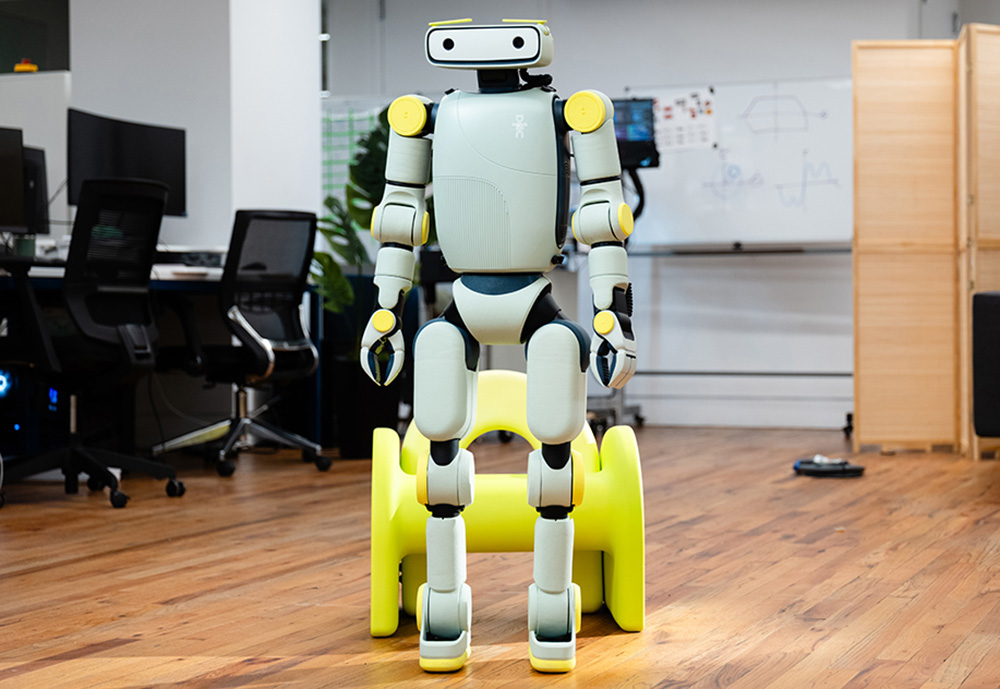
The work sits inside Amazon's Personal Robotics Group, the division created after the company acquired Fauna Robotics in March 2026. Fauna is a New York startup that builds a small humanoid called Sprout. Amazon confirmed the acquisition at the time, and the company now operates as “Fauna Robotics, an Amazon company.”
CNBC found listings for a field support engineer, a user experience designer and other roles tied to a “new-to-world” robot product. One listing described a machine that can navigate dynamic home environments and operate autonomously alongside family members. That wording points to a consumer device rather than a warehouse tool.
The company has not described the robot's form, its tasks or its price. An Amazon spokesperson gave CNBC a broad statement about personal robotics rather than product details. Brad Glasser said Amazon is “optimistic about a future where personal robots are helping people in meaningful ways in everyday life.”
That gap between a hiring signal and a product is the core of the story. Amazon is committing people and money to the category, but it has not committed publicly to a device. Readers should treat the job listings as evidence of direction, not as a specification sheet.
The timing matters because Amazon has tried this before. Astro, its first home robot, launched in 2021 and never became a mainstream product. The new effort appears to be a second attempt, built around a startup Amazon bought rather than a device Amazon designed alone.
What do Amazon's job listings actually say?
The listings are unusually direct about ambition. One engineer role, since removed, said that “robots are about to step out of the movies and into our homes.” It described a product capable of navigating dynamic home environments and operating autonomously alongside family members.
A second listing sought a user experience designer to define what it feels like to live with a Fauna robot. A third described a field support engineer who can handle customer support and on-site repair. Together they suggest Amazon is thinking about the full service lifecycle, not just a demo.
Another posting carried a line that could serve as the group's mission statement. “Our goal is simple: make robots people actually want to live and interact with in everyday human spaces,” it said. That is a consumer-facing goal, and it is different from Amazon's warehouse automation language.
Job ads are a weak form of evidence, and CNBC is careful to say so. They show that a team exists and that Amazon is hiring for home use. They do not show that a product is finished, that it works reliably or that it will ship. Amazon has not described the product itself.
The listings also hint at how Amazon may sell the robot. A support engineer for on-site repair implies a service network, which a $50,000 research platform would need. A designer focused on daily life implies a consumer experience, which a cheaper device would need. Both roles can coexist during development.
Amazon has a history of long development cycles before launch. Its device unit, Lab126, produced the Kindle, Echo and Fire TV, and some Personal Robotics Group staff came from that organisation. Amazon's chief executive, Andy Jassy, has described artificial intelligence and robotics as major inflections.
The practical reading is that Amazon is building capability and hiring ahead of a decision. The decision could be a consumer launch, a business product or a developer platform. The listings do not settle which one comes first.
Why did Amazon's first home robot, Astro, stall?
Astro was a small wheeled robot with a tablet for a face. Amazon showed it on stage in 2021 as an Alexa-equipped device that could patrol a home, recognise faces and act as a roving security camera. It was sold by invitation only, at $1,450, and never reached open retail.
Amazon shipped Astro to a few thousand customers. It also launched an Astro for Business in 2023, then discontinued that version less than a year later. Amazon says it still supports Astro owners, but some owners have concluded that the product is being wound down.
The complaints are practical. Owners have said Amazon's newer Alexa+ assistant is not supported on Astro, according to CNBC. Some have tried to sell their units at a discount. One owner described the robot as a party trick and a trip hazard, useful mainly for checking on pets and appliances.
Price and utility explain much of the problem. A former Amazon employee told CNBC that Astro cost around $2,000 at launch and did too little for that money. CNBC has reported the price as $1,450 and, in March, as $1,600, which is still high for a device that mostly maps a room and follows commands.
Ken Washington, who led Amazon's consumer robotics until 2023, gave CNBC a blunter assessment. He said Bezos was impressed by Astro's ability to map and navigate an undefined space under different lighting. He added that Bezos seemed disappointed by the lack of functionality.
Washington also said he pushed for a bipedal design and that leadership disagreed. His verdict on Astro was that it was “such a big, massive leap” that he felt “we had the right to own the home.” The market did not agree, at least not at that price and capability level.
The lesson for the new team is that novelty is not enough. A home robot has to do something a person values repeatedly, and it has to do it safely around children, pets and furniture. Astro proved that mapping and navigation are not, by themselves, a product.
What is Fauna's Sprout, and why did Amazon buy it?
Fauna Robotics was founded in 2024 by former Meta and Google engineers. It is based in New York and had roughly 50 employees when Amazon bought it. The company's first product, Sprout, is a bipedal humanoid about 3 feet 6 inches tall, or roughly one metre.
Sprout is built for safety around people. It has a soft green foam exterior, lightweight materials, minimised pinch points and compliant motors that yield to external force. Those choices are unusual in industrial humanoids, which are often heavy and rigid.
It is not a consumer appliance. Sprout costs $50,000 and is sold as a development platform with an SDK, so buyers can write their own applications. Early customers included Disney and Boston Dynamics, according to CNBC. Fauna has pitched it for retail, hospitality, research and entertainment.
Fauna's own site lists a consumer-home use case. It says developers can turn Sprout into a personal assistant, a companion for family members or a concierge for the home. That is a developer proposition, not a promise that a finished Amazon product is coming.
Amazon bought Fauna less than a week after acquiring Rivr, a Swiss company building quadruped robots for doorstep delivery. The two deals point in the same direction. Amazon wants machines that operate in human spaces, not only in fenced-off warehouses.
The appeal for Amazon is a combination of talent, hardware and software. Fauna brings a small, safe humanoid and a developer community. Amazon brings device manufacturing, retail distribution, cloud services and its Alexa business. The acquisition terms were not disclosed.
There is also a strategic option. Amazon could adapt Sprout for homes or businesses, or use its lessons to build a different machine. CNBC reported that this remains unclear. Amazon's spokesperson said the company is working with the robotics community on the gap between lab demos and real rooms.
Why is a home robot harder than a warehouse robot?
Amazon operates more than one million robots across its facilities. It bought Kiva Systems for $775 million in 2012 and built an automation business on top of that acquisition. Those robots work in structured spaces with predictable floors, routes and lighting.
A home is the opposite. Jeff Burnstein, president of the Association for Advancing Automation, told CNBC that children, pets, grandparents and stairways all change the problem. He said no home is set up the same way, which makes walking robots especially difficult to deploy.
The technical constraints are real. A home robot needs to see in clutter, avoid people, carry or manipulate objects and run for long enough to be useful. It also needs to fail safely, because a mistake near a child or a pet is not a warehouse incident.
Privacy adds another layer. A robot with cameras and microphones moves through private spaces and could collect data about family life. Amazon will have to explain what it records, where that data is processed and how long it is kept. Those answers will shape whether families trust the device.
The tools have improved, though. Colin Angle, a co-founder and former chief executive of iRobot, told CNBC that the toolkit available to the Astro team was primitive. He said the industry had changed enormously since then.
Better AI models, sensors, batteries and actuators have lowered some barriers. They have not solved manipulation, reliability or cost. A robot that can fold laundry or clear a table remains a research problem, even as demos improve.
Cost is the hardest constraint for consumers. Sprout sells for $50,000, and Astro struggled at $1,450. A mass-market home robot would need to land far below Sprout while doing more than Astro. That combination is the central engineering and business challenge.
Who else is building home robots in 2026?
Amazon is entering a crowded field. Tesla has developed its Optimus humanoid since 2021, and Elon Musk has said he wants to build up to one million units a year. Apptronik, Boston Dynamics, Figure, 1X and China's Unitree are also building humanoids.
Most of those machines target factories, logistics and healthcare. A growing group is aimed at homes. Apple is reportedly working on home robot projects, including a tabletop device that resembles the Pixar lamp. Hugging Face released a $399 robot called Microduck in August.
Startups including Sunday, Tau and Nori say their robots can help with chores such as folding laundry and clearing tables. Most remain prototypes or niche devices. Colin Angle launched a startup building fuzzy companion robots called Familiar Machines Magic.
The money is flowing. Venture capital firms invested $33.4 billion in robotics and physical AI companies in the first half of 2026, according to PitchBook data cited by CNBC. That compares with $28.7 billion for all of 2025.
Barclays has forecast that the humanoid market could grow from $2 billion to $3 billion today to roughly $40 billion by 2035. Its most optimistic scenario puts the figure at $200 billion. Those forecasts are speculative, but they explain why so many companies are competing.
Agility Robotics, which makes the Digit robot and counts Amazon as a backer, went public via a SPAC last week. Public markets now give investors a way to price the sector. That will make it easier to compare promises with revenue.
For Amazon, the competition is not only other robot makers. It is also the smartphone, the smart speaker and the security camera. A home robot has to justify its place in a room that already contains several connected devices.
What should you watch next?
The first signal will be a product name and a filing. Watch for regulatory paperwork, a retail listing or a developer program before any launch event. Amazon has not produced any of those for a home robot yet.
The second signal is pricing. A device aimed at developers could cost tens of thousands of dollars, like Sprout. A consumer device would need a price closer to a high-end appliance. Amazon's choice will reveal which market it is targeting first.
The third signal is software. Amazon's advantage is Alexa and its cloud services. If a new robot runs Alexa+ or a successor assistant, it would connect to Amazon's existing ecosystem. Owners have complained that Alexa+ is not available on Astro, which makes this a test of follow-through.
The fourth signal is support. A field support engineer and on-site repair suggest Amazon is preparing a service operation. That is expensive, and it implies a product with real customers rather than a limited pilot.
Privacy will be the fifth signal. Amazon will need to explain what the robot records, where the data goes and how long it is kept. Those answers will decide whether the device is welcome in bedrooms and living rooms.
None of this has a date. Amazon has not given a timeline, and the job listings do not include one. The confirmed facts are a team, a division, talent from Fauna and a stated interest in the category.
The open question is whether Amazon can turn a $50,000 research platform into something a family would buy. Astro showed that the company can build a robot and sell a few thousand units. The second attempt has to clear a higher bar: usefulness, safety and a price that makes sense.