What did Apple announce at its October 28 event?
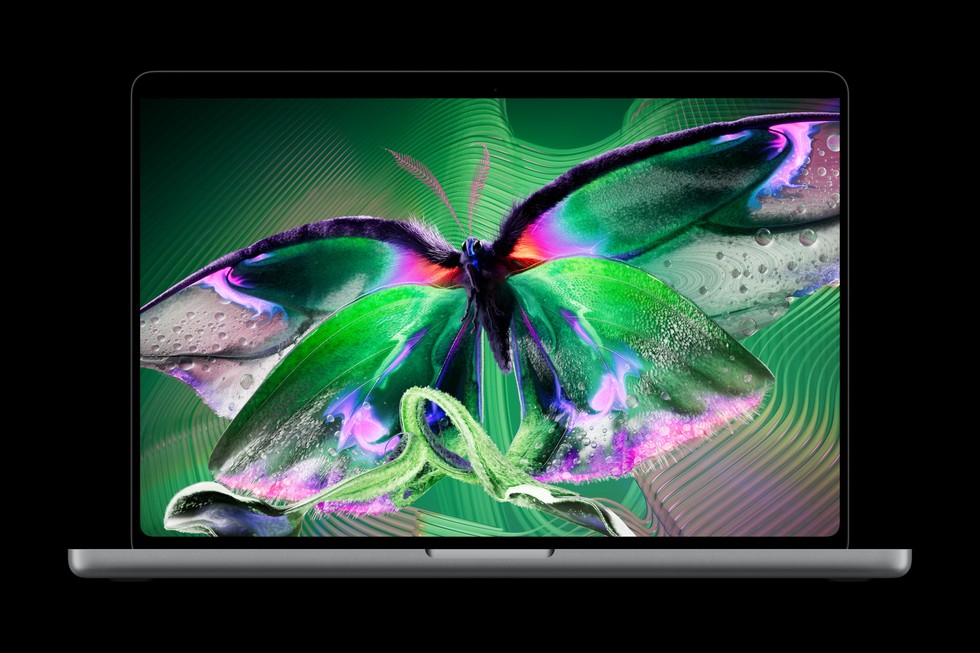
Apple announced its first touchscreen MacBook Pro on October 28, 2026. The company calls the machine the MacBook Pro with PROLED XDR Display. It comes in 14.2-inch and 16.3-inch sizes and uses M5 Pro or M5 Max chips.
Pre-orders opened the same day. Apple says availability begins Friday, November 6, 2026. The 14-inch model starts at $2,899, and the 16-inch model starts at $3,399.
The laptop was not alone. Apple also refreshed the entry 14-inch MacBook Pro with an M6 chip at $1,999. The iMac with M6 starts at $1,499, and the iPad mini with an 8.5-inch OLED screen starts at $699. Those products share the November 6 date.
The iMac pairs its M6 chip with a 10-core CPU and GPU. Apple claims up to five times faster on-device AI performance than the M4 model, according to The Verge. The iPad mini adds an A20 Pro chip, IP67 water resistance and a 5.4mm chassis.
The touchscreen is the headline because Apple spent years arguing that laptops should not have one. Steve Jobs called touch laptops "ergonomically terrible." He also said "touch surfaces don't want to be vertical." Tim Cook said you can converge a toaster and a refrigerator, but the result probably would not please users.
Apple's chief hardware officer, Johny Srouji, framed the launch as a platform shift. "The new MacBook Pro with PROLED XDR Display is a monumental step forward for the Mac," he said. The claim is large, and the details behind it matter more than the slogan.
The M6 model is a smaller step. It uses a 12-core CPU and a 12-core GPU, with a dual 16-core Neural Engine. Apple claims 30 percent faster graphics and 25 percent faster AI workloads than the M5 version, plus a 1.9x faster Neural Engine. It keeps the 24-hour battery rating.
How does the touchscreen actually work?
The touch sensor is built directly into the display panel. Apple says it is not layered on top of the screen. The panel still uses tandem OLED, with two light-emitting layers stacked together.
Software is the more interesting part. Apple says macOS "automatically translates touches into clicks." Swiping and pinching also work: you can "scroll through a webpage with a natural swipe" and "pinch to zoom." There is no tablet mode and no separate touch-first interface.
That design keeps existing Mac apps usable on day one. It also means the touchscreen adds a second way to do familiar things. A video editor can scrub a timeline with a finger. A 3D artist can orbit a model without reaching for a mouse.
Apple pairs the touchscreen with macOS 27 Golden Gate, which includes Siri AI features. The company says Siri can draw on personal context to help users find things. None of those features depend on touch, but they give the new hardware a software story.
Apple redesigned the hinge to keep the display steady when a finger pushes it. The company says the hinge "provides greater stability while using Touch." A wobbly screen is a practical problem on touch laptops. The change targets that complaint directly.
The hinge change matters because touch input pushes the screen backward. A stiffer hinge keeps the panel from flexing, which protects the display and makes taps feel more precise. MacRumors reports that the hinge also improves airflow.
Apple's announcement makes no mention of Apple Pencil or any stylus. Rival machines such as Lenovo's Yoga 9n support a pen that works on the screen and the trackpad, according to The Verge. Buyers who want pen input on a Mac still have no official option.
The approach is conservative, and that looks deliberate. Apple is selling touch as an addition for professional workflows, not as a new computing category. The MacBook Pro remains a Mac first.
What is PROLED XDR, and how much better is the display?
PROLED XDR is Apple's name for a tandem OLED panel with two self-illuminating pixel layers. Apple claims "up to 2000 nits peak HDR and SDR brightness." It also advertises an "industry-leading 10,000,000:1 contrast ratio." The screen refreshes at up to 120Hz.
The outgoing Liquid Retina XDR display reached 1,600 nits for HDR content, according to Apple's specifications. In SDR it reached 1,000 nits, with a 1,000,000:1 contrast ratio. The new panel is therefore twice as bright in SDR and ten times higher in claimed contrast.
Brightness matters for anyone editing HDR video or working near a window. OLED also switches individual pixels off, which produces true blacks that mini-LED backlights can only approximate. The panel covers the P3 and Adobe RGB color spaces, according to Apple.
The design changed around the screen. The notch is gone, replaced by a small pill-shaped Dynamic Island, according to MacRumors. A 12MP Center Stage camera sits there, and the six-speaker system now delivers "50 percent deeper bass," Apple says.
Apple also brought back the glowing logo on the lid. MacRumors reports that it returns after a 10-year absence and is lit by display pixels rather than a separate backlight. John Ternus said the company is "glowing with excitement over the new MacBook Pro."
The chassis shrank while the screen grew brighter. The 14-inch model weighs 3 pounds, half a pound less than before, and the 16-inch model weighs 4 pounds, down 0.7 pounds. Apple says the design is nearly a millimeter thinner and still delivers up to 24 hours of battery life.
The port selection includes three Thunderbolt 5 ports, HDMI, an SDXC card slot, MagSafe charging and a headphone jack.
How much does the touchscreen MacBook Pro cost?
The 14-inch MacBook Pro with M5 Pro starts at $2,899. The 16-inch version with the same chip starts at $3,399. Moving to M5 Max raises the prices to $4,499 and $4,799.
Those numbers are $700 above the M5 Pro MacBook Pros Apple launched in March 2026. The 14-inch M5 Pro started at $2,199 and the 16-inch at $2,699, both with 1TB of storage. Apple's new release lists a 16TB maximum but does not break down standard storage by price.
The education discount ranges from $150 to $300, based on Apple's published prices. That is smaller than the $700 gap between generations. Students face the same premium as everyone else.
The cheaper option is the non-touch model. The refreshed 14-inch MacBook Pro with M6 starts at $1,999, or $1,899 for education. It keeps the older Liquid Retina XDR display, three Thunderbolt 4 ports, Wi-Fi 7 and Bluetooth 6.
Apple lists maximums of 128GB of unified memory and 16TB of storage for the touch models. Those ceilings target video, 3D and AI workloads that need large local datasets. The M6 model tops out at 32GB of memory and 170GB/s of bandwidth.
The 16-inch touch model is 4 pounds, lighter than the 4.7-pound 16-inch MacBook Pro Apple listed before this launch. The 14-inch touch model at 3 pounds is lighter than the previous 3.4-to-3.6-pound range. The weight savings are real, but they come with a higher price.
Touch is therefore a premium feature, not a standard one. Anyone who wants the new display and the new input method pays at least $2,899. Anyone who wants the newest chip pays $1,999 and keeps the old screen.
- •14-inch, M5 Pro: $2,899, or $2,749 with education pricing
- •16-inch, M5 Pro: $3,399, or $3,199 with education pricing
- •14-inch, M5 Max: $4,499, or $4,199 with education pricing
- •16-inch, M5 Max: $4,799, or $4,499 with education pricing
Why is Apple adding touch now, after years of saying no?
Apple's public position was negative for more than a decade. Jobs argued that vertical touch surfaces cause fatigue, and Cook worried that combining device categories would produce a compromised product. Those quotes, reported by The Verge, capture the logic Apple followed for years.
The market changed around that logic. Reuters reports that Windows laptops have offered touch for years and that many buyers now expect a responsive screen. The same report says Mac sales have grown among enthusiasts and businesses buying machines for on-device AI.
Analysts see the reversal as overdue. "I believe they were always wrong on pushing back on touch," said Anshel Sag of Moor Insights & Strategy, in comments reported by Reuters.
Technology commentator Jason Calacanis offered a different priority. "The only thing people want is more memory and better processors for local models!" he said, according to Reuters.
Apple's chip roadmap supports the second point. The M5 Max can run large language models with hundreds of billions of parameters on the device, according to Apple. A touchscreen does not make those models faster, but it gives users a direct way to interact with them.
There is also a design story. The glowing logo, the thinner chassis and the brighter OLED panel all signal a new generation rather than a spec bump. Touch gives Apple a visible reason to charge more in a laptop market where performance gains are harder to feel.
The reversal also has a pricing dimension. Apple's Mac business has benefited from buyers who want local AI performance, and those buyers already pay for memory and storage. Adding touch to the most expensive models can lift the average selling price without changing the entry model.
The launch came during a broad product push. Apple opened pre-orders for five products at once, including the iPad mini and the iMac, according to MacRumors. That cadence points to a holiday lineup rather than a single hero device.
For now, macOS remains a desktop operating system with desktop apps, while iPadOS handles tablet tasks. Apple has not said whether the two will converge. A touchscreen Mac makes that boundary blurrier without settling the question.
Who is affected, and what are the limitations?
The obvious buyers are creative professionals. Video editors, photographers, 3D artists and music producers are the people Apple features in its pro messaging. A finger on a timeline or a canvas can be faster than a trackpad for quick adjustments.
Developers and students are a second group. The M6 model at $1,999 is the entry point, while the touch models target people who already spend on high-end laptops. Businesses buying for on-device AI may compare the M5 Max's memory ceiling with Windows workstations.
The limitations start with software. Because macOS turns touches into clicks, apps do not become touch-native. Buttons designed for a cursor may be small for a finger, and Apple announced no developer API for touch-specific interfaces.
The missing stylus is another gap. Apple's release does not mention pen input, while Windows competitors sell pens that work across screen and trackpad. Artists who rely on pressure sensitivity will keep using an iPad or a Windows machine.
Price is the third limit. At $2,899, the 14-inch touch model costs $700 more than the 14-inch M5 Pro Apple sold before this launch. The 16-inch version is $700 more than its predecessor. Buyers must decide whether a brighter screen and finger input justify that gap.
Some claims remain unverified. Apple's brightness, battery and performance figures come from the company, not from independent testing. Reviews after November 6 will show whether the 24-hour battery rating holds with a 120Hz OLED panel at high brightness.
The touchscreen also stops at the Pro line. Apple did not announce touch for the MacBook Air or the $1,999 M6 model. If the feature proves popular, that could change, but Apple has not said so.
Schools and students may be the least served. The touch models start at $2,899, and the $1,999 M6 model has no touch. A student who wants touch on a Mac has no cheaper option in Apple's current lineup.
Enterprises will also weigh the support burden. Apple's announcement did not include repairability details for the new display. Buyers who keep laptops for four or five years may want that information before ordering.
What to watch next
The first real test arrives on November 6, when the laptops reach buyers and reviewers. Independent measurements of brightness, battery life and hinge stiffness will matter more than the launch demo.
Watch how software evolves. If Apple adds touch APIs or a tablet-like mode in a future macOS release, the touchscreen becomes more than a shortcut layer. If it does not, the feature stays a convenience for existing apps.
Watch the price ladder. Apple now sells a $1,999 non-touch MacBook Pro and a $2,899 touch model. Holiday discounts and education pricing will show how much buyers will pay for touch alone.
Watch Windows PC makers. Touch has been common on many premium Windows laptops, and Apple's entry raises the bar on display brightness and contrast. Competitive responses on OLED brightness and pen support are likely.
Watch Apple's Mac revenue. Reuters reports that Mac growth has come from enthusiasts and AI-focused business buyers. The new models test whether those buyers will pay more for a display and input change rather than a pure speed increase.
A teardown will also show whether the display and battery are easier or harder to service. Apple has not shared that information, and the thinner chassis leaves less room for components.