What did the investigation into Europe's data centre sites find?
A five-month investigation published on 30 October 2026 found migrant construction workers on European data centre sites facing serious injuries, unpaid overtime, crowded housing and restricted union access. The project was led by Investigate Europe and published with the Guardian, Le Monde, Die Zeit, Corriere della Sera, NRK, Follow the Money and Tech Policy Press.
Reporters interviewed workers and union representatives in Sweden, Norway, Belgium, Italy, Ireland, Germany, Denmark, Finland and the Netherlands. They examined payslips, medical records, photographs, videos and phone messages, and filed freedom of information requests with national authorities.
The sites named include Google's Saint-Ghislain campus in Belgium, Microsoft's expansion at Gavle in Sweden, Amazon's build outside Milan and Winthrop projects in the Netherlands. Several of the largest contractors named are Irish-owned, including Collen, Dornan, Benbau and Winthrop, each with its own chain of subcontractors.
The scale of the building programme explains part of the attention. Europe has more than 2,300 data centres, at least 500 of them in the UK, according to the Guardian. Investigate Europe reports that the industry forecasts EUR 100 billion of investment in European data centres by 2030. A single site can hold up to 2,000 workers, and the investigation estimates that up to a quarter of a million people work on European data centre sites each day.
Many of the workers arrive through recruitment agencies on short contracts and live in housing supplied by the employer. Workers told reporters that this arrangement makes it harder to refuse overtime or report hazards.
The findings matter beyond the construction industry. Data centres are the physical layer of the AI boom, and the companies paying for them have made public commitments on labour rights. The investigation tests whether those commitments reach the subcontracted workers who pour concrete, pull cable and test electrical systems.
- •Burns and other serious injuries, including an arc flash electrocution in Belgium.
- •Housing with vermin, broken heating and 14 men sharing one bathroom in Sweden.
- •A confirmed tuberculosis case and suspicions of further infections among workers.
- •Payslips showing weeks of 50 to 60 hours without overtime pay.
- •Union representatives refused entry at sites in the Netherlands, Sweden, Denmark, Finland and Italy.
How did an arc flash at Google's Belgian site burn 12% of a worker's body?
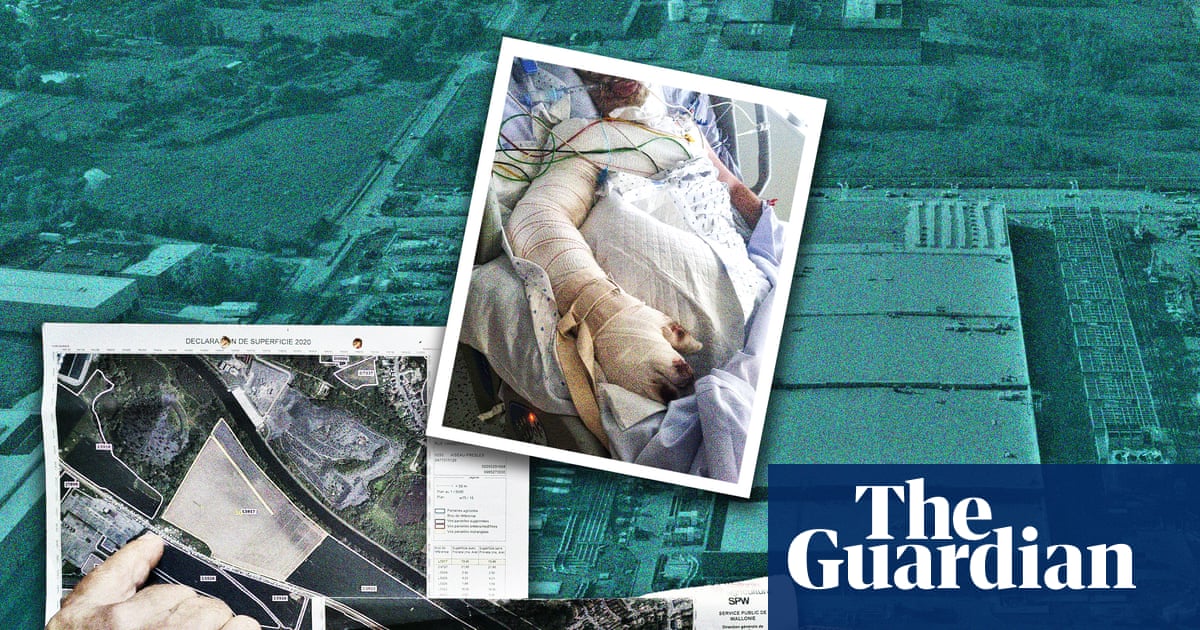
The most detailed case concerns a 34-year-old Romanian electrical tester identified only as Sandu. In March 2026 he was finishing a shift of almost 10 hours at GBL-6, the sixth building on Google's EUR 5 billion Saint-Ghislain campus in Belgium, when a manager asked for two final tests.
His protective suit was locked in an equipment room about 15 minutes away. He skipped it because colleagues were waiting, he told reporters. Managers confirmed the lines had been de-energised. On the second test they were live. He took 400 volts and 12,000 amps across his face and right side, and lost his sight temporarily.
Hospital records show burns to 12% of his body, including third-degree burns on his right shoulder and fingers. He spent five days in an induced coma. Doctors told him he may regain only 70% use of his right hand and arm. He has not worked since, and says he is sensitive to noise and sunlight.
Belgium's federal labour inspectorate closed its investigation at the end of October and found no wrongdoing. Sandu says investigators never interviewed him directly. No fines or sanctions are known to have been issued. Dornan Engineering, the Irish firm that was the main electrical subcontractor, said it supported the authorities and the worker's recovery. Google pointed to its supplier code of conduct. A Dutch recruitment agency, Wanted, disputed the account without giving detail.
A month after the accident, the recruiter messaged Sandu to check on him and then asked whether he knew other testers who might take jobs. He says he is still waiting for his accident report.
Eurostat figures put the wider risk in context. Construction recorded 776 fatal accidents across the EU in 2024, the highest of any sector and close to a quarter of the 3,367 deaths recorded that year. The sector also recorded 352,520 non-fatal accidents.
What did workers at Microsoft's Gavle site describe?
Near Gavle, two hours north of Stockholm, Microsoft is spending 33.7 billion Swedish krona, about EUR 3 billion, on a 130-hectare expansion begun in June 2024. Collen Construction is the general contractor. Benbau, an Irish-owned firm, is one of its subcontractors and houses its workers in modular units about 20 minutes from the site.
Records obtained from Sweden's Work Environment Authority show 148 firms working under Collen at Gavle, including 28 direct subcontractors. One subcontractor can sit above a dozen more firms. That distance between the technology company and the person pouring concrete is central to the investigation.
Workers described 40-room housing where 24 people shared a kitchen and 14 men shared a bathroom. They reported rats in the walls, broken ventilation and no heating in sub-zero winters. One diabetic worker said ill-fitting boots issued by the company contributed to an infection that cost him a toe.
In February 2026 a Romanian worker was diagnosed with active tuberculosis, according to medical records seen by reporters. Benbau told only a few close contacts and said testing was optional, seven workers said. The county medical officer confirmed that one case was reported in March. Eight workers and union representatives believe 10 to 12 men were infected. About 40 men were moved to a Microsoft site in Denmark in May, where the Danish union 3F recorded roughly 45 posted workers arriving.
3F says its records show the arrivals but it has found no further trace of the men, despite attempts to reach Benbau employees.
Discipline ran through a card system. Workers received yellow and red cards, were questioned for hours and were made to write letters admitting faults, several said. A programme called Good Save required two reports a week, and failure brought threats to deduct pay, according to messages seen by reporters. The investigation found no evidence that Collen knew about the pay threats.
More than 30 workers shared hundreds of payslips showing weeks of 50 to 60 hours without overtime. Some said they had received no holiday pay for five years. Solidariska byggare, the union representing them, estimates they were paid up to 30% less than Swedish colleagues.
Why are subcontracting chains so hard to police in Europe?
Sweden has no statutory minimum wage. Pay and conditions are set by collective agreements between unions and employers, and construction clients usually require them. When Collen began work at Gavle in 2019, no such clause was in place, and many subcontractors, including Benbau, followed without agreements.
Enforcement has been limited. Since 2021 the Work Environment Authority has opened 50 cases into data centre sites involving Microsoft and Irish contractors. In October 2021 a forklift ran over a Collen supervisor's foot. The company's own incident report found that the wrong machine was used, the driver lacked a certificate and the lift plan was incomplete. The authority saw no grounds to prosecute.
Another contractor, Winthrop, has been fined 12 times for failing to meet reporting requirements for foreign workers at Swedish data centre sites. Winthrop said its subcontractors were responsible and reimbursed the fines, and that the cases covered 45 workers out of about 8,000 inducted. A 2021 unannounced inspection at Sandviken found 15 nationalities on site.
Access is the other obstacle. The Dutch union FNV was refused entry at a Winthrop site at Schiphol-Rijk in September, and says an employee told representatives: "Beyond this gate, it's not the Netherlands." Winthrop called any suggestion that unions are denied access "false and misleading". Sweden's Byggnads says it has been unable to reach the Gavle and Sandviken sites since work began. Denmark's 3F says some sites are "more closed than a state prison". In Italy, unions have never been allowed onto one of the two Amazon sites at Pero, near Milan.
Pelle Sunvisson of Solidariska byggare describes how the shift plays out at the gate. Swedish electricians leave first, then Irish white-collar staff, then Polish, Romanian and Serbian workers, and later those from outside Europe. He says there is "a big black hole in the Swedish model" for people who do not know their rights.
In Finland, the union Rakennusliitto says bogus self-employment has become a major issue alongside wage theft, and that access took longer with contractors new to the country. In Italy, Carlo Rioldi of the Italian Confederation of Workers' Trade Unions says workers often stay silent about problems for fear of retaliation and because they do not know their rights.
Cross-border enforcement is thin. The European Labour Authority had fewer than 140 staff in 2025 and told Investigate Europe that it has no independent inspection or enforcement powers and cannot enter workplaces. The European Parliament's research service notes that 86% of the EU's most threatening criminal networks use legal business structures, with construction particularly exposed.
How did 78 Romanian workers win a EUR 1.3 million settlement?
Solidariska byggare spent months trying to recover unpaid wages for 78 Romanian workers at Gavle. The union accused Benbau of withholding nearly 10 million Swedish krona, about EUR 900,000, and considered blockading the site.
On 23 October 2026 the two sides signed a collective agreement worth 15 million Swedish krona, about EUR 1.3 million, which takes effect on 1 November. Workers will receive back pay and a rate of 260 Swedish krona, about EUR 23.49, an hour, which the union says is well above the Swedish average. They gain the right to elect health and safety representatives, and unions gain access to every Benbau data centre site in Sweden. The company can no longer hold meetings with workers without a union representative present.
Pelle Sunvisson, the union leader who led the talks, called it the first collective agreement in Sweden written by and for migrant workers. "No one is afraid anymore," he said. Benbau said it takes welfare and safety concerns "extremely seriously" and confirmed that the agreement was signed by all parties.
James McCabe of Unite, which represents 1.2 million workers in Ireland and the UK, said the deal showed that contractors can be held to account. The limits are obvious. It covers one company and one group of workers. Other contractors at Gavle, and thousands of workers on other sites, remain outside any agreement.
The timing matters too. The deal was brokered days after reporters sent detailed questions to Benbau, and days before publication. It does not settle the wider questions about the other firms named in the investigation.
What do Google, Microsoft and the contractors say?
Google said its supplier code of conduct and contracts "require all suppliers to comply with local labour laws and uphold safe, healthy working conditions". It said it maintains dialogue with union leaders and trade groups. Microsoft said it sets "clear requirements on health and safety, working conditions, and the freedom of association" and audits contractors against its supplier code.
Collen called the allegations "wholly inconsistent with Collen's values, policies and the standards to which we hold ourselves". It said it expects the same standards through its supply chain and has zero tolerance for conduct inconsistent with them. Dornan said it was committed to safe working conditions and had supported the injured worker and his family.
Benbau said it has stringent procedures for reporting and investigating concerns. Winthrop said it adheres to applicable laws and that union access runs through pre-arranged protocols. Amazon said it expects suppliers to follow its chain standards, which draw on United Nations and International Labour Organization frameworks.
None of the companies disputed the documents the investigation relied on. Several rejected the conclusions without addressing specifics, and the Wanted spokesperson said the claims were "not correct" without saying which. The statements describe audits and supplier codes, but they do not address records such as the 148-firm contractor list at Gavle or the payslips showing unpaid overtime. The gap between corporate audit claims and the records held by national authorities is the unresolved question at the centre of the story.
Will the EU's Quality Jobs Act change conditions on data centre sites?
The European Parliament adopted a resolution on subcontracting chains on 12 February 2026 by 332 votes to 209, with 33 abstentions. Its employment committee had approved the report in December 2025 by 35 votes to 20. The rapporteur was Swedish MEP Johan Danielsson.
The report asks the Commission to consider a framework directive on employers' obligations in subcontracting chains, and a joint and several liability regime for economic operators and subcontractors. Danielsson said that "behind the fence they are abusing workers, and they don't want anyone to know it".
The Commission's Quality Jobs Act is the likely vehicle. Ursula von der Leyen announced the legislative initiative in her 2025 State of the Union speech. The Commission frames it around fair pay, good working conditions, strong social protection and access to training. The first consultation with social partners ran from December 2025 to January 2026 and drew input from 34 EU-level organisations. The second stage opened on 20 July 2026 and covers workers' rights in subcontracting chains and AI at work. The proposal is expected by the end of 2026.
Its reach will be limited by treaty rules. Social policy is a shared competence, national inspectorates do the enforcing, and the EU labour authority cannot inspect sites. Company audits remain the main check on contractors, and the investigation suggests they missed conditions that national records document.
Three things to watch. First, whether the Benbau agreement is implemented from 1 November and copied by other contractors. Second, whether Belgian authorities revisit the Saint-Ghislain accident, which the inspectorate closed without interviewing the injured worker. Third, whether the Commission's proposal includes joint liability or stops at guidance.