What did France say Iran did?
On Monday in Paris, Foreign Minister Jean-Noël Barrot said France could confirm that Iran's Islamic Revolutionary Guard Corps was behind last month's attacks on supermarket cooling systems. He described the campaign as "unprecedented in both its scale and its level of aggression" and said those responsible would face sanctions at European level.
A formal attribution statement from the foreign ministry went further. It named Shahid Kaveh, a cyber-offensive unit inside the IRGC's Electronic and Cyber Centre, as the executor of what Paris calls the first cyber campaign run purely for sabotage on French soil.
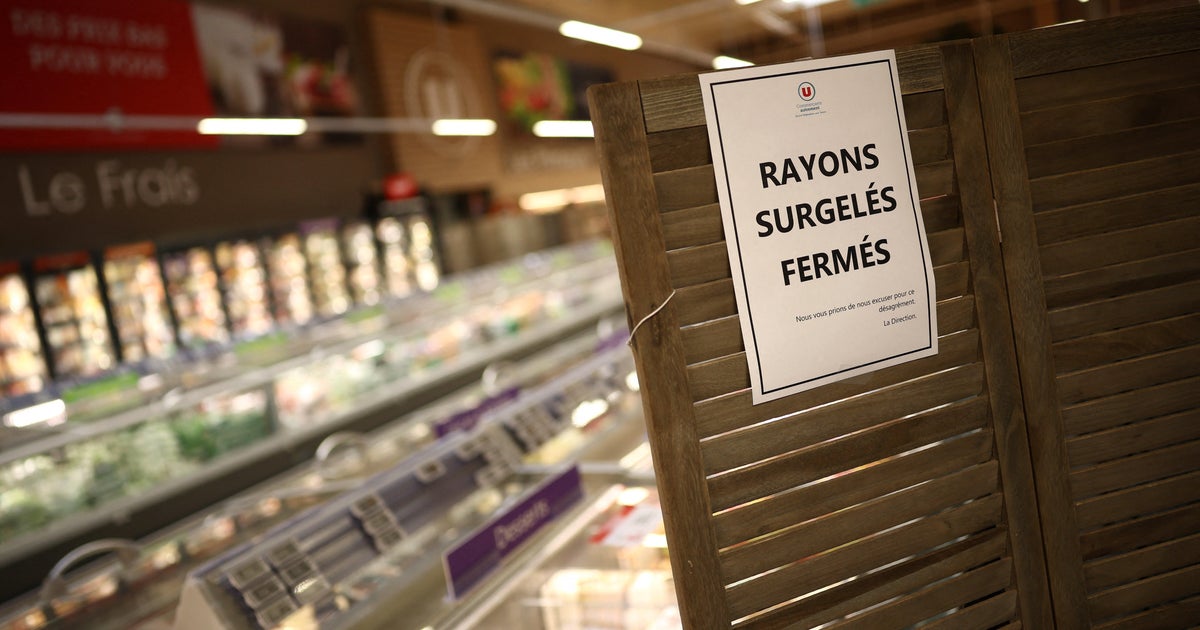
The statement said the attacks hit refrigeration controllers at more than 700 retail sites during the night of 11 to 12 October. It reported considerable material damage, fires and food losses estimated at several tens of millions of euros.
France also summoned Iran's ambassador to lodge a protest. Barrot said Paris would propose new EU sanctions on Iranian entities and individuals tied to the operation, and reserved the right to take further measures that it may not make public.
The attribution was not a single agency's call. It came from the Cyber Crisis Coordination Centre, known as C4, an interministerial body that brings together ANSSI, the military cyber command COMCYBER, the arms procurement agency DGA, the foreign intelligence service DGSE and the domestic service DGSI. The same grouping published a five-page technical report alongside the diplomatic statement.
Tehran had not responded publicly by Monday evening. Iran routinely denies carrying out malicious cyber operations, and the C4 report notes that attribution in this case rests on a body of technical and behavioural evidence rather than a confession.
- •Attribution announced by Foreign Minister Jean-Noël Barrot on 9 November 2026.
- •Formal statement names Shahid Kaveh and the IRGC Electronic and Cyber Centre.
- •Paris requests EU sanctions and summons Iran's ambassador.
How did hackers turn supermarket freezers into a weapon?
The operation was quick and mechanical. According to the C4 report, published on 9 November by France's Cyber Crisis Coordination Centre, intruders changed the defrost parameters on refrigeration controllers so that equipment was held at high temperatures. The centre was alerted on 12 October, after the compromise during the previous night.
The Paris prosecutor's office gave a more detailed account. It said the attackers gained remote control through web interfaces, started "indefinite, abnormal defrost cycles" and disabled the safety alerts that normally fire when temperatures pass a set threshold.
That combination matters. A defrost cycle is a routine maintenance step, so a controller commands it without alarm. Disabling the alerts removed the second line of defence, leaving staff to discover the problem only when food had already warmed.
Retailers described the disruption in plain terms. Coopérative U chief executive Dominique Schelcher said targeting equipment essential to preserving fresh food and supplying the French public was "of extreme gravity and is unprecedented". His teams worked with refrigeration specialists to restore the situation as quickly as possible.
In some stores, freezer temperatures reportedly reached 50C overnight, according to the BBC. The C4 report counts at least 15 cases where the overheating led to fires. The prosecutor put the number at roughly 20, and said the damage included significant food spoilage.
The same night, the coordination centre saw related targeting of Schneider Electric equipment at several small hydroelectric plants in France. The report describes the effect there as moderate, and links those probes to the same infrastructure used against the refrigeration controllers.
- •Entry point: web interfaces on internet-connected refrigeration controllers.
- •Method: altered defrost settings held equipment at high temperatures.
- •Impact: spoiled stock, at least 15 fires, and disrupted store operations.
Which stores, chains and countries were hit?
The C4 report lists Casino, Leclerc, Coopérative U, Metro, Carrefour and Intermarché among the affected retailers. It also records smaller victims: several butcher shops, a slaughterhouse and cooperative food-processing plants. That spread matters because it shows the attack was not aimed at one company's network.
Early estimates were lower than the final figure. The day after the attack, The Record reported that about 300 Intermarché and Netto stores and fewer than 100 Coopérative U outlets had been affected, based on retailer statements. The official count later settled at around 700 sites.
The BBC reported that more than 100 Coopérative U supermarkets were hit, along with 180 stores from Intermarché and its Netto brand. The discrepancy with the prosecutor's total reflects how the count grew as retailers checked more sites and smaller businesses came forward.
Accountability has been awkward. Groupement Mousquetaires, which owns Intermarché and Netto, said the affected systems were managed by Danfoss and that it would be up to the supplier to file a criminal complaint, according to The Record. That position shifts the question of legal responsibility toward the equipment vendor rather than the shopkeeper.
A second wave followed in early November. The Record reported that supermarkets in Belgium, Ireland, Estonia, the Netherlands, Luxembourg and Sweden were affected on Monday 2 November. By 4 November, businesses in at least 11 countries had reported incidents, including Germany, Portugal, the United Kingdom and Finland.
No government has attributed that second wave. Belgium's Centre for Cybersecurity said it was aware of the incident but could not say who was behind it, warning that "it may never be possible to identify" the perpetrators.
Healthcare was touched too. France's national blood service, the EFS, said temperature and defrost thresholds were raised at three of its sites. It reported no losses of blood products and said it was not directly targeted, describing the intrusion as arriving through a third-party refrigeration provider.
The United States has its own loose thread. The BBC reported that fridges at a small number of US military bases malfunctioned in August, spoiling food, and that the incidents are being investigated as possible deliberate attacks. CBS News said the Department of the Army Criminal Investigation Division is examining them, citing a public affairs officer.
- •France: about 700 sites, mostly large grocery chains plus small food businesses.
- •Second wave: Belgium, Ireland, Estonia, Netherlands, Luxembourg and Sweden, later at least 11 countries.
- •Blood service: three EFS sites affected, no products lost.
What evidence links the attack to Shahid Kaveh?
The C4 report sets out a chain of circumstantial evidence. It does not publish a smoking gun, and it does not name a specific vulnerability. Instead, it argues that the infrastructure, tooling, language traces and propaganda timing all point to one unit.
First, the servers used against French refrigeration were also used in the same period to probe Schneider Electric equipment, including at small power and water facilities. The report says those probes used the Modbus protocol on port 502, a technique it has observed from Shahid Kaveh since at least April 2026.
Second, the operators used FOFA, a commercial internet-scanning service, to find exposed controllers. The report describes that scanner as part of the unit's habitual attack methodology rather than an incidental choice.
Third, investigators found traces of Persian in the attack infrastructure. On 13 October, CyberbanNews, a propaganda outlet the report ties to the unit, relayed news of the refrigeration attack.
The report names Mahdi Lashgarian and Reza Salarvand as commanders of Shahid Kaveh, and Hamid Reza Lashgarian as head of the IRGC's Electronic and Cyber Centre. It lists the unit's online personas, including CyberAveng3rs, Soldiers of Solomon, Mr. Soul and Cyber Isnaad Front.
Those aliases connect the unit to earlier campaigns. The report cites a November 2023 operation against Israeli firm Unitronics, which makes industrial controllers, and sabotage campaigns in March and April 2026 that hit Israeli and American industrial equipment, including refrigeration systems.
The report puts the French case inside a longer campaign. It says the same IRGC cyber centre, through a second unit called Shahid Shoostari, also known as Emennet Pasargad, ran destabilisation operations against French interests from at least 2020. Those included a 2023 defacement of Charlie Hebdo's online shop and a 2024 attempt to hijack video display terminals during the Paris Olympics.
In the Olympics case, attackers tried to push images condemning Israeli athletes' participation onto public screens. The compromise was found before the images appeared. Investigators traced related material to a Persian-language Instagram account, two X accounts and an Iranian news site.
The judicial track is separate from the intelligence assessment. Paris prosecutor Laure Beccuau said her office opened an investigation into the head of Shahid Kaveh, two deputies and unidentified others. The charges include fraudulent interference with an automated data-processing system and causing damage by means dangerous to people, aggravated by acting for a foreign power. Her office has requested international arrest warrants.
France has not published the full underlying evidence, and the BBC notes that attribution is notoriously difficult because attackers can route traffic through third countries. Readers therefore cannot independently test the conclusion, even though the C4 report sets out its indicators in unusual detail.
- •Shared infrastructure with Schneider Electric reconnaissance.
- •FOFA scanning tool and Modbus port 502 probes match the unit's known methods.
- •Persian-language artefacts and a 13 October CyberbanNews relay.
Why are internet-connected cooling controllers so exposed?
Refrigeration controllers are designed to be managed remotely. Technicians use a web console to adjust setpoints and diagnose faults without driving to every store, and that convenience is precisely what puts the devices on the public internet.
The AK-SM 800A is not a single fridge's thermostat. It is a central manager that coordinates many field controllers across an installation, giving an operator one browser window for a whole store's refrigeration. Compromise that interface and the attacker is no longer adjusting one unit but the cold chain of a site.
Claroty's Team82 research unit studied the Danfoss AK-SM 800A, a system manager used to coordinate refrigeration across supermarkets and cold stores. Using internet-wide scanning services, the researchers found thousands of management interfaces that were directly reachable from the open internet.
The flaws they found were serious. One was a hidden "code-of-the-day" authentication mechanism that could be abused to bypass normal login. Another was command injection leading to remote code execution. A third let authenticated users inject Nginx configuration directives, which could be used to disrupt web traffic.
The US Cybersecurity and Infrastructure Security Agency published an advisory on the Danfoss AK-SM 8xxA series in May 2025 and updated it in August 2025. It lists CVE-2025-41450 with a CVSS v3.1 score of 8.2, CVE-2025-41451 at 7.6 and CVE-2025-41452 at 5.4, and says fixes arrived in versions R4.2 and 4.3.1.
The advisory also records a limitation. At the time of publication, CISA said it had received no reports of public exploitation specifically targeting those vulnerabilities, and it rated their attack complexity as high. That does not clear the devices, but it does mean the advisory is not evidence that this was the route into French supermarkets.
Linking those specific flaws to the French attack requires care. BFMTV reported that the affected systems were Danfoss controllers running older software, and the retailer group behind Intermarché and Netto said its systems were managed by Danfoss, according to The Record. Danfoss has not publicly confirmed that its equipment was the entry point.
ANSSI, the national cybersecurity agency, later said the October campaign involved remote controllers from a range of brands. Neither the C4 report nor the prosecutor has said which vulnerability, if any, was exploited.
The defensive advice is consistent across agencies. CISA tells operators to keep control systems off the internet, place them behind firewalls and use a VPN for remote access. The FBI issued a similar warning, and a Belgian installer told The Record that some affected units needed physical modifications, not just a software update.
- •Remote management is the feature that creates the exposure.
- •Danfoss controllers had documented authentication and command-injection flaws.
- •CISA and the FBI both say controllers should not be reachable from the public internet.
What happens next for France, the EU and Iran?
The immediate response is legal and diplomatic. The Paris investigation gives France a formal channel to gather evidence and to justify sanctions. International arrest warrants are unlikely to be executed against IRGC commanders, but they create a legal record that supports travel bans and asset freezes.
The EU track is the one to watch. France says it will propose new sanctions on Iranians involved in this attack and in other malicious cyber activity. The bloc has precedent: in March 2026 it sanctioned Emennet Pasargad, an Iranian entity linked to earlier operations against Charlie Hebdo and the Paris Olympics.
The security track will be quieter but broader. The C4 report is addressed to French operators as much as to the public, and agencies are likely to press retailers and food processors to audit exposed controllers. The Belgian installer's comment about physical fixes suggests some equipment cannot be secured with a patch alone.
For Iran, the attribution adds to a growing list of accusations. Tehran has not commented on this case, and its usual position is to deny involvement in malicious cyber operations. The risk is that sabotage campaigns against civilian infrastructure become a normal part of state pressure, not an exception.
Several questions remain open. Will the EU actually adopt the sanctions France is proposing? Will anyone attribute the November attacks in 11 countries, or will they stay unexplained? Will Washington make a formal attribution of its own, given that US military bases also reported refrigeration failures in August? And will Danfoss confirm what role, if any, its controllers played?
For retailers, the practical lesson is unglamorous. A freezer is now an internet-connected industrial system, and the same remote access that saves on maintenance costs is a route into the cold chain. The French case shows the damage does not stop at spoiled food.
- •Watch EU sanctions discussions and the Paris investigation.
- •Watch whether the November European wave is attributed.
- •Watch for audits of internet-exposed refrigeration controllers.