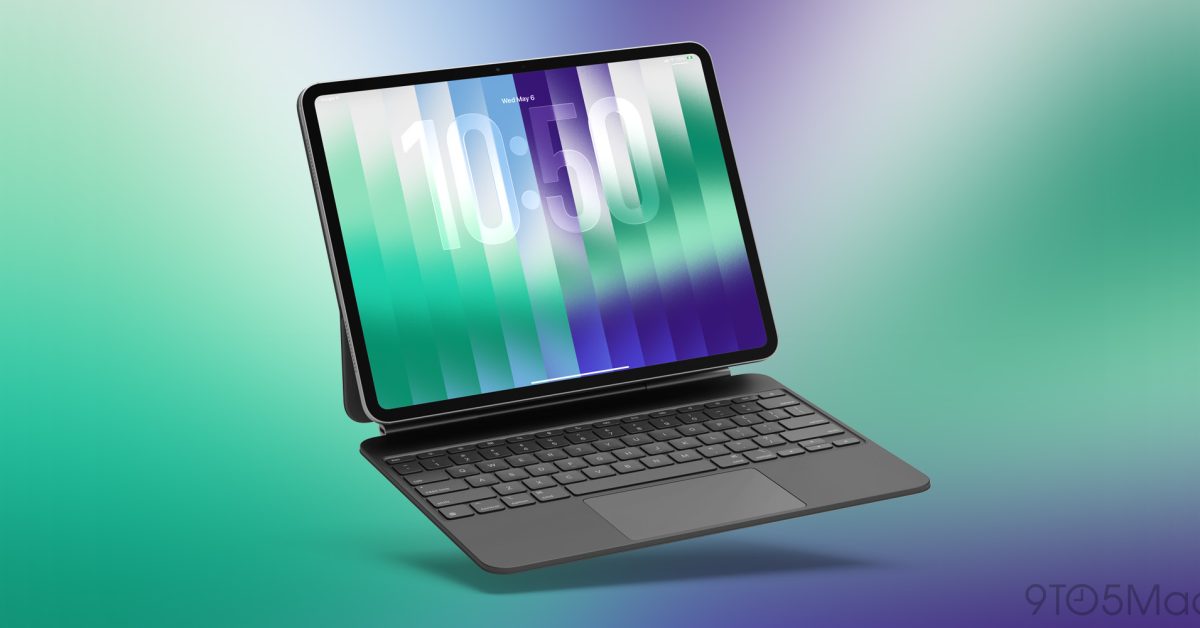
How far did global tablet shipments fall in Q3 2026?
Omdia's latest tablet tracker puts worldwide shipments at 32.19 million units in the third quarter of 2026. That is down 23% from 41.81 million units a year earlier, and the lowest quarterly total in nearly three years. The research firm published the figures on 5 November through Business Wire.
The decline follows a 10% fall in the second quarter, so the contraction widened rather than levelled off. Omdia described the result as another double-digit drop after the previous quarter's retreat.
The numbers measure sell-in, meaning the devices vendors ship to retailers and distributors. They are not a count of tablets that customers carried home. Omdia's own note says unit shipments are in thousands and that rounding can stop shares adding up to exactly 100%.
Regional detail is thin in the release. Omdia says the Middle East, China and Western Europe were hit harder than the rest of the market, without publishing unit totals for each region. Treat that ranking as directional rather than a full regional breakdown.
IDC runs a separate tablet tracker with its own methodology and reporting calendar. It put the second quarter at 33.6 million units, down 12.3% year on year, which is a steeper drop than Omdia's 10% for the same period. Two trackers, two estimates, so the 32.19 million figure is best read as Omdia's number rather than an agreed market total.
Trade coverage followed the release quickly. 9to5Mac and Ubergizmo both reported the same 32.2 million total and the same vendor ranking within a day, attributing the data to Omdia.
The release labels the dataset as Omdia's PC Horizon Service. Every figure in its table is in thousands, so Apple's 11,581 is 11.58 million units and Lenovo's 4,093 is 4.09 million.
Why did tablet shipments drop so sharply?
Omdia blames supply rather than a sudden collapse in interest. Memory and other components are scarce, and vendors are steering what they can get towards products they consider more important.
Himani Mukka, a research manager at Omdia, said supply constraints are intensifying. Tablets are, in her words, "taking a backseat in vendors' strategic priorities for 2026 and 2027." She added that supply is expected to tighten further next year.
The memory angle has a longer paper trail. In August, IDC published a blog arguing that the memory shortage reshaping PCs and phones had finally reached tablets. Its author, Jitesh Ubrani, said AI infrastructure buildouts keep pulling DRAM and NAND capacity away from consumer devices.
IDC also tracked the price consequences through vendor list prices. Samsung raised prices by $40 to $280 across nearly its entire Galaxy Tab lineup in April. Lenovo added $30 to $70 on the Tab One, Tab Plus and Yoga Tab the same month.
Apple then raised the entire iPad line globally in June, with several models costing 20% or more extra. According to IDC, Apple cited memory costs rather than tariffs or a hardware refresh.
Three of the largest vendors moved prices within ten weeks of each other. IDC's reading is that consumer demand does not absorb a shock of that kind.
Those increases came from IDC's list-price tracking, not from Omdia's shipment data. The two firms measure the market differently, but they describe the same pressure. Parts are short, prices are up, and shipments are falling.
IDC's second-quarter data shows who absorbed the shock. Consumer tablet shipments fell 13.5% year on year, while commercial shipments fell 5.9%. Businesses and schools buy on multi-year contracts, so they were less exposed to list-price jumps.
Which tablet makers gained and lost share in Q3 2026?
Apple stayed first with 11.58 million units and 36.0% of the market, down from 38.2% a year earlier. Its shipments fell 27.5%, which is worse than the 23% market decline. A vendor that shrinks faster than the market loses share even while it leads.
Samsung held second place with 5.43 million units and 16.9% share, up slightly from 16.6%. Shipments fell 21.7%, a milder drop than Apple's. Omdia said new tablet launches did not offset the component constraints weighing on volumes.
Lenovo was the exception. It shipped 4.09 million units, up 11.9%, and lifted its share to 12.7% from 8.7%. That was the largest share gain of any vendor in the quarter.
Omdia's breakdown of Lenovo is specific. Detachable tablets fell sharply year on year, but slate tablets drove the overall increase. Sell-in rose in every region except Europe and Latin America.
Xiaomi shipped 2.35 million units, down 10.6%, and its share rose to 7.3% from 6.3%. A decline smaller than the market average is enough to gain share. Omdia credits a strong quarter in Latin America.
Huawei had the roughest quarter of the top five. Shipments fell 43.0% to 1.85 million units and its share dropped to 5.7% from 7.8%. Even so, Omdia says Huawei still grew in Central and Eastern Europe and in Asia-Pacific.
Everyone outside the top five shipped 6.90 million units, down 26.5%, and their combined share slipped to 21.4%. The smaller the vendor, the harder it is to secure memory allocations, which helps explain why the long tail shrank fastest.
IDC's second-quarter data shows the same consolidation from a different angle. The top five held about 79.8% of shipments, up from 77.9% a quarter earlier. Bigger vendors have the procurement leverage to secure memory allocation that smaller players cannot match.
Which regions are holding up best?
IDC's second-quarter tracker gives the clearest regional picture, and it is grim for the United States. Shipments there fell 31.6% year on year, even as they rebounded 7.1% from a weak first quarter.
IDC says the US is the one market where memory costs and tariffs land at the same time. Amazon also saw its tablet shipments decline, against a tough comparison with 2025, when many brands pulled inventory forward ahead of expected tariffs.
Western Europe fell 13.3% in the same quarter. Asia-Pacific excluding Japan and China grew 2.6%, the Middle East and Africa edged up 0.7%, and Japan rose 5.8%.
Chinese vendors have been pushing volume into those emerging regions. IDC notes that tablets carry a smaller share of memory in their bill of materials than smartphones do, which leaves more room to defend share on price.
Production location matters as well. IDC expects Samsung and Lenovo to be in better shape than rivals with heavy exposure to Chinese manufacturing, as tariffs continue to pinch supply.
Omdia's third-quarter release draws a different regional map. It names the Middle East, China and Western Europe as the hardest-hit areas. The two firms cover different quarters and use different definitions, so their regional rankings should not be stitched into one series.
The common thread is that no large region is carrying the market. Emerging-market growth in IDC's second quarter was in low single digits, while the US and Western Europe fell by double digits. Gains of that size in Japan and Asia-Pacific cannot offset losses of that scale.
Are tablets losing their reason to exist?
The second half of 2026 was not short of new hardware. Samsung launched its Galaxy Tab S12 series, Apple released an OLED-equipped iPad mini, and Xiaomi introduced the Pad 9 series. Huawei, HONOR, OnePlus and realme also shipped new models.
Omdia's verdict on that wave is blunt. Mukka said "these launches have done little to stimulate consumer demand amid challenging market conditions." Supply limits also mean thinner upgrades, which gives buyers less reason to replace a working tablet.
IDC goes further and questions the category itself. Its August blog argued that AI PCs are absorbing the productivity work tablets spent a decade chasing. Larger phones and foldables are pulling away casual browsing and video, and cheap mini-PCs and laptops compete at the low end.
IDC is careful about foldables, calling them a rounding error in unit terms even as they grow. The point is direction, not volume. A device category can lose ground to several rivals at once without any single rival replacing it.
There is counter-evidence inside the same IDC dataset. Slate tablets fell 19.8% in the second quarter, concentrated at the low end where price rises bite hardest. Detachables fell only 6.1%, because that mix leans towards commercial and productivity buyers.
That split suggests the market is tilting towards tablets that behave like PCs. It does not prove the category is recovering. Omdia's third-quarter release does not break out slate and detachable shipments, so the two firms cannot be compared line by line here.
IDC's conclusion is the sharpest version of the argument. Its blog expects the memory shortage to clear, but asks whether a category that lost its reason to exist recovers with it. The vendors still gaining share, it adds, are the ones treating relevance rather than memory as the real problem.
What does the tablet decline mean for buyers?
The immediate effect is price. The increases IDC tracked landed between April and June, before the third quarter began. Buyers are now paying more for refreshes that Omdia describes as less ambitious than earlier generations.
That combination makes waiting rational, and Omdia expects exactly that. Mukka said consumers are "increasingly expected to delay purchases until more substantial improvements become available." A tablet that still works is easier to keep when its replacement costs more and changes little.
Availability is uneven. Commercial and education buyers held up better in IDC's second-quarter data because contracts shield them from list-price swings. Walk-in retail buyers have no such protection, and low-end slates took the heaviest hit.
Anyone shopping now should check two things before paying. First, whether a model's price moved after April or June, when the tracked increases landed. Second, whether the device is a 2026 refresh or an older model still selling at a raised price.
Second-hand and refurbished stock becomes more relevant in this environment. Neither release cited here covers resale volumes, so the shipment data says nothing about that part of the market.
There is also a timing trap. Shipments can rise because retailers are restocking rather than because shoppers are buying. Watch sell-through estimates and retail discounting before treating any single quarter as a turnaround.
Choice is narrowing as well. Vendors outside the top five shipped 26.5% fewer units in Omdia's count, and they hold the least leverage when memory is allocated. Fewer smaller brands in a market means fewer cheap alternatives for buyers who want to spend less.
Vendor plans shape what reaches shelves. Omdia says tablets rank below other products in vendor priorities for 2026 and 2027. That suggests the range on offer will thin before it widens.
IDC expects the pace of list-price increases to ease in the coming quarters. It does not expect supply relief to arrive quickly. Buyers waiting for a sharp price cut may find that the wait runs into next year.
When is the tablet market expected to recover?
Omdia does not expect a quick bounce. Mukka said "a meaningful recovery in the tablet market is unlikely before 2028", citing supply that is expected to tighten further next year.
IDC's forecast is softer but points the same way. It expects the pace of price increases to ease in coming quarters, while warning that supply relief will not arrive immediately. Tablets are likely to keep selling at elevated prices for a while.
Ubergizmo's write-up goes further, saying industry observers expect the constraints to run through 2027 and possibly drag smartphones into a similar stall. That is the outlet's characterisation rather than a figure from either tracker.
Three signals are worth tracking. Memory contract pricing tells you when component costs stop rising. Vendor launch calendars show whether refreshes return to a normal cadence. Regional splits show whether growth in Asia-Pacific and the Middle East can offset weakness in China and Western Europe.
Lenovo's run is the other test. It grew in the second quarter under IDC's count and again in the third quarter under Omdia's, on the strength of slates and productivity models. If that holds while the rest of the market shrinks, it says more about product mix than about demand returning.
For now the data points one way. A market that fell 10% and then 23% is contracting faster, not stabilising, and the cause sits in the supply chain rather than in a single bad product cycle.
One structural point cuts against a fast rebound. IDC argues that tablets were already losing ground before the shortage, as AI PCs, larger phones and cheap mini-PCs took over jobs the category once handled. A supply fix would not undo that on its own.
Timing matters when reading any of this. IDC's price tracking and regional splits come from the second quarter, while Omdia's headline covers the third. The two firms will not mark a turning point on the same day, and one quarter is not a trend.