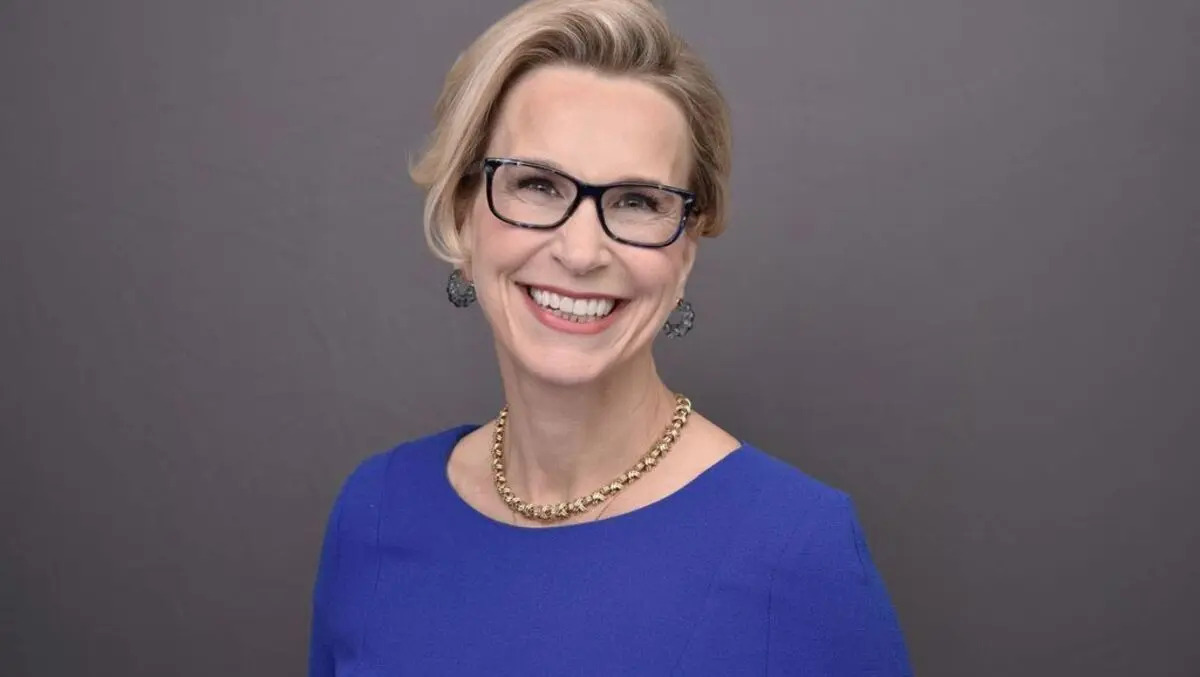
What did HP announce on November 4?
HP's board unanimously appointed Emma Walmsley as chief executive, effective January 4, 2027. She succeeds Bruce Broussard, who has been interim CEO since February 2026. Broussard will become chair of the board on the same date, replacing Chip Bergh.
The decision ends a nine-month search. HP formed a CEO search committee and hired an executive search firm after Enrique Lores stepped down in February. Lores had spent 36 years at HP, including seven as CEO, before leaving to pursue another role.
HP Inc. is the PC and printer half of the old Hewlett-Packard, which separated from Hewlett Packard Enterprise on November 1, 2015. The company was founded in 1939 and reported $55.3 billion of revenue in fiscal 2025. PCs and printers still account for almost all of its sales, so the CEO job is closely tied to the hardware cycle.
Bergh described the process as “a comprehensive global search focused on what HP needs to win in its next chapter.” He said Walmsley stood out for her leadership experience, strategic clarity and ability to turn customer insight into growth.
Investors welcomed the news. HP shares rose 6.33% to $30.06 on November 4, according to Benzinga. The gain suggests relief that the board had finally filled its top job after a long interim period.
The release did not disclose Walmsley's pay package or contract terms. It also offered no new financial targets, leaving her first priorities unclear beyond broad statements about AI and growth.
- •Effective date: January 4, 2027
- •Outgoing interim CEO: Bruce Broussard, who becomes board chair
- •Search length: about nine months
- •Stock reaction: up 6.33% to $30.06
Who is Emma Walmsley?
Walmsley ran GSK, one of Britain's largest drugmakers, from April 2017 through December 2025. She joined the company in 2010 and led its consumer healthcare division before taking the top job. Before GSK, she spent 17 years at L'Oréal building global consumer businesses.
Her main corporate action was the separation of Haleon, GSK's consumer healthcare business. The demerger completed in July 2022, and GSK then focused on cancer and infectious diseases as patent expiries approached. HP's release credits her with sharpening that strategy and strengthening the balance sheet.
The record is mixed. CNBC reported that GSK shares had fallen about 11% since she became CEO, and that they rose 3% when her departure was announced in September 2025. The same report said she had “struggled to win over investors due to concerns about GSK's drug pipeline.”
Her technology experience comes mainly from Microsoft's board. She became an independent director in December 2019, giving her about seven years of exposure to cloud computing, AI governance and large-scale software operations.
Microsoft's board is not an operating role, but it exposes directors to the economics of cloud capacity, AI models and enterprise software. That perspective could help HP as it tries to sell AI services alongside devices. It does not replace experience in component procurement or retail channel management.
That is not the same as running a hardware business. Walmsley has no public record of managing a PC supply chain, a channel network or a consumer device launch. Her career has been built on brands, regulation and long product cycles.
She framed the move in HP's release. “We will focus on harnessing the power of the AI era,” she said, promising to use HP's “creativity and innovation” to find new sources of growth.
Why did HP choose a pharmaceutical executive?
The board bet on transformation experience rather than product knowledge. HP is a mature company that needs to cut costs, simplify operations and sell higher-value devices. Walmsley did similar work at GSK, including a complex separation and a strategic reset.
Vitor Madeira, a senior market specialist at Capital.com, put the case plainly. Walmsley “has no background in hardware,” he said, “but she has experience steering a large company through a major restructuring.” He argued that this is “closer to what HP needs,” according to Reuters.
Broussard called her “a proven CEO with a track record of leading organizations at scale and guiding them through significant change.” The quote appeared in HP's announcement and reflects the board's focus on execution.
There is also a continuity argument. Broussard stays as chair, and CFO Karen Parkhill remains in place. Walmsley inherits an existing strategy built around AI PCs, premium devices, services and tighter cost control rather than a blank sheet.
The counterargument is that pharma and hardware reward different skills. Drug companies plan in years and depend on regulators and clinical trials. PC makers plan in quarters and depend on component prices, channel inventory and consumer demand.
HP's board clearly believes the management playbook travels. The next year will test that assumption, starting with the fourth-quarter results on November 24.
How bad is the PC market HP is inheriting?
The market is shrinking quickly. Gartner estimates that worldwide PC shipments fell 22.4% to 55.4 million units in the third quarter of 2026. HP shipped 10.37 million units, down 30.9%, for an 18.7% share.
Lenovo remained first with 27.1% of shipments. Dell fell 25.4%, Apple fell 7.1% and Asus fell 13%, according to the same Gartner data. HP's decline was the steepest among the top five vendors.
IDC uses a different definition and counted 62.7 million units, down 20.1%. It also put HP's decline at 30.9% and its share at 16.5%. The two firms disagree on the level of shipments but agree on the direction and on HP's underperformance.
Memory is the main cause. AI data centres are absorbing DRAM and NAND output, leaving less capacity for PCs. TrendForce expects conventional DRAM contract prices to rise 10-15% in the fourth quarter and NAND prices to rise 15-20%.
The increases follow a volatile year. HP has spent 2026 repricing notebooks and cutting costs to protect margins. Memory suppliers have also prioritised server customers, which makes PC allocations less predictable even when contract prices moderate.
Gartner's Namrata Banerjee said the cost pressure is now visible to buyers. “The impact of higher memory and storage costs is now fully reflected in PC pricing,” she said.
HP's results show the effect. Personal Systems revenue rose 18% to $11.8 billion, but unit shipments fell 16%. The segment's operating margin was 4.6%, below its long-term range, as commodity costs rose. Printing revenue fell 2% to $3.9 billion, with an 18.1% margin.
HP expects more pressure in the current quarter. Parkhill said Personal Systems revenue would be “below seasonal performance” because of commodity-driven price increases. She expects the segment margin to fall below the third-quarter level before improving in fiscal 2027.
The company has stopped short of a full forecast. In a September 21 filing, HP said it would not provide fiscal 2027 guidance. It assumed industry PC unit volumes would fall by a mid-single-digit percentage in calendar 2027.
That assumption is milder than the decline HP has just reported. It implies the company expects the market to stabilise next year, even as memory costs remain elevated.
What is HP's AI PC strategy?
HP's growth story is the AI PC. AI PCs accounted for 46% of HP's shipments in the third quarter of fiscal 2026, inside its 40-50% forecast. HP expects that mix to reach 50% by the end of the fiscal year.
The company expects 60-70% in 2027 and more than 70% in 2028, executives said on HP's August earnings call. Those targets matter because AI PCs carry higher prices and richer configurations than entry-level laptops.
The rationale is that AI workloads will move to devices for cost, latency and privacy reasons. HP says more than 150 software partners are building for its AI PCs. Commercial customers generated over 70% of Personal Systems revenue in the quarter, which gives HP a base of fleet buyers.
HP is also selling the surrounding infrastructure. Its WXP telemetry platform and services are meant to make device fleets easier to manage. In June, HP signed a strategic partnership with OpenAI to use its Frontier platform across customer experiences and internal operations.
HP also faces a software question. Device makers can bundle assistants and management tools, but many of the most demanding AI workloads still run in cloud data centres. HP's bet is that enough inference will move locally to justify premium hardware.
These products support higher average selling prices, which helps offset memory costs. But they do not change the unit cycle. An AI PC is still a PC, and businesses can delay replacing one when budgets are tight.
The label covers a wide range. “AI PC” can mean machines with a basic neural processing unit or workstations running large local models. HP's 46% figure measures shipments, not how often buyers use on-device AI.
For now, the strategy is more promise than proof. HP's own guidance points to a weaker fourth quarter before any recovery, and the company has not said how much AI PCs add to margins.
What are the biggest risks for Walmsley?
The first risk is the memory cycle. TrendForce expects PC DRAM supply to decline in 2027 as manufacturers shift capacity toward servers. If that happens, HP's input costs could rise again just as it tries to stabilise prices.
The second is demand. HP has raised prices, and its unit shipments are falling faster than the market. Consumers and small businesses may keep older machines for longer, especially if AI features do not justify an upgrade.
The third is competition. Lenovo has greater scale and a broader supply chain. Dell and Asus face the same memory costs. Apple designs its own chips and software, which gives it more room to absorb component inflation and protect margins.
The fourth is leadership. Walmsley is an outsider in an industry with short product cycles and close channel relationships. A chair with operational experience helps, but the learning curve is real.
The fifth is visibility. Without fiscal 2027 guidance, investors have little to model beyond quarterly updates. HP shares trade above the average analyst price target of $25, according to Benzinga, which implies limited expected upside.
Analysts are also divided. RBC initiated coverage with a Sector Perform rating and a $33 target in September, while Barclays had an Underweight rating and a $23 target in August, according to Benzinga.
Investor patience is another constraint. HP pays a quarterly dividend of $0.30 a share and repurchases stock, commitments that compete with restructuring spending. A new CEO who cuts costs too slowly may satisfy customers and frustrate shareholders.
There is also the question of scope. HP's release contains no restructuring plan, no cost target and no portfolio review. Walmsley will have to define what “AI era” leadership means in numbers, not slogans.
Tariffs add another variable. HP's third-quarter earnings included an $0.11 benefit from tariff refunds, and its fourth-quarter guidance assumes a further $0.08 benefit. Those gains flatter profit but depend on policy decisions outside HP's control.
What should investors and laptop buyers watch next?
HP reports fourth-quarter results on November 24. Analysts expect earnings of 75 cents a share on revenue of $15.44 billion, according to Benzinga. A year earlier, HP earned 93 cents a share on $14.64 billion.
The report will show whether pricing held in the October quarter and whether memory costs compressed margins further. It will also be Broussard's last earnings call as CEO before Walmsley takes over.
The bigger test is fiscal 2027 guidance. HP withheld it in September, so investors will watch the assumed unit decline, the pricing trajectory and any new restructuring charges.
Watch gross margin as well as revenue. HP has been trading unit volume for price, and that strategy only works while customers accept higher prices. If demand weakens faster than expected, revenue growth can disappear quickly.
Product news will arrive at CES in January, where PC makers typically launch new AI PCs. HP's ability to sell premium devices into commercial fleets will matter more than consumer launches, given its commercial revenue mix.
Memory prices remain the wild card. TrendForce's 2027 outlook, and any sign that AI data-centre demand is easing, will shape HP's costs more than anything Walmsley does in her first quarter.
For laptop buyers, the practical effect is likely to be continued high prices and fewer cheap options. AI features will be marketed heavily, but memory, storage and battery life still matter more than the label.
Walmsley starts on January 4. By then, HP will have reported its fourth quarter and faced more questions about fiscal 2027. Her first year will be judged on whether she can protect margins without losing more market share.