What did Motorola announce on 5 November 2026?
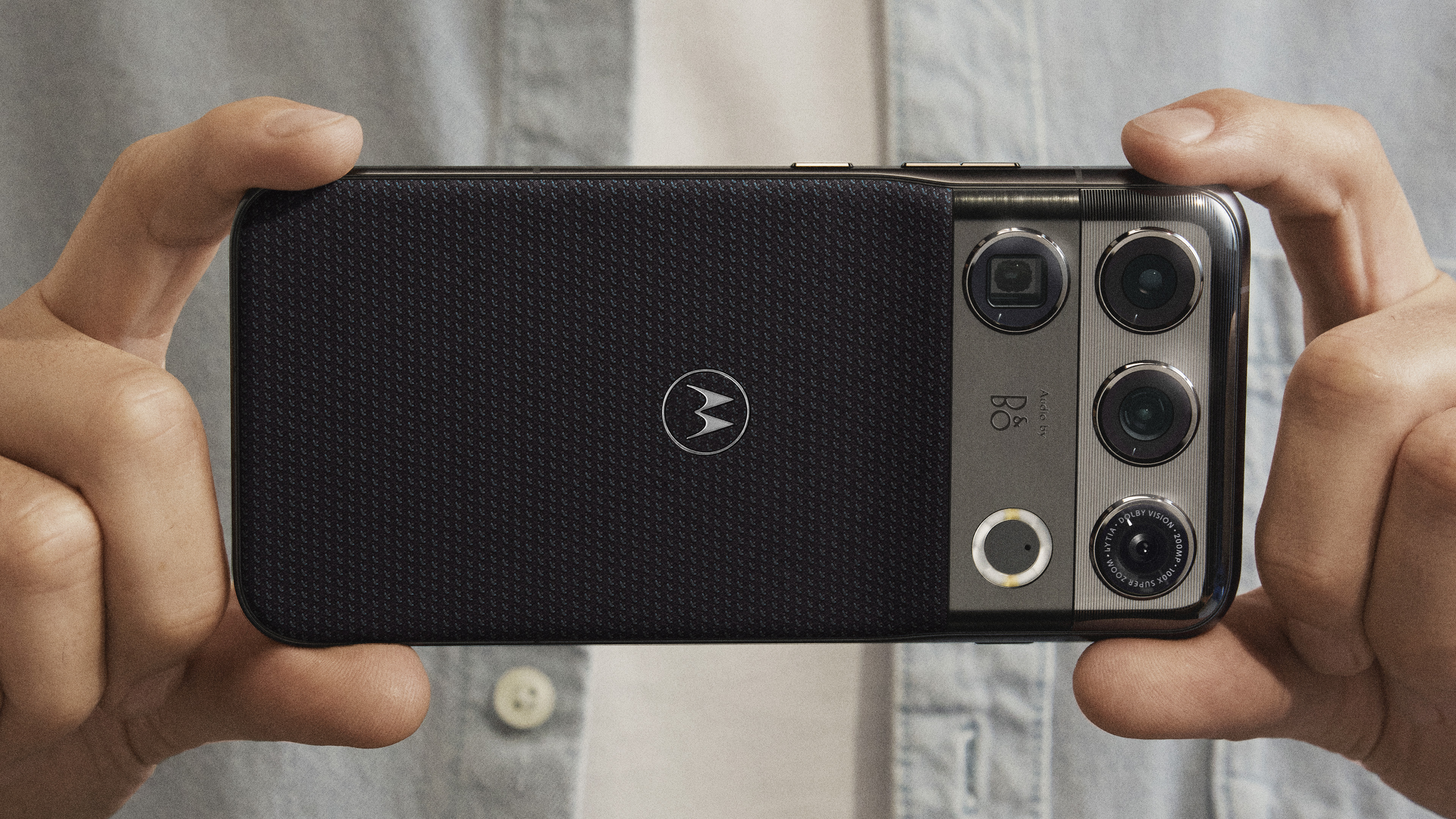
Motorola announced the Signature 27 on 5 November 2026, a non-folding flagship intended to fill a gap in its US lineup. The phone starts at $1,599, well above most Android flagships and close to the company's foldables.
The hardware targets the top of the Android market. Motorola pairs Qualcomm's Snapdragon 8 Elite Extreme Gen 6 with 12GB of RAM and 512GB of storage. Ars Technica reports there is no 16GB memory option.
The display is a 6.8-inch Extreme AMOLED Duo panel with a 120Hz refresh rate. Motorola claims peak brightness of up to 12,000 nits and calls it the brightest display available in a smartphone. That figure comes from Motorola's own lab testing.
The panel uses tandem OLED technology, which stacks two emissive layers to raise brightness. Ars notes that Motorola's figure is four times the peak brightness of the iPhone 18 Pro Max. It cautions that tandem panels can look uneven at low brightness, though it has not tested this phone.
A 7,000mAh silicon-carbon battery powers the phone. Motorola quotes 90W wired charging and 15W wireless charging, and Ars notes that a compatible charger is not included in the box. The cell is 1,000mAh larger than the one in Samsung's Galaxy S26 Ultra.
The design uses an aluminium frame with Gorilla Glass Ceramic 3 and carries IP68 and IP69 ratings for dust and water resistance. Motorola also advertises Audio by Bang & Olufsen, Wi-Fi 8 compatibility and a six-antenna design. The phone measures 162mm tall and weighs 227 grams.
Motorola is positioning the device for Google's Gemini Intelligence programme. It lists agentic app control, Create My Widget, Sign-to-Text and Rambler voice input among the features planned for the phone. Ars reports that most of those features are still limited to Pixel devices and will arrive in the coming months.
The camera system has four sensors on the back. There is a 50MP main camera, a 50MP ultrawide, a 200MP periscope telephoto with 3x optical zoom, and a dedicated event-based vision sensor for motion shots. A 50MP front camera handles selfies.
Motorola promises seven OS upgrades and up to seven years of security updates from the global launch date. Ars compares that commitment to Samsung and Google, which offer similar timelines on their flagships.
In the US, preorders open on 19 November and the phone goes on sale on 26 November. Motorola will sell it unlocked through its own store, Best Buy and Amazon, with no carrier partnerships announced at launch.
Motorola says the Signature 27 will reach markets worldwide in the coming months. The company lists a starting MSRP of $1,599 and directs buyers to local PR teams for regional pricing.
What does GrapheneOS support actually mean here?
Among the launch claims, one stands out for privacy-focused buyers. Motorola describes the Signature 27 as "the first Motorola device to support GrapheneOS", a hardened version of Android maintained by a separate project.
The partnership is not new. GrapheneOS announced a long-term agreement with Motorola in March 2026. It said the two were working on "future devices meeting our privacy and security standards with official GrapheneOS support".
In September, the GrapheneOS project confirmed that the Signature 27 would be the first phone under that deal. 9to5Google reported at the time that availability at launch was still unclear.
The launch answer is narrower than some buyers expected. Ars Technica reports that Motorola does not intend to sell a version with GrapheneOS preloaded. Buyers will have to install it themselves, and Motorola has not published the process.
Ars expects the method to resemble installing GrapheneOS on a Pixel: unlock the bootloader, flash the software, and set the phone up. The details are promised for a later date.
Gadget Review reached the same conclusion. It reports that the phone ships with standard Android 17, that GrapheneOS is not preinstalled, and that timing for support remains unconfirmed.
The launch reporting does not match an earlier expectation. 9to5Google wrote in September that it was "apparently still planned" for Motorola devices to ship with GrapheneOS preinstalled. Ars now reports a manual install, and neither company has published an explanation for the difference.
GrapheneOS's own guidance points the same way. The project's FAQ says it is not affiliated with, and does not endorse, companies that sell devices with GrapheneOS preinstalled. It recommends that buyers install the system themselves.
That makes the launch claim a compatibility promise rather than a product on a shelf. The phone is meant to run GrapheneOS at some point, but no official build is available to download today.
Why does GrapheneOS on a non-Pixel phone matter?
GrapheneOS has officially supported Pixel phones only. The project's public documentation lists Pixel 6 through Pixel 10a as its supported hardware, with no devices from other brands.
The restriction reflects hardware and firmware requirements rather than preference. 9to5Google ties it to how Google handles software updates and security components in Pixel and Tensor hardware.
A second manufacturer changes the supply picture. Until now, anyone who wanted official GrapheneOS support had to buy a Google phone. The Motorola deal gives the project another hardware partner and buyers another option.
Android Police reported that Qualcomm's flagship mobile chip was crucial to bringing GrapheneOS to the device. That fits the project's pattern of supporting hardware with long firmware commitments and strong security features.
Motorola is a large vendor owned by Lenovo, and the phone will be sold through major US retailers. Its involvement gives GrapheneOS a mainstream channel that the project has not had before.
The software itself is a hardened Android build without Google apps or services. Users can install Google Play services in a sandbox if they need apps that depend on it, according to the project's FAQ.
The project also says it will never bundle Google apps with the operating system. That distinguishes it from standard Android builds, where Google's services sit at the centre of the account, backup and notification systems.
The tradeoff is convenience. Some apps rely on Google services, so users may need the sandboxed Play layer to keep them working.
For privacy-conscious buyers, the appeal is choice: a de-Googled operating system on hardware that is not made by Google. The catch is that the choice arrives as a do-it-yourself install, not a preconfigured phone.
The practical benefit is also limited by price and size. At $1,599 and 6.8 inches, the Signature 27 is a large, expensive device, not a cheap entry point to GrapheneOS.
What does GrapheneOS require from a phone?
GrapheneOS publishes a non-exhaustive list of requirements for future devices. It includes support for running alternate operating systems with full hardware security features. The project also asks for monthly Android security patches without long delays and at least five years of device support code.
The list also calls for a generic Linux kernel image and hardware-accelerated virtualization. It requires verified boot with rollback protection, a StrongBox keystore, hardware key attestation, and resistance to insider attacks on the secure element.
Those requirements explain why official support is rare. Adding a phone is not a simple port of an open-source ROM. The manufacturer must expose security features and keep firmware current for years.
Verified boot checks that the operating system has not been altered, and attestation lets services confirm which software a device is running. A secure element such as StrongBox stores keys away from the main processor. Those pieces are difficult to retrofit after a phone ships.
The update cadence is just as demanding. GrapheneOS asks for monthly Android Security Bulletin patches without regular delays of more than a week. That is a strict schedule for a manufacturer that sells many models.
Motorola says it worked with the GrapheneOS Foundation on the Signature 27's hardware to meet those demands. Yahoo Tech reports that Motorola will share more details in the future.
The phone also includes what Motorola calls a "performant implementation of ARM Memory Tagging Extension", a hardware feature that helps catch memory-safety bugs. Motorola says this is a first for the company.
On paper, the seven-year update commitment fits the project's requirement of at least five years of device support. The long window is one reason the Signature 27 is a plausible candidate.
Official support is still the project's decision, not the manufacturer's claim. As of 7 November, GrapheneOS's FAQ lists Pixel devices only. Its public release notes do not list a Motorola build.
Until that changes, owners cannot install an official GrapheneOS release. They can read the requirements and the marketing claim, but they cannot complete the install.
Is the Signature 27 worth $1,599?
The price puts the Signature 27 above high-end flagships from Samsung and Apple. Ars notes that it is within $300 of foldables such as the Galaxy Z Fold 8 and Motorola's own Razr Fold, both listed at $1,900.
The gap to a foldable is smaller than it looks. Ars points out that the iPhone Duo costs $2,000, only $400 more than the Signature 27. It adds that buyers at this price may expect either a folding screen or a camera system with a long track record.
Buyers cannot pay for more memory. Ars reports that 12GB is the only configuration for the US model, even though some Android phones now offer 16GB. Storage is fixed at 512GB.
Buyers get a top-tier chip, 12GB of RAM, 512GB of storage, a large battery and a very bright display. The seven-year update promise is also longer than many Android phones receive.
There are tradeoffs. The phone is 227 grams and 6.8 inches tall, with a camera bump that adds thickness near the top. The charger is sold separately, and the 200MP periscope and action sensor are unproven in independent testing.
Motorola says the camera system earned a DXOMARK Gold label and describes it as the best camera launched in 2026 under DXOMARK's rankings. Those are manufacturer-selected results, and Ars has not tested the phone in person.
The missing carrier deals matter in the US. Without them, buyers cannot spread the cost through a monthly installment plan or take advantage of carrier trade-in promotions. Ars reports the phone will be sold unlocked.
The GrapheneOS angle does not change the value calculation today. It adds a future option, not a feature that works out of the box, and it does not lower the price.
Buyers who want official support now have one brand to choose from. Pixel phones are the only devices on GrapheneOS's supported list, so the Motorola promise does not yet widen that choice.
When can you buy it, and when will GrapheneOS arrive?
US buyers can preorder the Signature 27 from 19 November. Retail sales begin on 26 November through Motorola, Best Buy and Amazon, according to Ars Technica and Gadget Review.
Motorola says the phone will reach other markets in the coming months. The $1,599 figure is a starting MSRP, so local taxes and carrier pricing will vary.
GrapheneOS support has no date. Gadget Review reports that timing is unconfirmed, and Ars says Motorola will share installation details later. Neither Motorola nor the GrapheneOS project has published a release schedule.
That gap is the central uncertainty for buyers. Someone who preorders on 19 November will receive an Android 17 phone, not a GrapheneOS phone, and cannot know when that will change.
The partnership covers future devices, not Motorola's existing lineup. 9to5Google reported in September that all current Motorola phones were incompatible with GrapheneOS.
The same report said future Razr foldables were expected to support GrapheneOS as well. Motorola's launch materials mention only the Signature 27, so treat the Razr plans as reported expectations rather than commitments.
For now, the Signature 27 is an Android 17 phone with a promise attached. The promise becomes useful only when GrapheneOS publishes a build and installation guide for the device.
What should buyers watch next?
The first signal is GrapheneOS's own device list. If the project adds the Signature 27 to its supported hardware and release notes, official support has arrived. Until then, marketing claims are not enough.
A Motorola entry would also be the first non-Pixel device on that list, which makes it easy to check. The project publishes installation instructions alongside each supported device.
The second is the installation guide. Buyers should check whether Motorola allows bootloader unlocking on the US model, because the install depends on it.
Independent reviews will settle the camera and battery questions. Motorola's brightness and charging figures come from its own labs, and the action sensor is a new design with no track record.
Carrier support is worth watching as well. A Verizon, AT&T or T-Mobile deal would change the effective price and make the phone easier to buy, but no such deal exists today.
Finally, watch whether other manufacturers follow. The Motorola partnership is a test of whether GrapheneOS can support hardware beyond Pixel without weakening its security requirements.
If it works, buyers get a real alternative to Google hardware. If it stalls, the Signature 27 remains an expensive Android phone with an unfinished privacy option.