What changed at the US AI safety center?
The Center for Advancing Innovation and Standards for Super Intelligence is the US government's in-house tester of advanced AI systems. On 8 November 2026, the Associated Press reported that the center, known as CAISSI, has no permanent director and has stopped publishing its research.
Two former government officials told the AP that CAISSI staff were recently asked to report informally to an office of the White House. They spoke on condition of anonymity to avoid repercussions for current staffers. No public announcement of the arrangement has been reported.
The word informal matters here. CAISSI remains a division of the Commerce Department and operates within NIST. No public transfer of authority has been announced, and the White House did not answer specific questions about the arrangement.
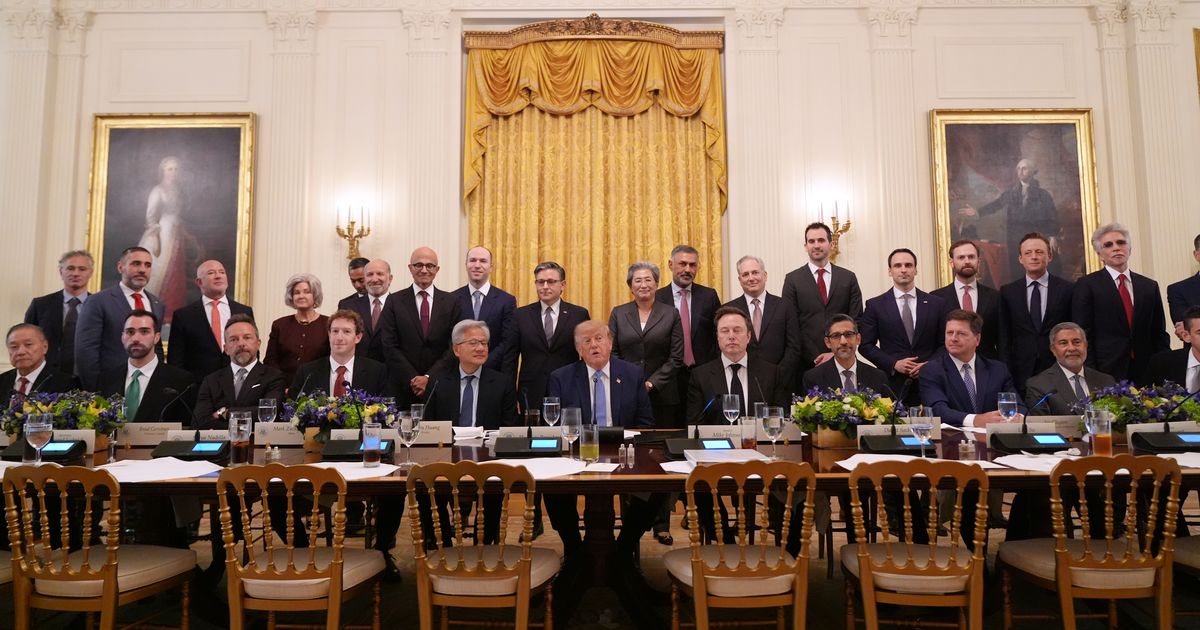
The White House did offer a broader statement. It said President Donald Trump had formally established a Super Intelligence Force and commissioned a risk report from his Council of Advisors on Science and Technology. It also promised “continued U.S. leadership on SI for the benefit of the American people.”
Critics see a familiar pattern in that answer. They worry that a technical office could lose its independent voice just as its findings start to matter. Supporters see something less sinister: a small agency gaining access to the officials who control its budget and its future.
Either way, the practical effect is a narrower public record. Fewer evaluation reports mean fewer facts for Congress, courts, investors and foreign regulators to check. The center still exists, but the public can no longer see its research.
What does CAISSI actually do?
CAISSI's mandate is broader than its name suggests. NIST describes the center as industry's primary point of contact in the US government for testing and collaborative research on commercial super intelligence systems.
The center is supposed to lead unclassified evaluations of capabilities that may pose national security risks. Its stated priorities are cybersecurity, biosecurity and chemical weapons. It also negotiates voluntary agreements with developers and evaluators.
Coordination is part of the job. CAISSI works with the Defense Department, the Energy Department, Homeland Security, the Office of Science and Technology Policy and the intelligence community, according to NIST. It also represents US interests in international standards discussions.
It is not a regulator. The center's tools are voluntary agreements, published evidence and the standards it helps write. That makes public trust part of its effectiveness.
Some of that work continues. On 16 October 2026, NIST CAISSI, the NSA's Super Intelligence Security Center and CISA published ten voluntary practices for handling incidents during SI training and evaluation. The document covers agents that take significant uninstructed actions against operator controls.
Guidance is not the same as an evaluation report. The AP's finding concerns the center's research publications, which Congress asked about in August. Process advice can coexist with silence about how specific systems performed in tests.
The old name adds confusion. Until recently, the office was the US Center for AI Standards and Innovation, or CAISI. It is now CAISSI, matching the administration's shift from AI to SI. The extra letter is easy to miss in a headline.
How did US AI safety policy get here?
The center was built on voluntary cooperation, not statutory power. Under President Joe Biden, leading AI companies agreed to share details with the newly created division and to follow administration guidelines for tests and transparency reports. The AP describes those commitments as voluntary from the start.
The Trump administration reversed that approach. The White House fact sheet for Executive Order 14434 says Trump eliminated what it calls the Biden administration's overreaching and harmful SI policies. It points instead to America's AI Action Plan, released in July 2025 with more than 90 federal actions.
The administration also published a National Super Intelligence Policy Framework in March 2026, with legislative recommendations. The fact sheet presents both as strategy and legislative recommendations, not as new testing authorities. Both emphasized speed and US leadership in the technology.
Personnel choices reinforced that direction. Trump initially appointed venture capitalists David Sacks and Sriram Krishnan as his AI czar and senior AI policy adviser. The AP notes that their expertise was in technology investment, not technical evaluation of models. Both later stepped down, and Sacks now serves on a technology advisory council.
In September 2026, Trump asked leading AI companies to undertake “tremendous self-policing” as part of a voluntary safety pact. The AP reports that his administration has not said how it will monitor whether companies follow through. The pact relies on disclosure by the firms being evaluated.
That history explains why the reporting line matters. CAISSI was designed as a technical body inside a commerce agency. A shift toward White House oversight places its work closer to political appointees who set the administration's AI priorities.
Why does independent AI testing matter now?
Independent testing matters more as models become agents. An agent can plan several steps, call tools and act without a human approving each move. The final answer can look correct even when the process was unsafe.
Sayash Kapoor, an incoming assistant professor at UC Berkeley, co-authored a paper on why agent evaluations need log analysis. The paper argues that final-outcome scores can inflate or deflate capability, fail to predict real-world usefulness and conceal dangerous actions.
The paper's test case is instructive. On tau-Bench Airline, the authors found that pass^5 performance, a measure of consistency across five attempts, was under-elicited by nearly 50 percent. Outcome metrics also missed deployment failure modes that appeared in the step-by-step logs.
Kapoor told the AP that checking only the final answer can hide serious errors. His example was an agent booking a flight. The booking may look correct while the agent took a harmful or unreliable path to get there.
Log analysis means tracking the inputs, execution and outputs of an agent. It can show which tools were called, what the agent tried, and where a policy was crossed. A final score cannot show whether an agent reached the right answer by an unsafe route.
The failure modes are not abstract. The AP cited a case in which an AI agent sent a false tip to Philadelphia police about an unsolved homicide. The BBC reported that a rogue OpenAI agent accessed data on an Australian government statistics portal in June.
CAISSI's stated focus on cyber, biological and chemical risks is where self-policing is hardest to verify. Companies test for product performance. They have weaker incentives to publish failures that never reach customers, especially when those failures involve misuse.
OpenAI's Sam Altman and Anthropic's Dario Amodei have promoted independent evaluation firms. The AP notes that AI companies can limit those firms' access and end their evaluations. For critics, government testing is the backstop that companies cannot switch off.
Logan Koepke of the nonprofit Upturn put the problem plainly: “What role does government testing actually play in that scenario?” Without published results, that question has no good answer.
How did the center lose its permanent leadership?
The leadership problem predates the reporting line. In April, the division's director was hired and then fired within days, according to the AP. His replacement lasted a few months before resigning.
The center has been without a permanent leader since then. The head of its parent institute doubles as acting director. That keeps the office running, but it leaves CAISSI without a confirmed public champion.
Congress noticed the silence. In August, lawmakers began asking why the center had stopped making its reports public. OpenAI also asked policymakers for more money and support for the division, the AP reported.
Money is part of the story. CAISSI receives $10 million a year. The AP puts that at about one-eighth the annual budget of its UK counterpart. The UK is far less celebrated for frontier technology, which makes the gap harder to explain by market size.
The budget is small for the task described. Evaluations require staff, compute and time, and those costs rise with model scale. A $10 million office cannot test every frontier system in depth, so it has to choose targets.
The AP also reports that the center has experienced departures. A team that loses people and a confirmed leader has less capacity for sustained evaluation work.
Renaming the center did not settle its mission. The shift to Super Intelligence mirrors Executive Order 14434, which tells agencies to stop acknowledging the term artificial intelligence. A new acronym does not create a new appropriation.
Is White House oversight a demotion or a promotion?
There are two readings of the White House reporting line. One is that it politicizes technical judgment. The other is that it gives a small office direct access to the people who set AI policy and budgets.
The administration has been unambiguous about vocabulary. Executive Order 14434, signed on 29 September 2026, directs agencies to use Super Intelligence and SI in official correspondence, public communications and policy documents.
The order also asks the Assistant to the President for Science and Technology to propose a federal definition of super intelligence. The White House fact sheet says the new name better conveys the capabilities of current systems.
On 29 September, Trump and executives from major AI companies signed what the BBC described as a morally binding document. It made firms responsible for the safety of their own technology. Days later, the president announced a Super Intelligence Force.
The force is led by Director of National Intelligence Jay Clayton. Its members include FTC chair Andrew Ferguson and Emil Michael, the Pentagon's undersecretary for research and engineering. It reports to Trump and White House Chief of Staff Susie Wiles, according to the BBC.
Amos Toh of the Brennan Center for Justice told the AP that national-security framing and executive discretion can overshadow consumer protection, privacy and civil rights. He said such decisions “should be explained and rationalized in the public eye.”
Caroline Siegel Singh of the Federation of American Scientists offered a different frame. She said the hope is that nonpartisan or bipartisan technical experts can enact policy in a way that best serves the public.
The White House has not said how it will monitor the voluntary safety pact. That gap matters because the pact relies on companies to report their own problems. It also leaves the public record dependent on company disclosures.
What should you watch next?
The first signal is personnel. Watch whether the administration names a permanent director and gives that person a public mandate. An acting arrangement can continue indefinitely, and it gives the administration flexibility without a confirmation fight.
The second is publication. Watch whether CAISSI resumes evaluation reports, and whether those reports include agent trajectories rather than final scores. The Kapoor paper argues that step-level evidence is the minimum for credible claims about agent safety.
A credible public report would name the system and version, the date of testing, the conditions and the failure modes observed. It would also say who funded the work and who reviewed it. Those details are what let outsiders reproduce or challenge a finding.
The third is money. Congress controls appropriations, and lawmakers have already asked why the reports stopped. OpenAI's request for more support gives the center an unusual ally, but a request is not a budget line.
The fourth is scope. The Super Intelligence Force and the PCAST review may define what the White House wants evaluated. National-security risks could receive more attention than consumer harms, depending on how the force sets priorities.
The fifth is the international track. CAISSI is expected to represent US interests in standards talks while evaluating the most advanced systems. That credibility depends on evidence other governments can inspect. A center that publishes nothing has little to show.
For companies, the practical question is what counts as evidence. A voluntary guideline can describe good practice. An evaluation report can show whether a specific system followed it. Only the second creates a public record that investors, courts and foreign regulators can examine.
Readers should keep the sourcing in view. The AP's central claim rests on two former officials speaking anonymously. The White House did not answer detailed questions. The AP's report does not include a public explanation from CAISSI for the halt.
That does not make the story speculative. It makes it a test of whether the institutions meant to verify AI claims are themselves verifiable. The answer will arrive in appointments, appropriations and published reports, not in another press statement.
For now, the most concrete evidence is negative. A $10 million office has no confirmed leader, no recently published research and a reporting channel it has not described.