



Reported by BBC Science
Climate change is increasing the frequency and intensity of extreme heat events
Human activities are causing world temperatures to rise, posing serious threats to people and nature.
Things are likely to worsen in the coming decades, but scientists argue urgent action can still limit the worst effects of climate change.
More from the original report
Climate change is the long-term shift in the Earth's average temperatures and weather conditions.
The world has been rapidly warming for around a century, causing weather patterns to change.
Since the 1980s, each decade has been warmer than the previous one, the Met Office says.
2024 was Earth's hottest year on record , with climate change mainly responsible for the high temperatures.
It was also the first calendar year to surpass 1.5C of warming compared to "pre-industrial" levels of the late 1800s, according to the Copernicus climate service , external .
Temperatures remained high in 2025 , despite a slight cooling from a natural weather pattern called La Niña.
The opposite El Niño pattern , combined with climate change, makes it likely that 2026 will also rank among the hottest years ever recorded.
The climate has changed naturally throughout the Earth's history.
But natural causes cannot explain the particularly rapid warming seen over the last century, according to the UN's climate body, the Intergovernmental Panel on Climate Change (IPCC).
This has been without doubt caused by human activities, especially the widespread use of fossil fuels - coal, oil and gas - in homes, factories and transport systems.
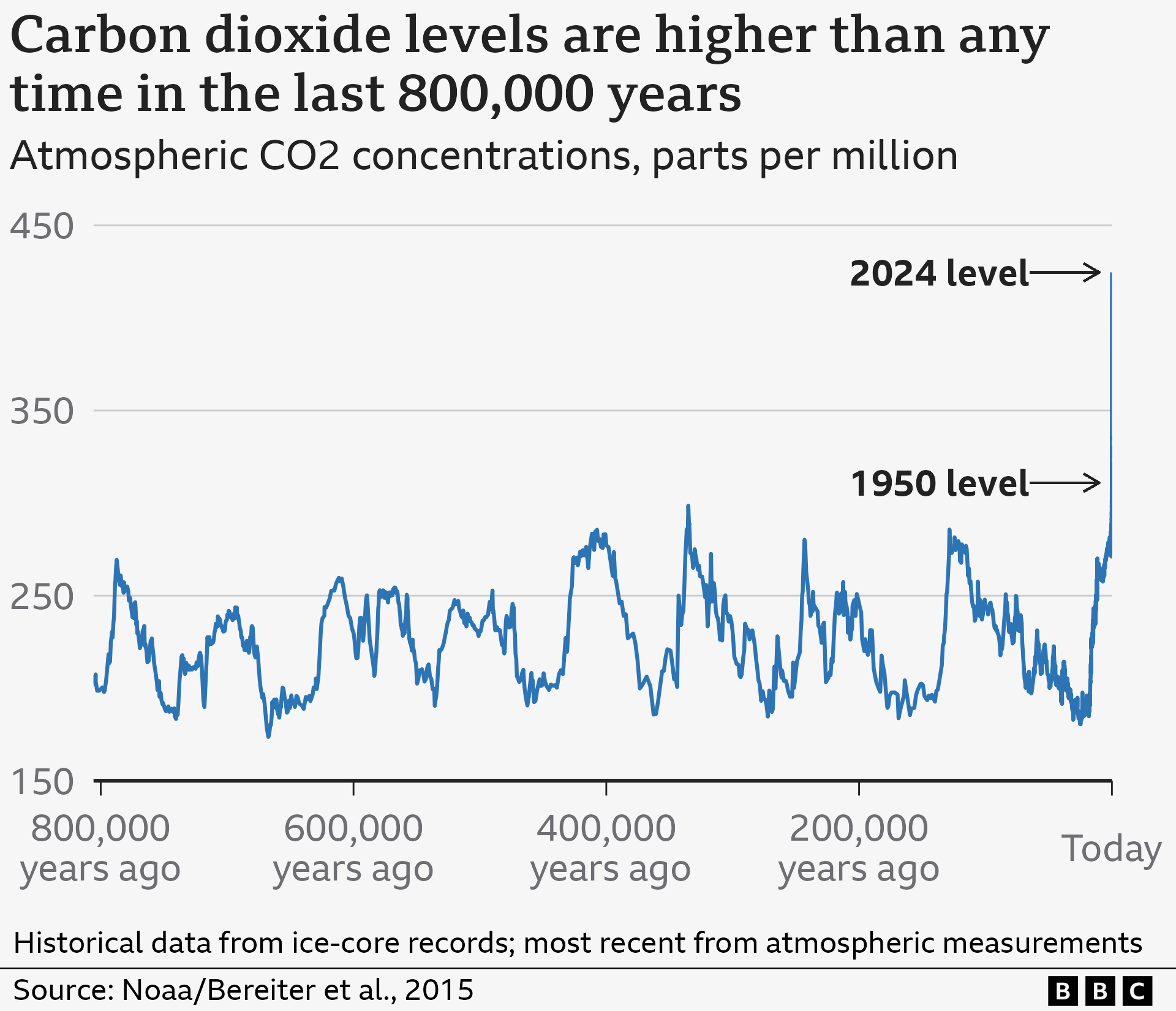
When fossil fuels burn, they release greenhouse gases - mostly carbon dioxide (CO2). This CO2 acts like a blanket, trapping extra energy in the atmosphere near the Earth's surface. This causes the planet to heat up.
Since the start of the Industrial Revolution - when humans began burning large amounts of fossil fuels - the level of CO2 in the atmosphere has risen by more than 50% .
The CO2 released from burning fossil fuels , external has a distinctive chemical fingerprint. This matches the type of CO2 increasingly found in the atmosphere.
more frequent and intense extreme weather , such as heatwaves…