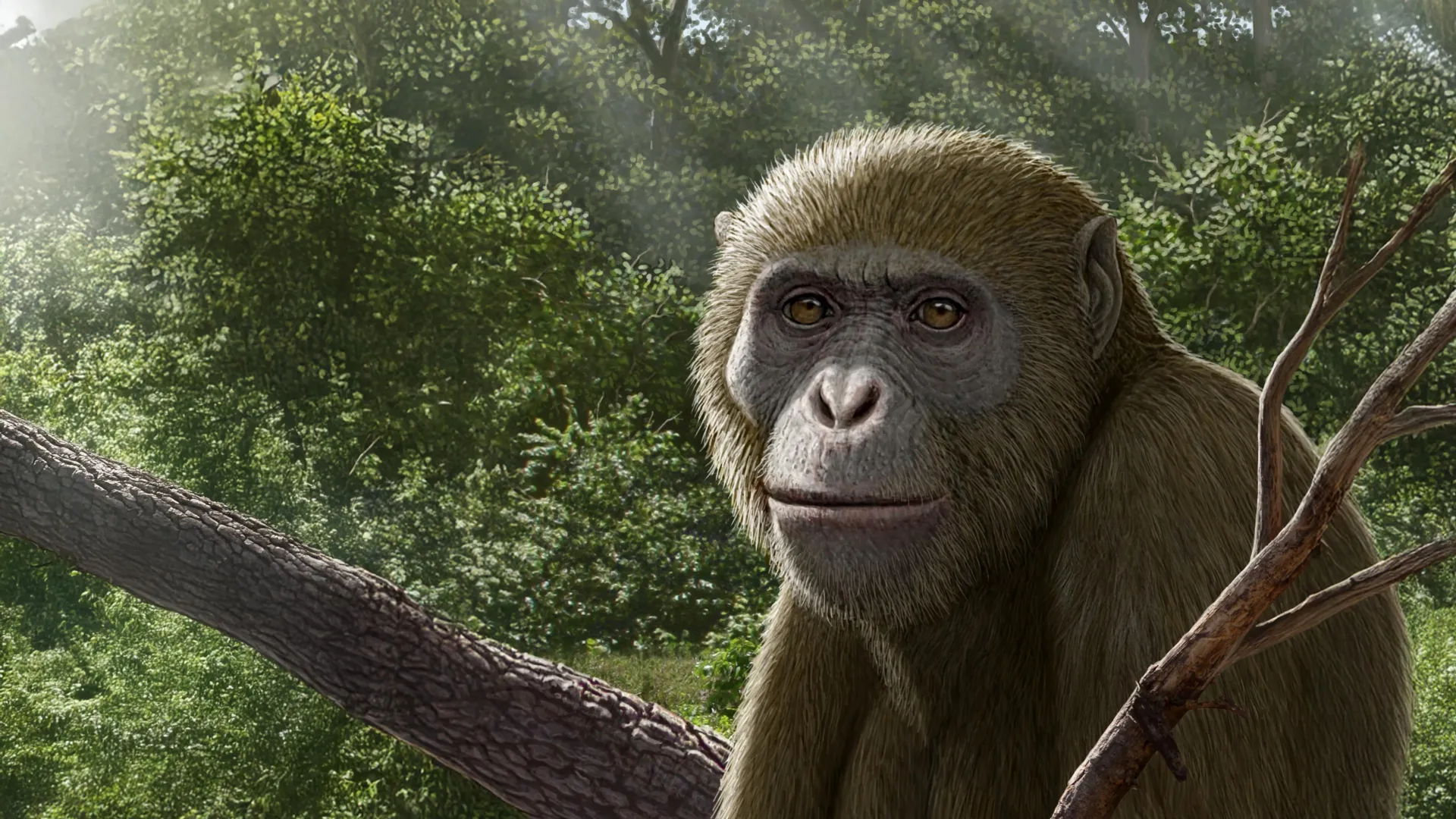
Reported by ScienceDaily
An ancient ape fossil discovered in Egypt is challenging a long-standing theory about where the ancestors of modern apes, including humans, first evolved. The remarkable find suggests that a crucial chapter of our evolutionary history may have unfolded much farther north than scientists previously believed.
The newly identified species, named Masripithecus moghraensis , lived approximately 17 to 18 million years ago during the Early Miocene. Its fossilized remains were recovered from Wadi Moghra in northern Egypt, making it the first definitive fossil ape ever discovered in North Africa.
The discovery, described in a study published March 26, 2026, in Science , comes from an international team at the Mansoura University Vertebrate Paleontology Center (Egypt) and the University of Southern California (USA). Their findings suggest that northern Africa and the Middle East may have played a central role in the emergence of the evolutionary lineage that eventually gave rise to all living apes.
More from the original report
For decades, scientists believed that early apes and their close relatives were concentrated primarily in regions farther south in Africa. Fossil sites in North Africa had produced remains of ancient monkeys from the Early Miocene, but researchers had never found definitive evidence of apes from the same period.
That gap helped shape prevailing theories about ape evolution. Although younger ape fossils have been discovered across Africa, Europe, and Asia, their evolutionary relationships and geographic origins remain subjects of scientific debate.
The newly discovered Egyptian fossil may help explain what was missing from this picture.
"We spent five years searching for this kind of fossil because, when we look closely at the early ape family tree, it becomes clear that something is missing -- and North Africa holds that missing piece," said Hesham Sallam, a paleontologist at Mansoura University and senior author of the study.
The discovery is especially important for understanding the origins of crown Hominoidea, the evolutionary group that includes the last common ancestor of all living apes and its descendants. Today, that group encompasses gibbons, orangutans, gorillas, chimpanzees, and humans.
Scientists suspect that the incomplete geographic distribution of ancient fossils has obscured important details about when…