Reported by NPR Health
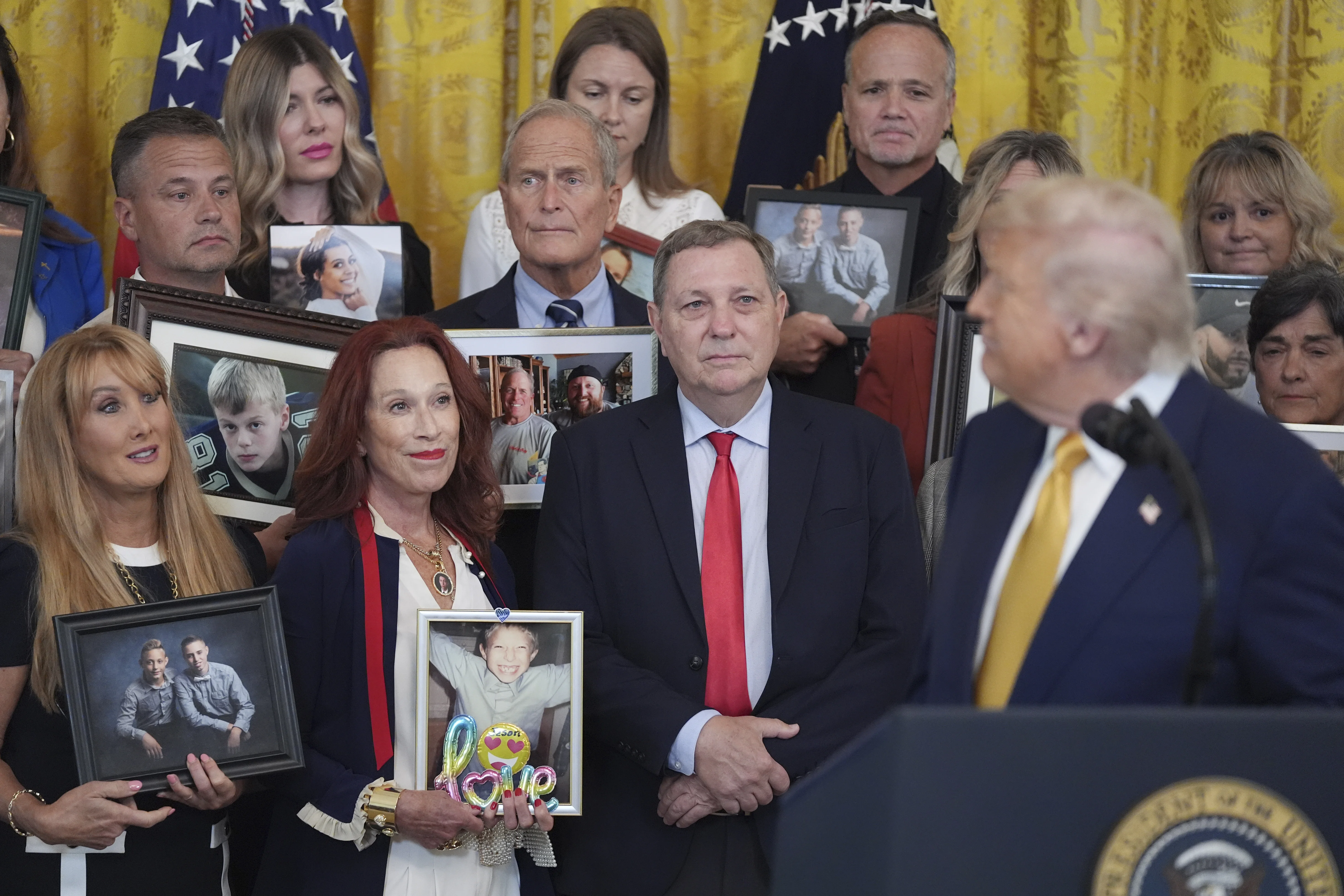
Families look on as President Donald Trump speaks during a ceremony to sign the "Halt All Lethal Trafficking of Fentanyl Act" in the East Room of the White House on July 16, 2025. Evan Vucci/AP hide caption
When the White House announced big improvements in the number of people dying from fatal drug overdoses earlier this week, officials pointed to hopeful new data from the Centers for Disease Control and Prevention showing U.S. drug deaths have plunged to their lowest level in roughly a decade, saving nearly 50,000 lives each year.
But leading drug policy researchers say the White House statement also made misleading claims about the timing and cause of the remarkable public health success when it said that gains occurred primarily over the last 18 months due to policies enacted under President Trump's leadership.
More from the original report
"The historic decline in drug overdose deaths demonstrates that America is unequivocally winning the fight against illicit drugs," White House Office of National Drug Control Policy director Sara Carter said in a statement .
Carter credited heightened border security under Trump and claims of success dismantling "narco-terrorist" organizations for the recovery. "Critically, this represents a an approximately 41.5% decrease in total drug overdose deaths compared to the peak under the previous administration," the statement said.
What the White House failed to disclose is that declines in overdose fatalities began much earlier, under the Biden administration, with most of the gains occurring before Trump returned to office.
"Since the spring of 2023, we have seen a steady decline in overdose deaths," said Vanda Felbab-Brown, a drug policy expert at the Brookings Institution. "The fact that it has been sustained is very important."
According to CDC data, reductions in drug deaths began in 2023 and have continued steadily for at least 39 consecutive months — not 18 months as the ONDCP statement said. By the time Biden left office, fatal overdoses had already dropped by roughly one-third, an improvement described by addiction experts at the time as unprecedented.
Nabarun Dasgupta, a street drug researcher at the University of North Carolina at Chapel Hill, was one of…