Reported by ScienceDaily
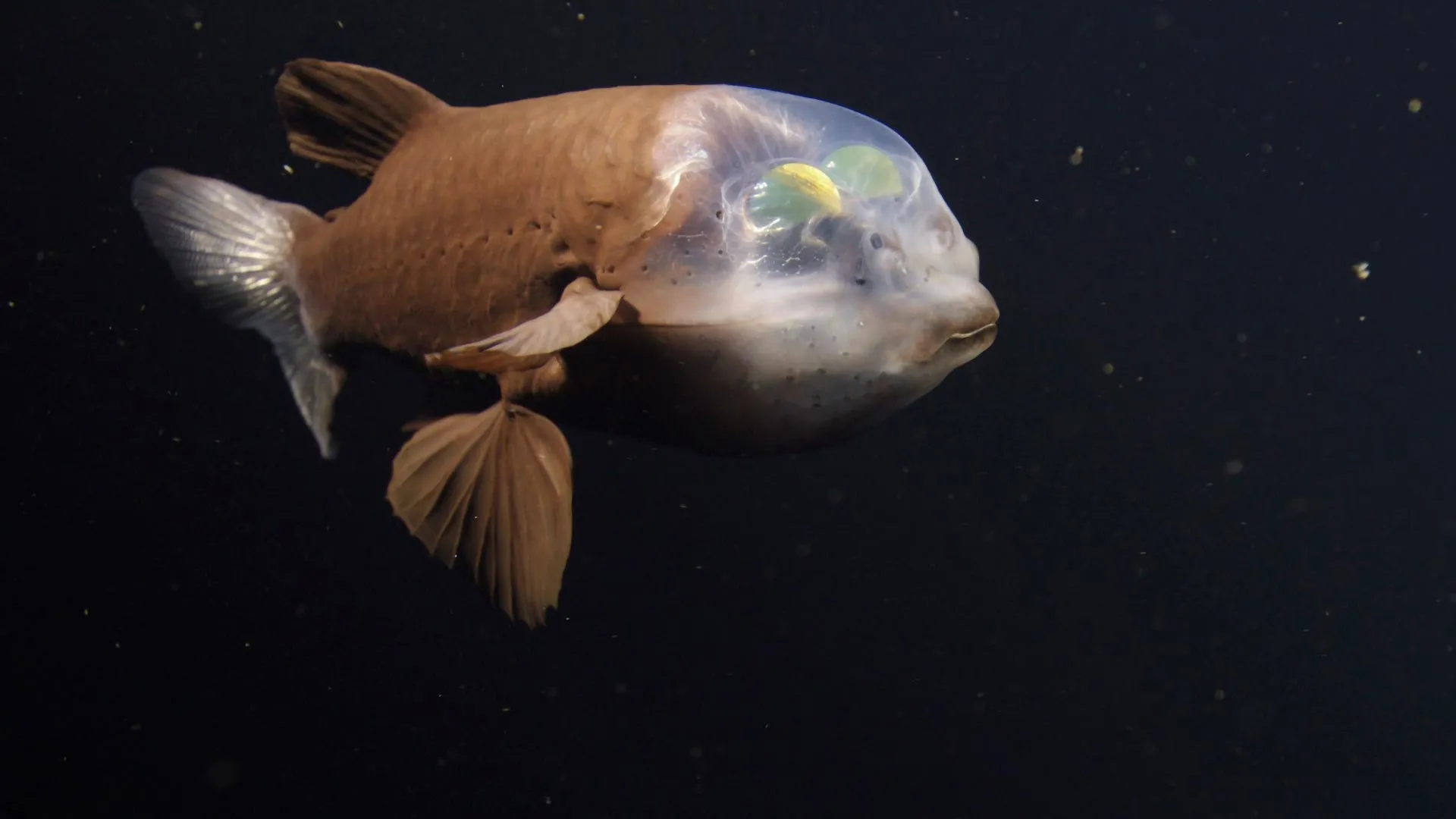
A rare encounter nearly 2,000 feet beneath the ocean's surface gave scientists an extraordinary opportunity to film one of the deep sea's most unusual creatures. Researchers from the Monterey Bay Aquarium Research Institute (MBARI) spotted a barreleye fish ( Macropinna microstoma ), a mysterious species known for its transparent head and remarkable eyes that can rotate to track prey.
The discovery occurred during an expedition aboard the research vessel David Packard . It marked only the eleventh time MBARI scientists have encountered this elusive fish during nearly four decades of ocean exploration.
Members of MBARI's Biodiversity and Biooptics Team were investigating marine life approximately 90 kilometers (55 miles) offshore when they spotted the fish about 600 meters (1,970 feet) below the surface. Using the remotely operated vehicle (ROV) Doc Ricketts , the researchers were filming and collecting deep-sea organisms when the unexpected visitor appeared.
More from the original report
"Seeing a barreleye fish is a rare treat. Crew from across the ship joined the science team in the control room, mesmerized by this remarkable animal. Deep-sea animals capture the imagination, creating wonder and awe that we hope will inspire stewardship of the largest living space on Earth," said Senior Scientist Steven Haddock.
The discovery was an unexpected highlight of the eight-day Diving Deep for Delicate Drifters expedition. Haddock and his colleagues had primarily been investigating gelatinous marine animals, including jellyfish, siphonophores, and ctenophores, also known as comb jellies. Their research seeks to understand how these delicate organisms have evolved to survive in the open ocean at great depths.
To investigate life throughout the water column, the team combined blue-water scuba dives near the surface with remotely operated vehicle surveys hundreds of meters below. These complementary approaches allowed researchers to observe and collect animals living in very different parts of the ocean.
The barreleye appeared just as the day's underwater operations were coming to an end. The ROV pilots were "flying" Doc Ricketts toward the surface for recovery when Research Specialist Shannon Johnson noticed the unusual fish and immediately asked them to stop.
Most of the scientists had already moved to the ship's wet lab, where…