Reported by NPR World
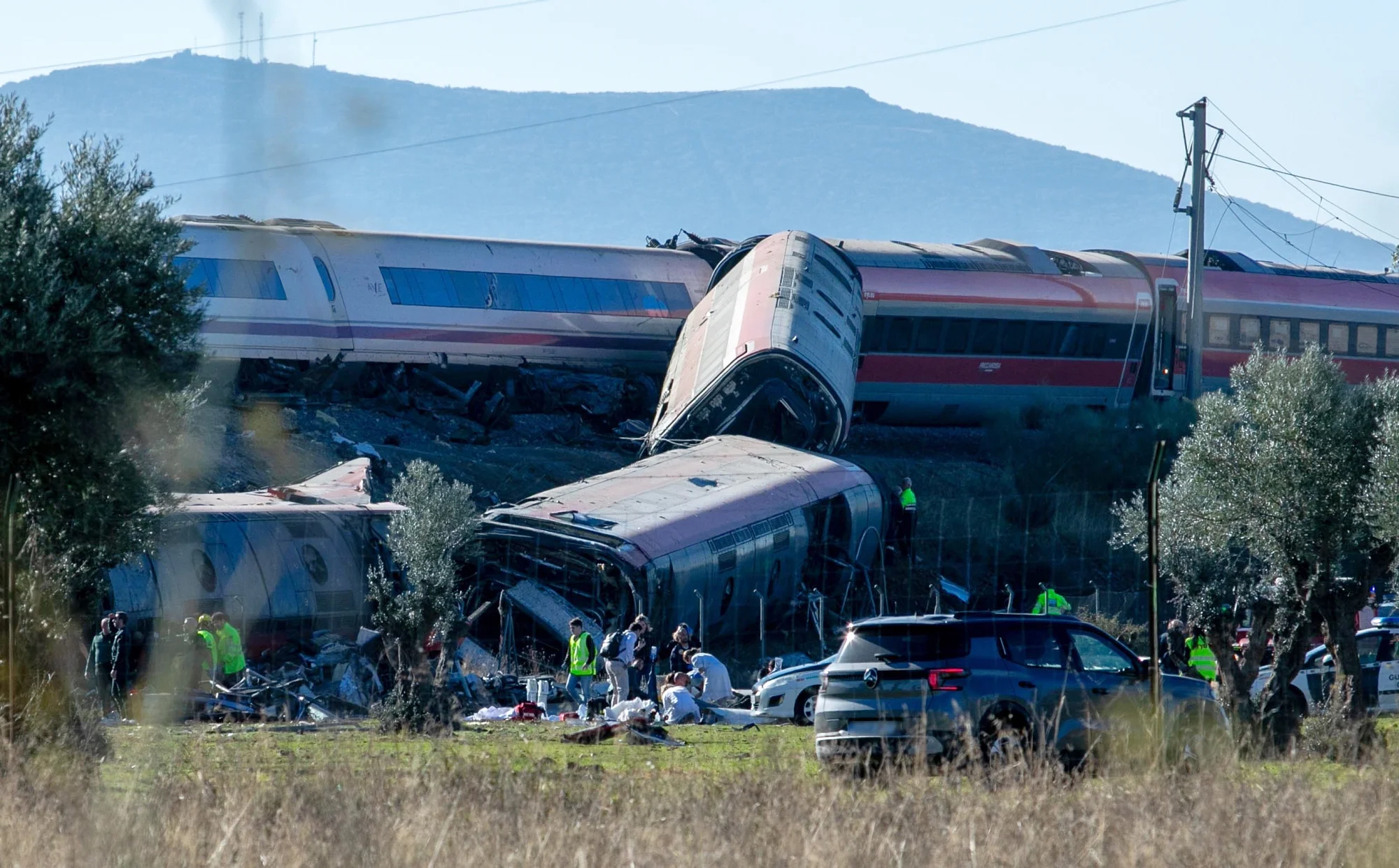
Emergency services attend to the victims at the scene of a collision between two trains in Urda, Spain, on Wednesday. Juanma Jiménez/Europa Press via AP hide caption
URDA, Spain — One high-speed Spanish train slammed into another that had stopped on the tracks Wednesday, killing at least 68 people and shredding carriages in the country's second deadly rail collision this year.
The regional government for Castilla La Mancha confirmed the death toll and said another 58 people needed medical treatment in hospital. Rescue workers continue to search in the wreckage for survivors and bodies.
More from the original report
The accident comes with memories still fresh of another crash between high-speed trains in southern Spain in January involving trains from the same two companies.
Spain's rail system operator ADIF said the crash occurred Wednesday morning in the province of Toledo, involving two high-speed trains carrying hundreds of passengers and heading in the same direction from the capital Madrid to Seville in southwestern Spain.
One train, run by the state-owned RENFE company, ran into the tail of the other train owned by private company IRYO that had stopped, knocking two of its cars off the track in a rural area between two villages.
This framegrab taken from a video provided by Spain's Guardia Civil shows an aerial view of carriages and first responders on the site of a collision between two trains in Urda, Spain, Wednesday. Guardia Civil via AP hide caption
David Gómez, a construction worker, was working with his brother and another colleague nearby when they heard the crash and ran to help, he told the newspaper El País.
"People were trying to get out through the windows ... We cut through some fences to access the area and treated people with the first-aid kits we had brought," until emergency services arrived, he said. "As I was trying to pull a young woman out, there was a piece of a leg."
Rail service was suspended between Madrid, Ciudad Real and Andalusia.
Until this year, there had been no fatal crash on Spain's dedicated high-speed lines since the network opened in 1992. It was a…