Reported by NPR Health
Dr. Mara Gordon, a family physician in Camden, N.J., answers reader health questions monthly. Send in your question to: thrive@npr.org.
Question: My doctor has started recording our office visits with an artificial intelligence scribe. She says it helps write notes in my medical record. I said yes when she asked if I was comfortable with it, but in hindsight I feel a little freaked out. Should I be worried about AI listening in on my private medical conversations?
Answer: AI scribes are all the rage in medicine right now. Doctors are using them to take notes everywhere from the gynecologist's office to the emergency room.
More from the original report
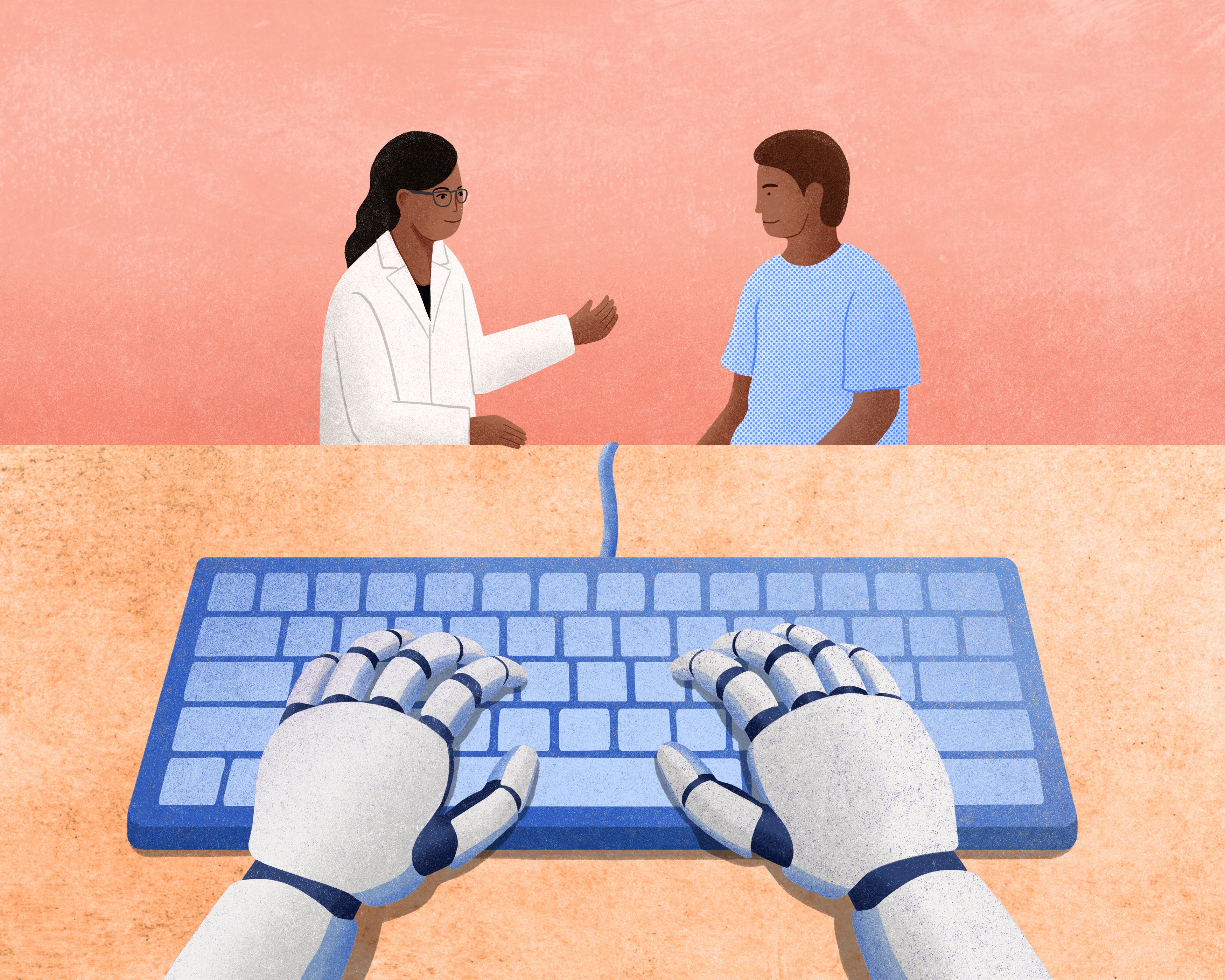
I admit I've been an eager adopter in my own primary care practice. I use an app on my phone that records my conversation with a patient and then uses AI to write a preliminary summary for the medical record.
It saves me time . But more importantly, I like using it because it helps me focus more fully on my patient. When I use the AI scribe, I don't have to talk and take notes at the same time – I can actually make eye contact with my patient rather than staring at the computer screen.
But I totally get why people feel uncomfortable with the technology. I share my patients' concerns about privacy and how AI scribes might impact the doctor-patient relationship.
I also worry that corporate health systems will put pressure on doctors to use any time we save with an AI scribe to squeeze in even more patients.
And like many people, I worry that artificial intelligence might one day put me out of a job!
When I use an AI scribe during a primary care visit, I first ask the patient if they're comfortable using the service. If the patient says yes, I start recording using an app on my smartphone. I usually set it down on the desk in the exam room.
The scribe uses a technology called "automatic speech recognition" which records our conversation and automatically distinguishes between the doctor's and patient's voices. (Sometimes, when the patient has…