Reported by ScienceDaily
An enormous number of invisible particles are constantly traveling through Earth, passing through our bodies and continuing into space as though almost nothing stands in their way. Known as neutrinos, these mysterious particles are among the most difficult objects in the universe to detect. Yet scientists are finding ways to capture evidence of their passage, opening new opportunities to investigate the cosmos and its most extreme environments.
Neutrino research has played a remarkable role in modern physics. Discoveries involving these particles have contributed to five Nobel Prizes in Physics. This year, physicist Francis Halzen received the prestigious award "for decisive contributions to the IceCube Neutrino Observatory and the discovery of high-energy neutrinos of astrophysical origin."
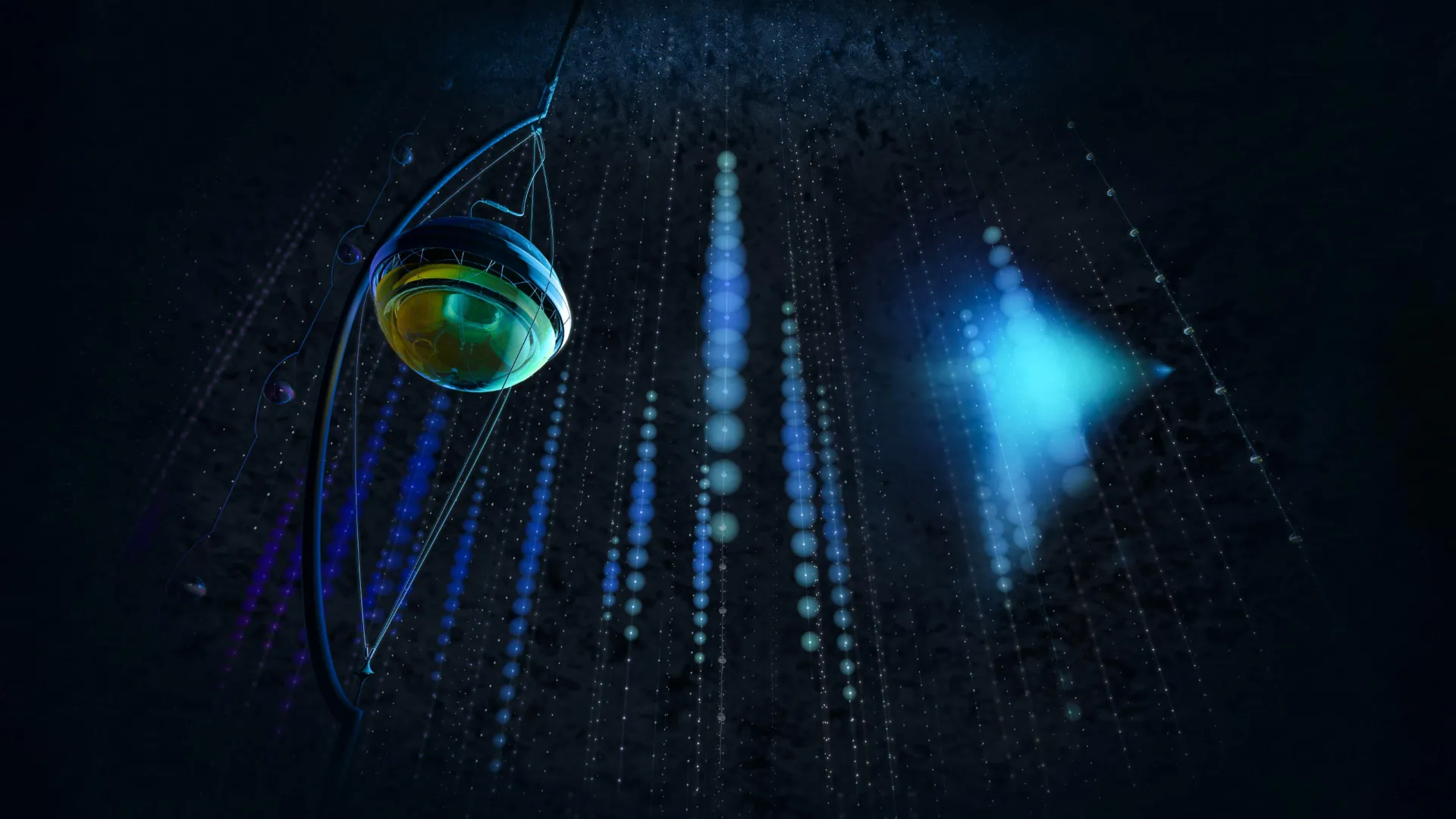
George Fuller, a Distinguished Professor of Physics at the University of California San Diego, has studied nuclear physics, particle astrophysics, and cosmology for decades. He also collaborated with Halzen on an early scientific paper about IceCube . His expertise helps explain what makes neutrinos so unusual and why scientists built an enormous observatory deep within the Antarctic ice to study them.
More from the original report
Neutrinos belong to a group known as elementary particles, which scientists believe have no smaller components. They come in three varieties, called electron, muon, and tau neutrinos. Unlike electrically charged particles, neutrinos have no electric charge. They do have mass, but it is extraordinarily small, potentially around 10 million times less than the mass of an electron. Their exact masses remain unknown, as does the mechanism responsible for producing them.
Another remarkable characteristic is their ability to travel through matter with almost no resistance. Because neutrinos interact so rarely with other particles, they can cross vast distances at speeds approaching the speed of light.
Neutrinos originate from many different places, including the Sun, distant regions of space, and sources scientists have yet to identify. They are also astonishingly abundant. Estimates suggest the universe contains roughly 10 89 neutrinos, equivalent to approximately one billion for every atom in existence.
"Neutrinos are truly ghost-like particles," stated Fuller. "It's hard to stop them. It's hard to catch them. How do we even know they exist or where…