Reported by NPR World
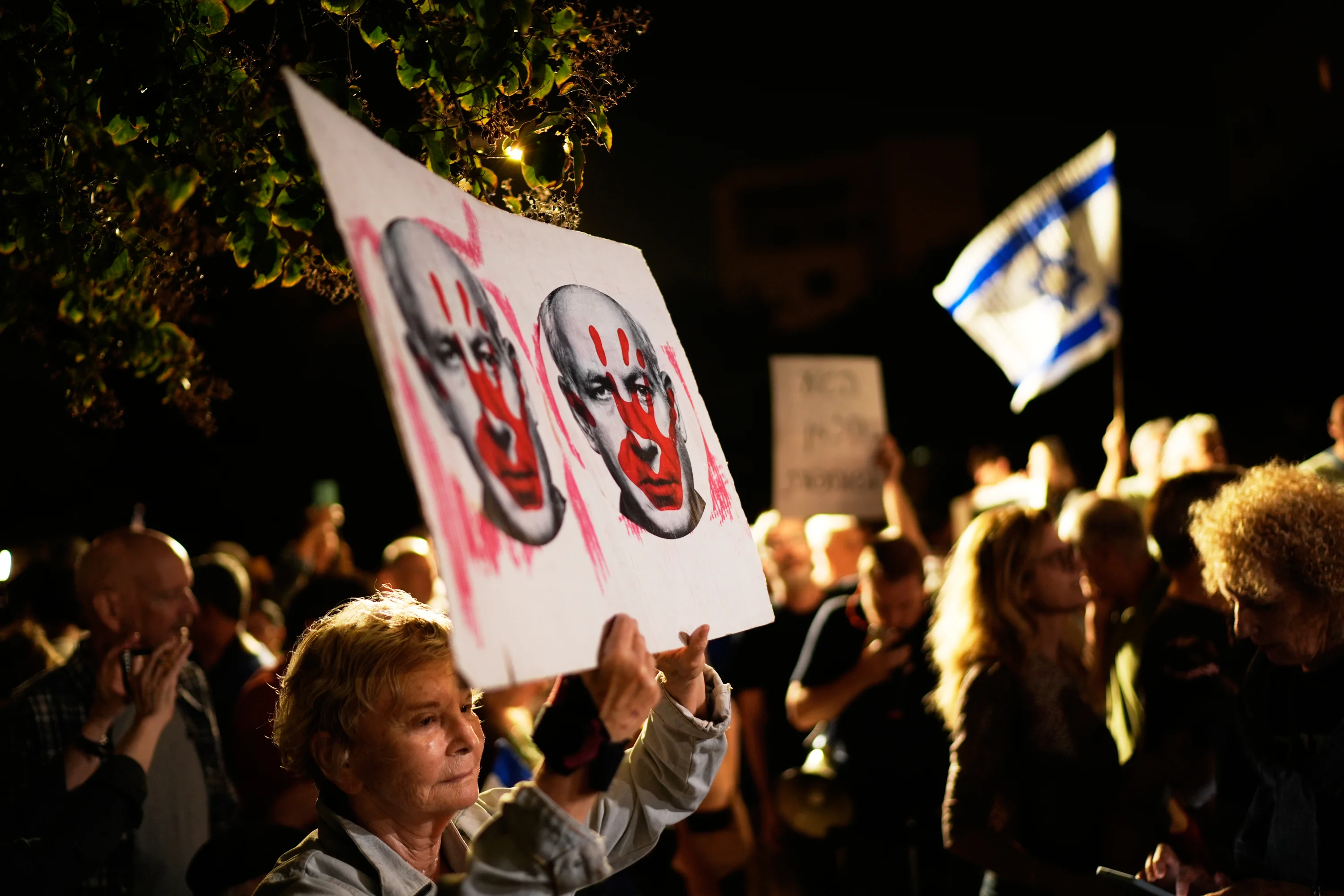
Israeli left-wing activists call for a government with Arab parties outside Yashar party leader Gadi Eisenkot's residence in Herzliya, Israel, Thursday. David Goldman/AP hide caption
TEL AVIV, Israel — Israel's election has produced a political deadlock, leaving neither Prime Minister Benjamin Netanyahu nor his main challenger, Gadi Eisenkot, with a clear path to forming a government.
The final results give opposition parties more seats than Netanyahu's right-wing bloc. But Eisenkot, a center-right former military chief of staff, cannot reach a governing majority without the support of predominantly Arab parties — an option Eisenkot's allies repeatedly ruled out during the campaign.
More from the original report
Netanyahu's Likud party received the most votes, but his bloc also falls short of a majority. The coalition of right-wing, far-right and ultra-Orthodox parties that supported his previous government does not control the 61 seats required for a majority in Israel's 120-seat parliament, known as the Knesset.
Here is what happens next and the possible paths to a new Israeli government.
In the next few days, Israel's president will consult with the leaders of every party elected to parliament. Each party will recommend the party leader it believes should be given the first opportunity to form a coalition.
The president is not required to choose the leader of the largest party. Instead, the president selects the candidate considered most likely to assemble a governing coalition.
That candidate is given 28 days to secure the support of at least 61 lawmakers. The president may grant an extension of up to 14 days. If the effort fails, the president can give another candidate an opportunity to form a government.
The process could take weeks, or months, or end without anyone assembling a majority.
Based on the election results, Eisenkot appears more likely than Netanyahu to receive the largest number of recommendations from newly elected lawmakers.
But that does not mean Eisenkot — a relative newcomer to politics — will be able to form a coalition. His political bloc lacks a majority without the Arab-led parties and he has repeatedly promised not to form a coalition that depends on their support. They represent…