Reported by ScienceDaily
Scientists have spent decades trying to control how tiny particles connect to form advanced materials. Now, researchers at MIT and their collaborators have discovered that doing the exact opposite of what was previously believed necessary can produce remarkable results.
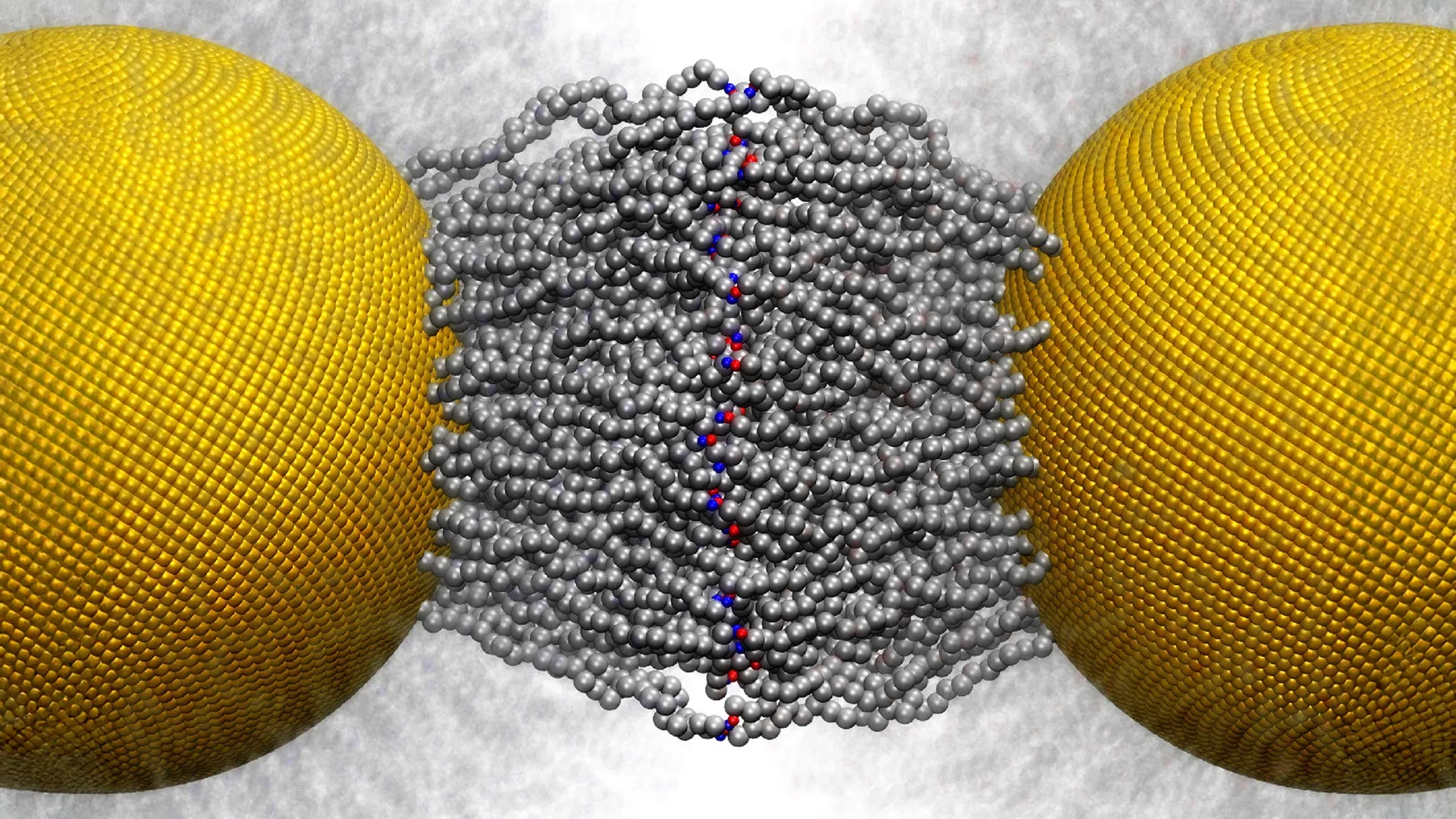
Instead of relying on rigid molecular connections to hold nanoparticles in carefully planned arrangements, the team developed extremely flexible connectors that bend and adjust as particles come together. This unexpected strategy gives scientists a new way to control how nanoparticles organize themselves, allowing them to create crystal structures that have never been observed before.
The discovery could help overcome a major obstacle in materials science and open new possibilities for creating substances with precisely engineered properties. Potential applications include electronics, medicine, energy technologies, agriculture, and chemical manufacturing.
More from the original report
The findings, described in a paper that will appear in Nature Materials , demonstrate how the flexibility and electrical charges of molecular connectors can determine the structures that nanoparticles form.
"People are interested in nanoparticle superlattices because of the promise of building designer materials where you have more say in what types of structures they can actually build into," says Rob Macfarlane, the Richard P. Simmons (1953) Professor in Metallurgy in MIT's Department of Materials Science and Engineering. "This is a new approach in nanoparticle assembly that hasn't been investigated before. It's exciting to have a new tool that is so counterintuitive. It's the exact opposite of what the dogma has been for 20 years: that you need to make connector ligands rigid, and any deviation causes assembly to fail. We showed if you just crank it all the way to the opposite extreme, it works just as well."
The research team also included MIT PhD candidate Nicholas Sbalbi, University of Delaware doctoral student Stephen Kronenberger, MIT undergraduate Hana Shinzawa, Matthew Ye PhD '26, and Arthi Jayaraman, a former professor at the University of Delaware.
At the heart of the discovery is a basic principle of materials science: The way a material's smallest components are arranged determines how that material behaves.
"That means if you know what your building blocks are and how they're…