Reported by ScienceDaily
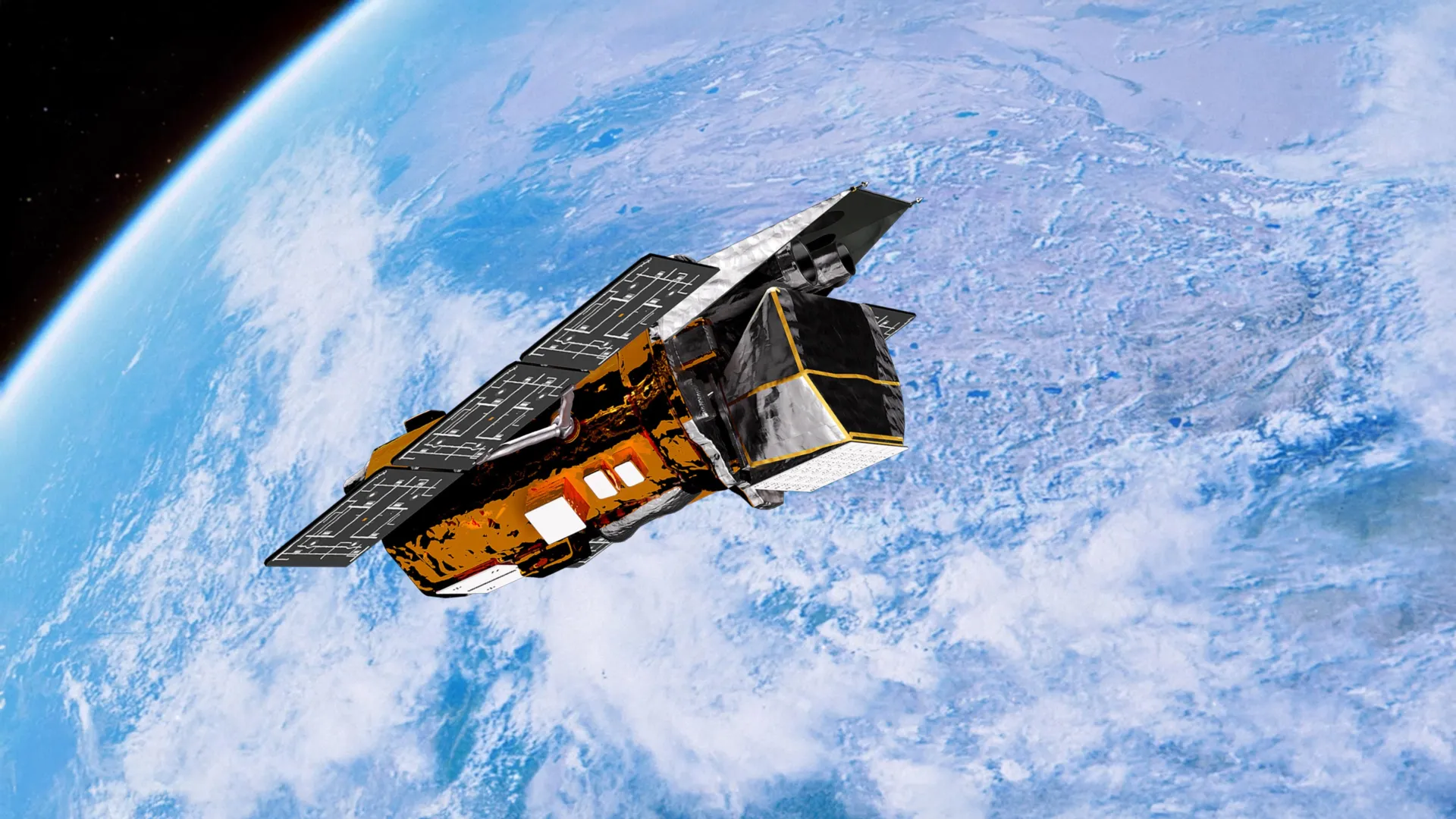
NASA's Neil Gehrels Swift Observatory has returned to Earth after spending nearly 22 years in space, bringing an extraordinary era of astronomical discovery to a close. The spacecraft re-entered Earth's atmosphere on Wednesday, ending a mission that lasted more than ten times longer than originally planned.
Launched in 2004, Swift was a pioneering space observatory equipped with three telescopes designed to study some of the most powerful explosions in the universe. Its instruments could detect different types of light, allowing scientists to investigate energetic cosmic events that would be difficult to understand using a single telescope.
The U.S. Space Force confirmed that Swift entered the atmosphere at 7:39 a.m. EST on Wednesday above North Sumatra, Indonesia. The reported location was approximately 3.4 degrees north latitude and 98.6 degrees east longitude.
More from the original report
NASA anticipated that most of the spacecraft would burn up as it plunged through the atmosphere. However, officials acknowledged that some components might have survived the intense heat of re-entry.
Swift was originally developed to investigate gamma-ray bursts, extraordinarily powerful flashes of high-energy radiation associated with some of the most extreme events in the cosmos. These bursts can occur when massive stars collapse or when certain compact objects, such as neutron stars, merge.
Although NASA initially planned for Swift to operate for just two years, the observatory continued making scientific contributions for more than two decades.
One of its most important capabilities was its ability to respond quickly to sudden cosmic events. When Swift detected an energetic outburst, it could rapidly redirect its telescopes toward the source and notify observatories around the world. This coordinated approach allowed astronomers to study brief astronomical phenomena before they faded from view.
Swift also observed multiple wavelengths of light, giving researchers different ways to examine the same event and better understand the physical processes behind it.
Over its remarkably long lifetime, Swift's scientific contributions expanded far beyond its original focus on gamma-ray bursts.
The observatory helped astronomers investigate active galaxies powered by supermassive black holes, stars that produce powerful X-ray flares, and supernovae, the enormous explosions that mark the deaths of certain stars.
Its…