Reported by ScienceDaily
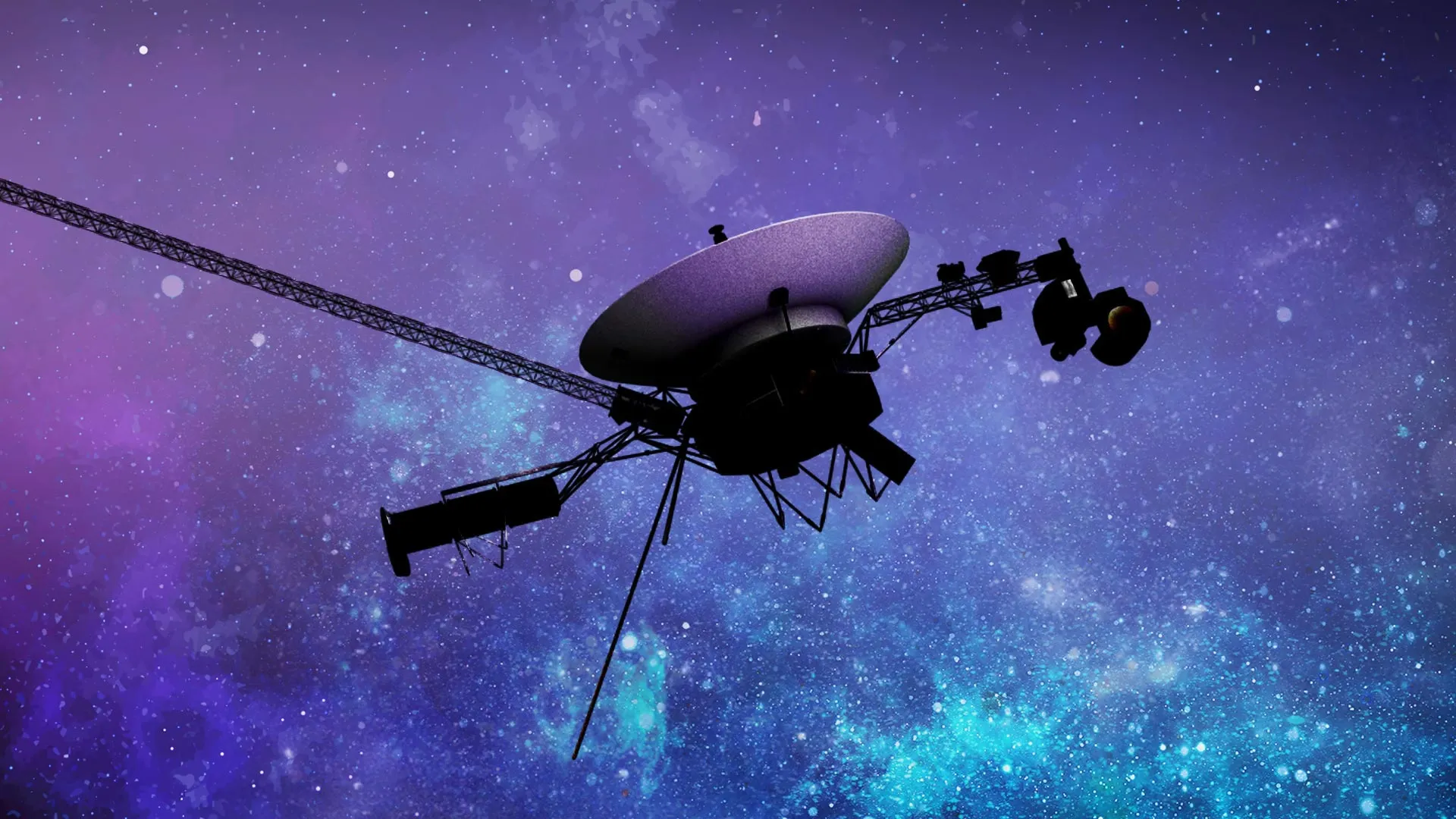
Nearly 50 years after leaving Earth, NASA's Voyager 1 is approaching an extraordinary milestone that will highlight just how far humanity's most distant spacecraft has traveled. But keeping the aging explorer operational has become an increasingly difficult challenge as its power supply slowly fades.
NASA engineers recently achieved two important developments in their effort to extend the mission. In September, they completed a complex energy conservation project designed to preserve the spacecraft's remaining scientific capabilities. Then, on October 20, Voyager 1 unexpectedly resumed communication with Earth after a mysterious 48-hour interruption.
In early September, the Voyager team successfully replaced three devices aboard Voyager 1 with alternatives that consume less electricity. The carefully coordinated operation, nicknamed the "Big Bang," took months to prepare and was completed approximately six weeks after engineers carried out an identical procedure on Voyager 2 .
More from the original report
The upgrade is expected to extend the operating lives of Voyager 1's remaining scientific instruments, allowing the spacecraft to continue collecting valuable information from interstellar space longer than previously expected.
Both Voyager spacecraft generate electricity using radioisotope thermoelectric generators. These systems produce electrical power from the heat released as plutonium undergoes radioactive decay. As that process continues, the spacecraft gradually lose generating capacity, with each probe experiencing a decline of approximately 4 watts annually.
After almost five decades in space, that steady loss has left engineers with very little power to spare. To keep the missions operating, NASA has progressively shut down equipment that is no longer essential.
The Big Bang presented an especially difficult engineering challenge because all three replacements had to happen simultaneously. The six devices involved help maintain temperatures inside the spacecraft despite the extreme cold of space. Replacing the three original devices together was necessary to reduce electricity consumption while preserving the proper distribution of heat throughout Voyager 1.
Power limitations have already forced NASA to deactivate two of Voyager 1's scientific instruments in recent years. When the spacecraft launched in 1977, it carried 10 instruments dedicated to scientific research. Several were shut down after Voyager completed its encounters with the outer planets, while others remained active…