Reported by ScienceDaily
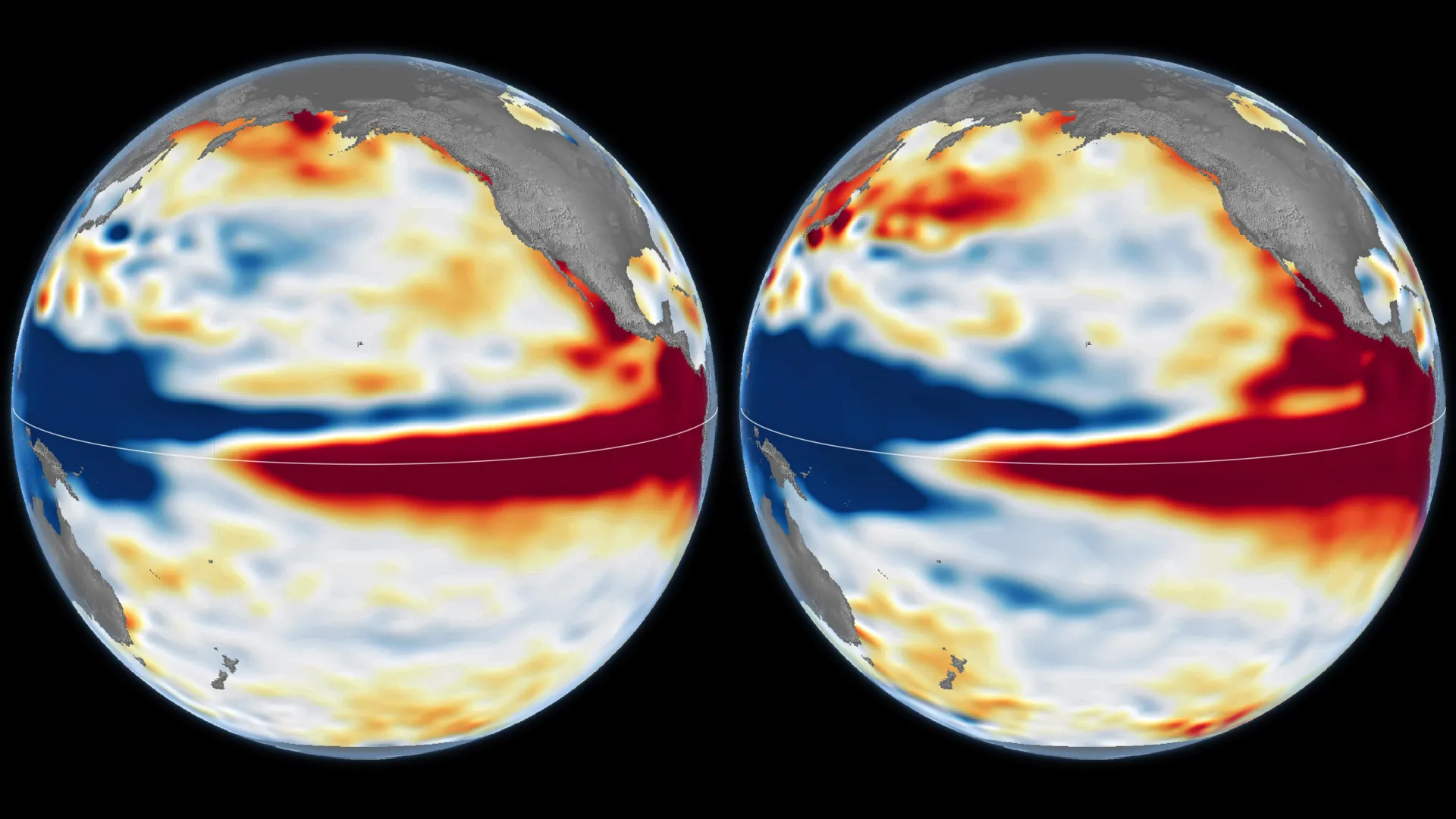
NASA scientists are tracking an exceptionally powerful El Niño that could grow even larger than the historic 1997 event, which brought extreme weather to regions around the world. Using 35 years of satellite observations, researchers can now compare the rapidly developing 2026 El Niño with some of the strongest events ever recorded, revealing remarkable similarities and important differences.
El Niño is a recurring climate phenomenon that typically develops every two to seven years, when ocean temperatures rise above normal across parts of the equatorial Pacific. These changes can disrupt atmospheric circulation and alter weather patterns far beyond the Pacific Ocean.
Two of the most powerful recent El Niño events occurred in 1997-98 and 2015-16. Both had widespread consequences, including destructive fires in Indonesia and the Amazon, severe drought and crop failures in southern Africa, and intense rainfall and coastal flooding in Southern California. Now, the 2026 El Niño is emerging as another major event, with satellite data suggesting it could rival those historic episodes.
More from the original report
The development of El Niño depends on a complex interaction between ocean temperatures and atmospheric winds.
Under normal conditions, steady trade winds push warm surface water toward the western Pacific Ocean. This causes warm water to accumulate in the west, where the ocean surface sits slightly higher than it does farther east.
When the trade winds weaken, some of that warm water begins moving eastward across the Pacific. The shift can weaken the winds even further or occasionally cause them to reverse direction. This allows additional warm water to spread east, reinforcing the process and raising ocean temperatures and sea levels across the central and eastern Pacific.
Although the underlying process is similar each time, no two El Niño events develop in exactly the same way. Their behavior depends partly on where the warmest water accumulates and how the atmosphere responds to the changing ocean conditions.
"The search for the 'typical' El Niño is very elusive," said Josh Willis, project scientist for sea level missions at NASA's Jet Propulsion Laboratory (JPL). "They're all different in terms of where they land and how their impacts play out."