Reported by ScienceDaily
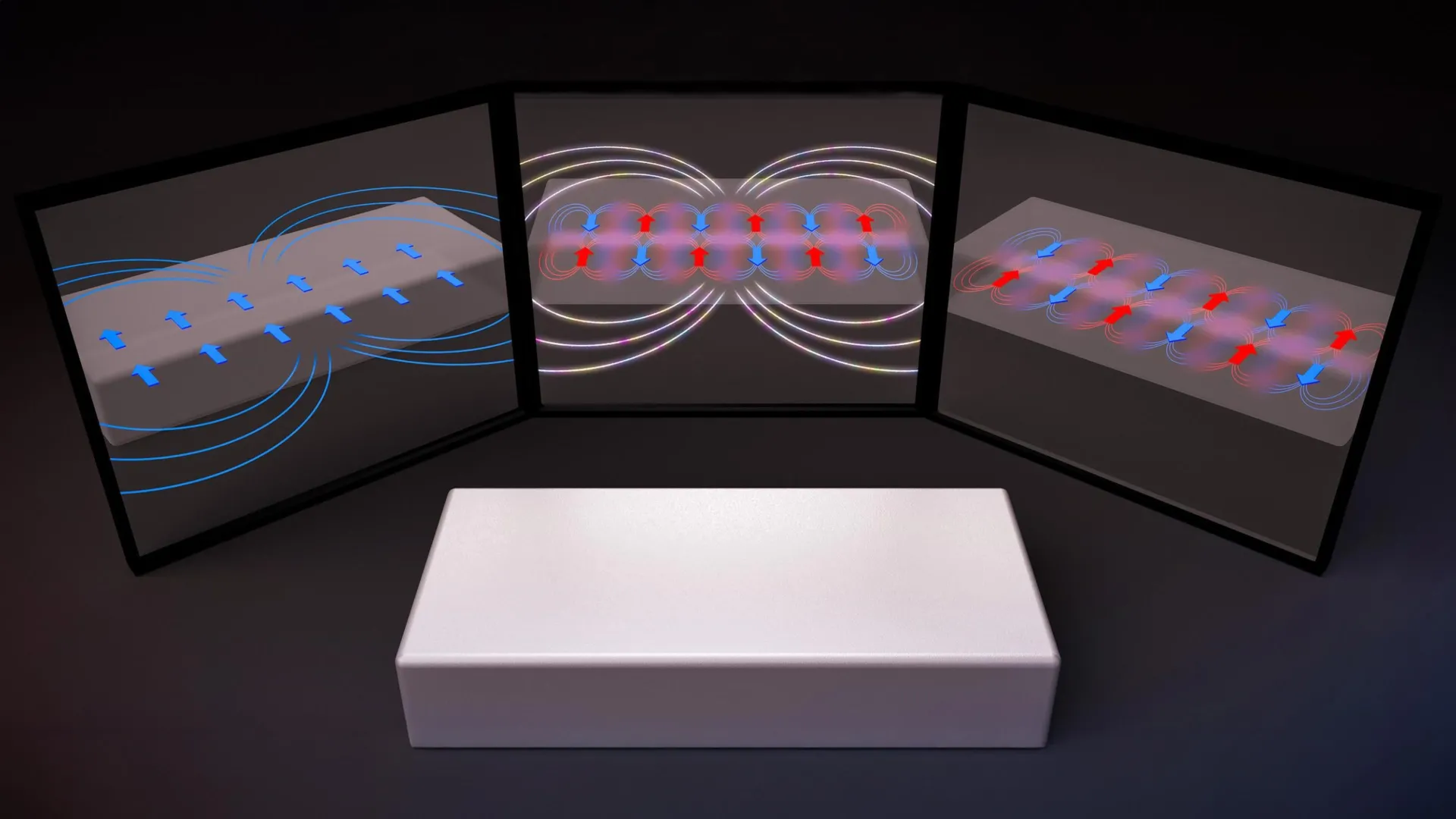
For nearly 90 years, physicists have divided magnetic materials into two main categories: ferromagnets and antiferromagnets. Now, scientists have confirmed that a third type exists, revealing a previously unrecognized form of magnetic behavior that could lead to major advances in computing and electronics.
The breakthrough comes from a research team led by the U.S. Department of Energy's SLAC National Accelerator Laboratory. In a study published in Science , the researchers presented compelling experimental evidence for altermagnetism, a distinct magnetic phase that combines important characteristics of the two traditionally recognized types.
"In the past few years, scientists have observed phenomena that don't fit neatly into the ferromagnetism-antiferromagnetism dichotomy," explained lead author Daniel Jost, associate scientist at SLAC and Stanford Institute for Materials and Energy Sciences. "Researchers have been compiling evidence of a third type of magnetism that bridges the qualities of these two classes. We believe our results provide robust experimental confirmation that this third phase -- altermagnetism -- is real."
More from the original report
The team focused on manganese telluride (MnTe), a material that had long been classified as an antiferromagnet. Building on earlier research, the scientists identified direct evidence of chirality, a distinctive asymmetry in the material's magnetic structure. This property resembles the way a spiral staircase or screw twists in a particular direction and provides a crucial signature of altermagnetism.
Beyond its importance for fundamental physics, the finding could help researchers develop magnetic materials with properties suited to future technologies, including advanced memory systems, quantum devices, and more energy-efficient data centers.
Magnetism is familiar from everyday experiences, whether it is a refrigerator magnet holding up a photograph or a compass aligning with Earth's magnetic field. But the physics behind these effects is far more complicated than it appears.
At the atomic level, magnetism is connected to a quantum property of electrons known as spin. Although spin is not literally an electron rotating like a tiny ball, it behaves in certain ways as though the electron has its own angular momentum. Scientists commonly describe the two possible spin orientations as "up" and "down."
When these spins become organized into particular patterns, a material…