Reported by ScienceDaily
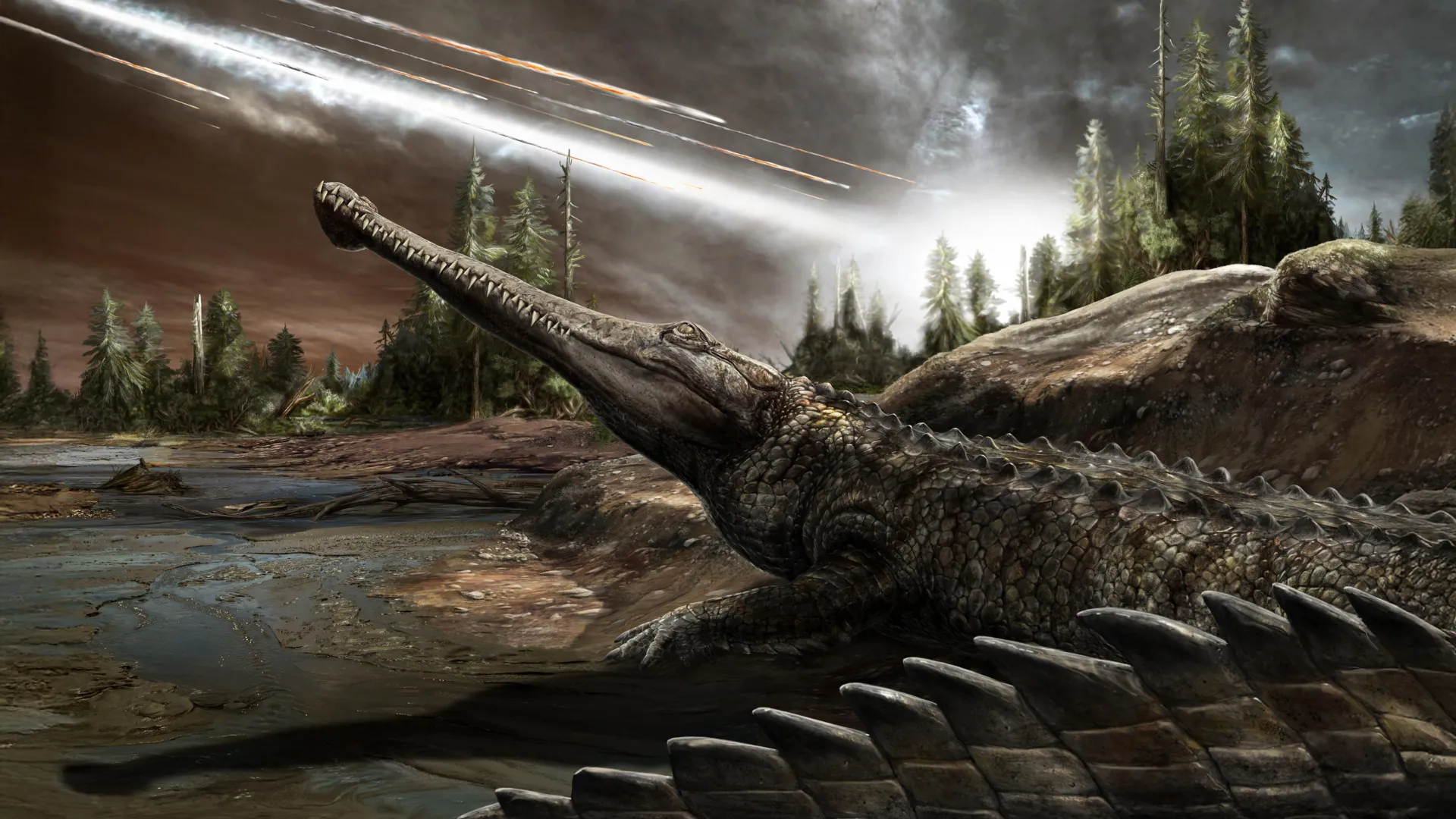
Why did crocodiles survive the asteroid impact that wiped out the dinosaurs 66 million years ago? New research suggests that their preference for warm environments may have given them a crucial advantage during one of Earth's greatest mass extinctions.
Scientists led by UCL (University College London) found that crocodiles and their ancient relatives spent much of their 250 million years of evolutionary history following warm climates rather than adapting to dramatically different temperatures. When Earth grew hotter, they expanded into new regions, sometimes reaching as far as Antarctica. As temperatures fell, they moved back toward the tropics.
Published in Science Advances , the study analyzed more than 7,000 fossils and records from over 400 living and extinct species. Researchers combined this evidence with computer models that reconstructed Earth's climate and geography across 245 million years.
More from the original report
The results suggest that tropical and subtropical regions remained suitable for crocodile relatives after the asteroid struck, even as the environments available to many dinosaurs deteriorated. Only the most extreme climate simulations eliminated these potential refuges.
The researchers examined how conditions on Earth may have changed following the asteroid impact 66 million years ago. Their simulations indicated that areas near the equator could have remained warm enough to support crocodile relatives, providing places where surviving populations could persist and eventually recover.
Previous modeling by members of the same research team found that suitable habitats for non-avian dinosaurs (i.e., the ones that went extinct) contracted much more severely after the impact.
Lead author Dr. Alfio Alessandro Chiarenza, based at UCL Earth Sciences, said: "The asteroid did not make the whole planet equally hostile to every group.
"Crocodiles' long-standing preference for warm environments may have placed survivors exactly where suitable climates held up best, like around the equator. These refuges could have sheltered populations that later recovered and radiated out."
The discovery offers a possible explanation for how a group of animals that appeared around the same time as dinosaurs managed to endure two of Earth's five major mass extinctions.
Modern crocodiles and their close relatives share many recognizable features, but their evolutionary history reveals a much…