Reported by NPR World
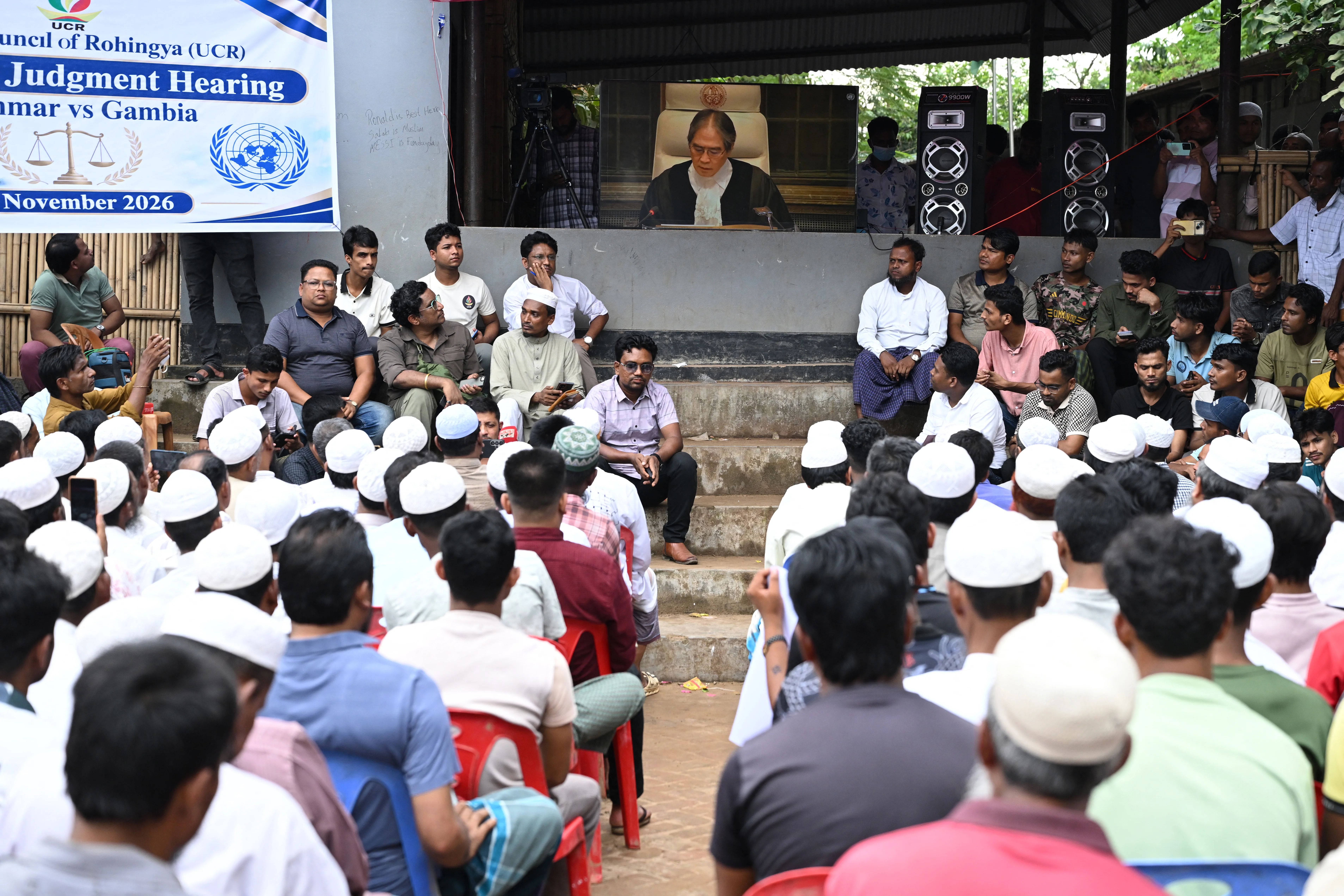
Rohingya refugees watch the International Court of Justice ruling over whether Myanmar committed genocide against Rohingya Muslims, on a screen at a camp in Bangladesh's Cox's Bazar on Nov. 19. Salahuddin Ahmed/AFP via Getty Images hide caption
The United Nations' top court ruled Thursday that Myanmar committed genocide against its Rohingya minority, the first time in the court's 80-year history that it has held a state responsible for the crime.
Judges of the International Court of Justice voted 9-6 that the military's 2017 crackdown was carried out with intent to destroy the long-persecuted Muslim minority. Myanmar's military-backed government has not yet responded to the ruling at the time of writing.
More from the original report
Brought by Gambia under the 1948 Genocide Convention, the ruling will have repercussions far beyond Myanmar, according to a legal expert.
But for Ma Roga Bibi, a Rohingya who fled Maungdaw township in northern Rakhine state, the impact was immediate.
"I feel wonderful and grateful," said the 18-year-old, who lives in the world's largest refugee settlement in Bangladesh. "It was an emotional, historic day."
For several weeks in August and September 2017, the Myanmar military attacked and burned to the ground hundreds of Rohingya villages. Soldiers committed rapes and massacred women, men as well as children.
The court estimated that about 10,000 Rohingya were killed. It cited estimates that up to 2,109 Rohingya children younger than 5 died, and found the violence was systematic, including the burning of all or parts of 392 villages.
Judges of the International Court of Justice (ICJ) attend a public hearing ahead of the reading of the court's judgment in the genocide case brought by Gambia against Myanmar, in The Hague on Thursday. Jeroen Jumelet/ANP/AFP via Getty Images hide caption
Ma Roga Bibi, then age 9, was one of about 700,000 people to flee to Bangladesh, joining earlier refugee waves. The camps sprawl across a narrow coastal strip a few miles from Cox's Bazar, a busy beach town near Myanmar. Rohingya are denied citizenship on both sides of the border.
"Recognition alone is not enough," she said. "We need justice, accountability, and the opportunity to…