Reported by NPR World
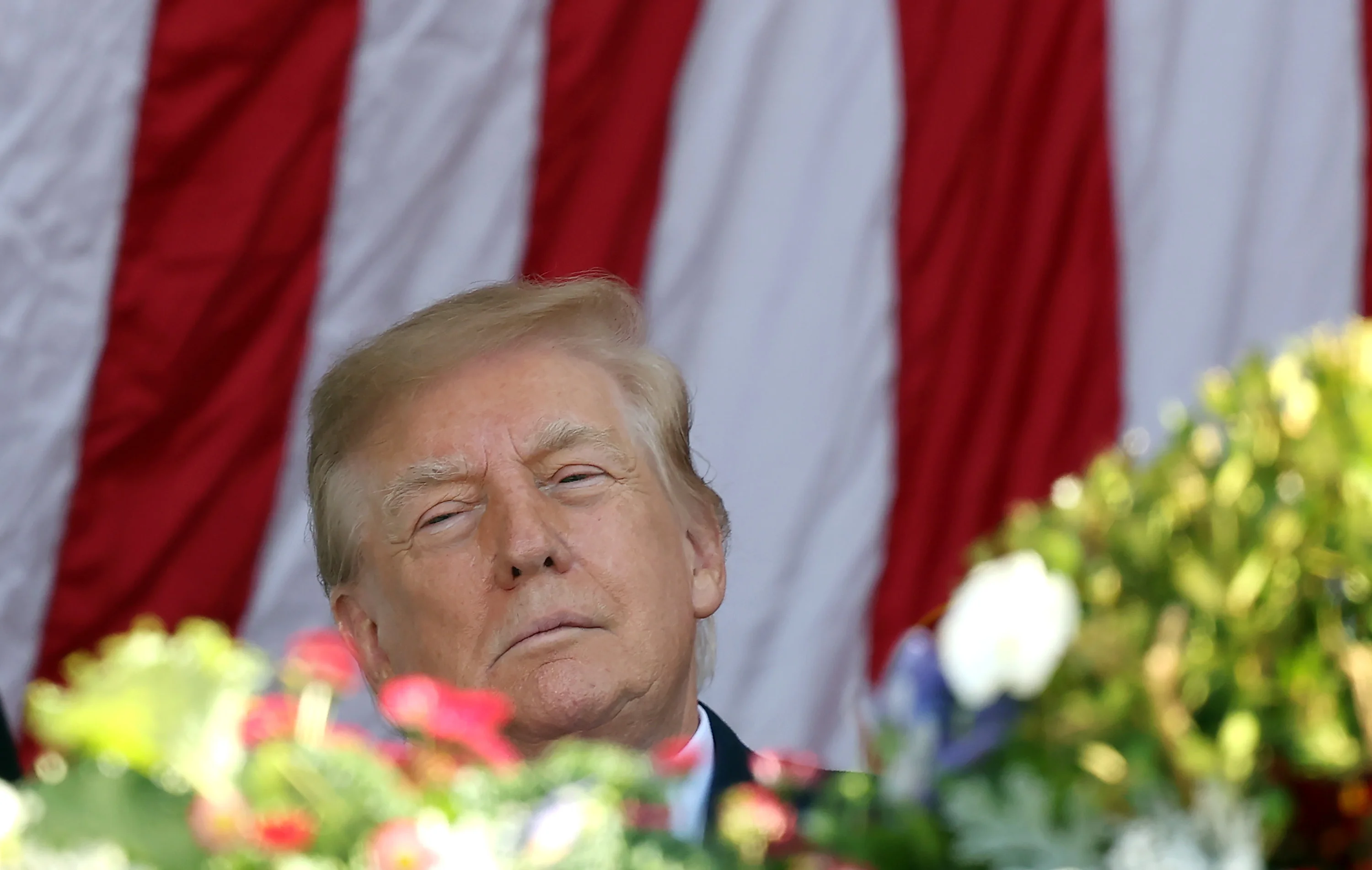
U.S. President Trump attends a ceremony in honor of Veterans Day at Arlington National Cemetery on Nov. 11 in Arlington, Va. Kevin Dietsch/Getty Images hide caption
President Trump heads to Asia this week where he's set to meet with Chinese President Xi Jinping and Russian leader Vladimir Putin for a high-stakes trilateral summit.
The trip to China marks Trump's second visit this year, and comes as the president and his party face widespread backlash from voters in the recent midterm elections, potentially weakening his bargaining position across the Pacific.
More from the original report
The president and administration officials – including Commerce Secretary Howard Lutnick – are also under scrutiny after the recent resignation of Nvidia CEO Jensen Huang , who admitted to an extramarital affair with a woman who U.S. intelligence officials believe was recruited by China's top spy agency, according to The New York Times. NPR has not independently confirmed those reports.
Huang traveled to China with Trump earlier this year – this time, tech billionaire Elon Musk is joining Trump in Shenzhen.
The expectation for major deals or pronouncements coming out of the meetings this week are low – but the meeting is still expected to make waves over the imagery of the trilateral summit.
Before China, Trump will first travel to the Philippines where he'll meet with allies at the ASEAN summit in Manila.
The president is expected to be in the region for just about three days.
For weeks the president has said he's keen to discuss the Iran war and denuclearization with Putin and Xi. But Edgard Kagan, the former ambassador to Malaysia and a senior adviser at the Center for Strategic and International Studies, said it's a topic that Xi likely won't want to get into. The White House confirmed Friday that Trump is expected to meet with Xi and Putin together.
"The Chinese strongly disagree with the idea that they should be involved in any kind of trilateral discussions with the United States and Russia on nuclear weapons," Kagan said.
"China wants to avoid this because they don't want to be locked into a subservient position. And…