What does 'AI clog' mean for UK public bodies?
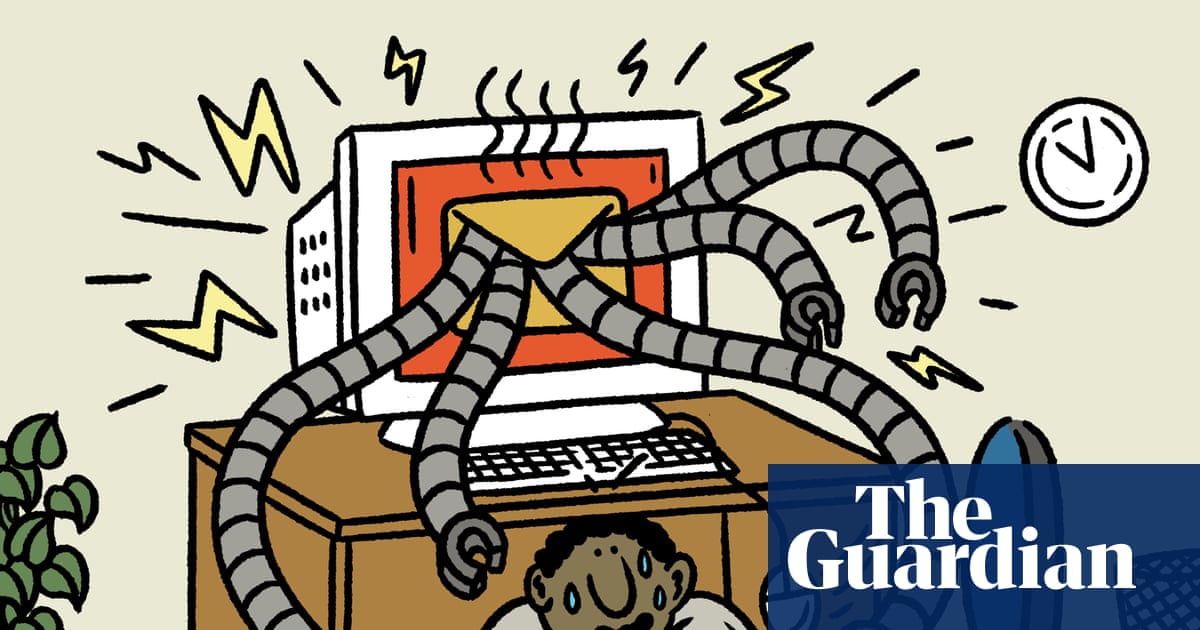
"AI clog" is the label some UK officials and commentators now use for a familiar problem with a new cause. Letters, complaints and legal challenges drafted with chatbots arrive faster than staff can read them. Each one can be longer and more formal than the handwritten version it replaced.
The Guardian reported on 8 November that MPs' offices, councils, courts and schools are seeing the effect. Hollie Wickens, a senior caseworker in a Labour MP's office, said "half the emails we receive are some form of AI". She described the work as more taxing despite a decade in the role.
The term is informal. Researchers prefer "agentic flooding", which they define as a rise in the volume or complexity of requests caused by AI use that strains a body's capacity. The phenomenon is documented, but no single official statistic measures its size.
The examples are ordinary: objections to planning applications, appeals against parking tickets, complaints about bin collections and requests for information. What changed is the effort required to produce them. A chatbot can turn a short grievance into a document that cites statutes and case law within minutes.
The timing matters. ChatGPT turns four this month, and free or cheap models are now built into phones, browsers and office software. The cost of writing a formal letter has fallen close to zero for anyone with a connection.
How much more correspondence are public bodies receiving?
Lawyers in Local Government, which represents 5,600 local authority lawyers, says complaint length has grown sharply. Chief executive Deborah Evans told the BBC in August that a complaint once ran to "one side of A4" but could now reach "between 19 and 27 pages", including case law and Acts of Parliament.
Evans told The Guardian the average complaint was about two pages before chatbots became widespread. Most are now roughly ten times longer, she said, and the longest she had heard of was about 200 pages. LLG estimates that matching the workload with staff alone would mean doubling complaint-handling teams.
The BBC reported in August that one public body had seen a complaint that once fitted on a single sheet of A4 grow to 20 pages. It also heard that AI-drafted letters sometimes misquoted legislation, adding to the time needed to correct them.
MPs' offices report a similar pattern. The GMB union, which represents parliamentary staff, says casework has "doubled or more" where offices keep figures. Lisa Gillmore, president of its MPs' and peers' staff branch, said "AI is not lightening the load in MPs' offices".
Vonnie Sandlan, head of office for Graeme Downie, the Labour MP for Dunfermline and Dollar, said staff were exhausted. Her office has stopped answering automated "click to email your MP" campaigns so it can focus on constituents' own requests.
Lynn Wyeth, a digital officer at the National Association of Data Protection Officers, told the BBC that AI-assisted requests were creating a "hidden workload". She said they lead to longer correspondence, clarification exercises and long complex appeals.
Transport for London received a record 4,769 freedom of information requests in 2025-26, 5% above its previous peak in 2023-24, according to The Guardian. Minutes of a TfL audit and assurance committee meeting recorded a "noted increase" in appeals that appeared AI-generated and contained "highly technical and often inaccurate assertions".
At employment tribunals, single claim receipts rose 28% between April and June 2026 compared with a year earlier. The Ministry of Justice recorded 14,000 single claim receipts and 70,000 open single claims at the end of June, up 51%. Those figures cover all single claims; they do not show how many involved AI.
Schools are affected too. Pepe Di'Iasio, general secretary of the Association of School and College Leaders, told the BBC that parents sometimes use AI to generate "multiple and extensive complaints", which adds to staff strain.
Which public services are most exposed to agentic flooding?
The clearest cross-country evidence comes from a paper by Chris Schmitz of the Hertie School and Lewis Hammond and Alan Chan of the Centre for the Governance of AI. "Characterizing Agentic Flooding of Government Services" was posted to arXiv in August 2026.
The authors documented 84 cases across 11 jurisdictions and 13 service domains. They began with 2,288 candidate services in 12 countries. Fewer than one in 20 met their test, which required an official or credible third party to attribute the surge to AI.
Officials asserted AI involvement in 58 of the 84 cases, or 69%. The rest rested on third-party attribution. The authors present the dataset as evidence that flooding is happening, not as a measure of how common it is.
Most cases followed the same route. In 87%, large language models generated text cheaply and people submitted it through existing channels by hand. The authors found no evidence of autonomous agents navigating government portals and filing requests without a human.
The services most at risk share a design feature: they accept free text of unlimited length. FOI portals, planning consultation platforms and public comment procedures all qualify, which helps explain why the cases cluster there.
Complexity rose more often than raw volume. Ninety percent of cases showed qualitative flooding, meaning longer or more complex requests. Sixty percent showed quantitative flooding, meaning more requests. Half showed both.
The authors also separate public and judicial services from participation and transparency channels. The former made up 73% of cases, the latter 27%. A few involved organised campaigns, such as mass FOI requests or voter roll challenges.
The starkest example came from Germany. Some social courts attributed a 55% year-on-year rise in caseload in 2025 to AI-generated claims. In one case, letters ran to more than 4,000 pages.
The paper names two UK illustrations: Money Claims Online and consultations on local plans under regulations 18 and 19. It also notes that Australia has considered reintroducing fees for freedom of information requests after officials pointed to AI-generated submissions.
The authors rank exposure using a 13-factor matrix. Near-term risk is highest for services that are financially attractive to claimants, complex to navigate and protected until now by friction or specialised knowledge. The paper suggests tax administration and court systems could fit that description.
Why do longer complaints cost more than they save?
The immediate cost is staff time. A letter that takes a minute to generate can take an hour to read, verify and answer. LLG's Evans said that every pound spent on complaints "is a pound that's not being spent on something else", which is why authorities want the flow under control.
The second cost is legal. Jim Moore, an employee relations expert at Hamilton Nash, told The Guardian that AI-assisted complaints are often verbose and exaggerate minor incidents. Many also fail to state what outcome the complainant wants.
The founder of one technology start-up put the change bluntly: "Everyone's got a free lawyer now." The entrepreneur was responding to a tribunal claim from a former employee dismissed on performance grounds, and expected legal costs to reach about £30,000.
Public bodies cannot simply ignore a letter because it looks machine-written. The Information Commissioner's Office has said AI-drafted requests are still valid and must be answered. Its guidance notes that such requests can be long, repetitive and hard to interpret.
The ICO also reported that many public authorities received more requests in 2025. In May it published guidance for FOI teams, warning that AI-assisted requests can misquote legislation or need significant clarification. A request that appears AI-drafted still needs a human response, even when it contains inaccuracies.
There is a counterweight. Dawn Harverson, who struggles with writing, told the BBC that AI helps people complain who would otherwise stay silent. A primary school teacher made a similar point: some parents find it easier to write than to speak.
That tension runs through the debate. The same tool that burdens an office can give a disabled resident, a nervous parent or a tenant a way to be heard. Policies that block the tool also block those users.
What can public bodies do about AI-generated correspondence?
The arXiv paper found that governments responded in 56% of the cases it documented. Most responses were narrow or non-binding, such as guidance on AI use.
In 17% of cases, authorities added friction: fees, identity checks, per-claimant limits or IP blocking. In 25%, they introduced their own AI tools, often to analyse consultation responses in bulk. In 15%, they made small procedural redesigns, such as a service to verify case numbers.
The authors recommend three steps. First, audit exposed services against their 13-factor risk matrix. Second, integrate digital identity into the most exposed services, which allows rate limits and pre-filled data. Third, commission legal reviews of which responses are lawful, because uncertainty slows preparation.
The paper notes that more than 100 jurisdictions already have digital identity infrastructure, though its maturity varies widely.
Some UK bodies are already experimenting. Wiltshire council has said it is exploring AI to summarise long emails and draft initial replies. A committee at Stroud district council has discussed how it uses Microsoft Copilot to help write reports. Some ombudsman services have imposed word limits or templates, according to Evans.
The UK government has issued civil servants advice on AI use. It covers checking facts, avoiding personal data and keeping a human review of the work.
Friction has costs of its own. The paper notes that fees and identity checks fall hardest on poorer and less digitally literate users, and can worsen trust. Some measures may also be unlawful; charging for welfare applications is banned in many jurisdictions.
The authors also expect some barriers to stop working. CAPTCHAs already have. Demand suppression is likely to become the default, they argue, because service redesign and digital identity take years.
What does the evidence not show?
The paper is explicit about its limits. It cannot make statistical claims about prevalence or causal claims about AI's role. Only 25 of the 84 cases included time-series volume data.
The dataset collects positive cases. It counts surges that were noticed and publicly attributed to AI, so it likely misses others and may include some mistaken attributions. Requiring a public attribution also excludes cases where no official or credible observer has said anything.
The pipeline used a language model to help find and code cases, with human review at each stage. The authors acknowledge they cannot rule out model errors or hallucination.
The UK figures have their own limits. The 28% rise in single tribunal claims coincides with wider AI use, but the statistics do not identify which claims were AI-assisted. The paper's authors also avoid causal claims about court volumes.
The paper cites separate research by Shah and Levy, who found a "dramatic increase" in both the share and average length of self-represented cases in US federal courts since 2022. The authors treat that finding as supporting evidence, not proof.
Nor is "AI clog" a single measurable thing. A long complaint can be legitimate. A well-drafted letter can expose a real failure. The risk is that volume and length crowd out the cases that need attention.
The paper's overall conclusion is more measured than some headlines. It says agentic flooding is plausible across many services and may intensify, but "acute operational collapse appears unlikely". Budgets may need adjusting, or service quality may suffer.
What to watch next
The ICO's guidance will be tested in practice. Watch whether authorities use existing cost limits, vexatious-request rules and clarification duties consistently, and whether those decisions survive appeals.
The regulator's current guidance on vexatious requests focuses on the burden, motive and value of a request, not on how it was produced. That gap matters now that a single person can generate many plausible letters in an afternoon.
Ombudsman procedures are a quiet test case. Word limits and structured forms may reduce workload, but they also change who can complain and how.
Procurement will show how quickly offices adopt triage tools. The paper counts 21 cases where governments deployed AI in response. Expect more vendors to sell summarisation and drafting to councils.
FOI fees are back on the agenda in Australia. The paper treats them as a likely response, not a confirmed trend. Any UK move would need consultation and legislation.
The tribunal backlog is the number to track. The next quarterly statistics will show whether single claims keep rising at 28% and whether disposals recover from their 6% fall.
Above all, watch for better data. The current picture rests on case studies, minutes and trade-body estimates. Public bodies that publish service-level figures on AI-related requests would make the debate testable.