What Apple reported for the September quarter
Apple reported fiscal fourth-quarter revenue of $114.5 billion on November 2, up 12 percent from a year earlier. Diluted earnings per share reached $2.10, up 14 percent, and gross margin came in at 47.9 percent. Apple said tariff refunds added about one percentage point to gross margin and five cents to earnings per share.
For the full fiscal year, Apple reported revenue of $479 billion. Its board declared a quarterly dividend of $0.27 per share, payable November 16 to shareholders of record on November 12. CEO John Ternus said the quarter capped off Apple's "best fiscal year ever."
The Mac was the standout hardware line. Mac revenue rose 24 percent to $10.79 billion. That was well ahead of the $9.61 billion analysts expected, according to LSEG estimates cited by CNBC. iPhone revenue reached $57.58 billion, up 17 percent, while services brought in $31.57 billion.
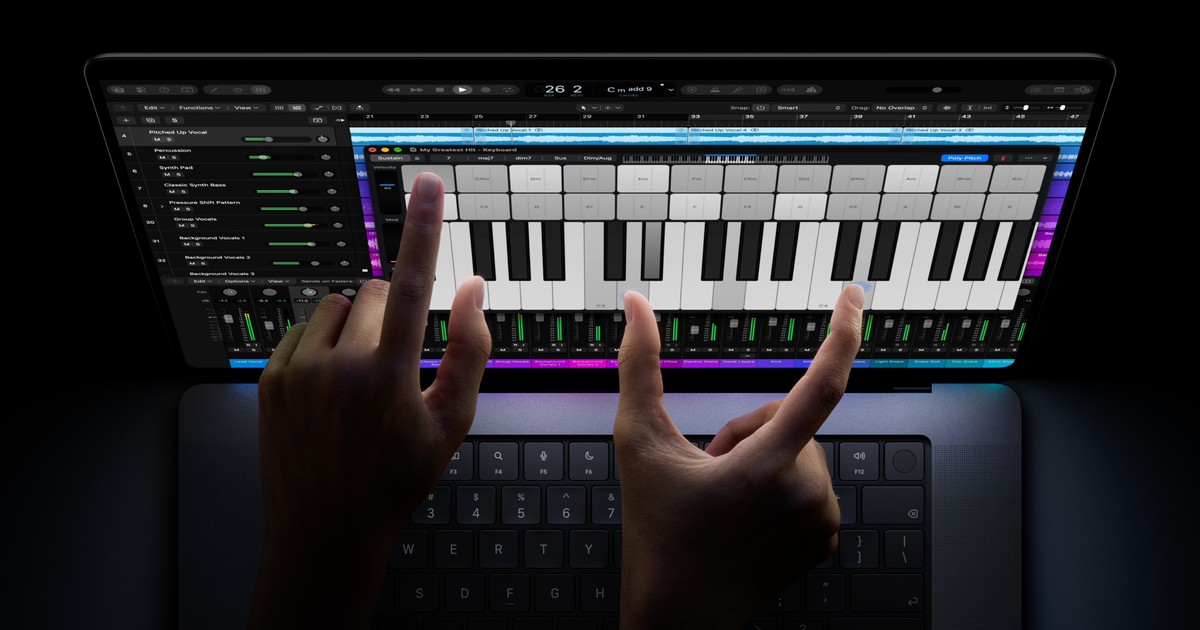
Apple's Mac growth also outpaced iPhone for the quarter. The company refreshed its entry-level iMac and MacBook Pro on October 27 and followed with the touchscreen MacBook Pro a day later.
Two categories lagged. iPad revenue fell 10 percent to $6.23 billion. Wearables, home and accessories declined about 8 percent to $8.3 billion. Greater China grew 21 percent to $17.53 billion, and Apple spent $2.24 billion on capital projects during the quarter.
The quarter ended September 26. Apple's late-October Mac refreshes were announced after that date. The September figure reflects older models sold at prices Apple raised in June. The quarter also included only eight days of iPhone 18 Pro sales and none from the iPhone Duo.
Investors focused on the outlook rather than the results. Apple shares fell about 3 percent in extended trading after the company issued a lower gross-margin forecast. Services revenue grew less than 10 percent, the slowest pace since 2022, according to CNBC.
Why does Apple call memory pricing 'unprecedented'?
Ternus, who became chief executive on September 1, used his first earnings call to describe the cost environment. "What we're seeing with memory pricing right now is unprecedented," he said, according to The Verge. He described a launch period covering new iPhones, home devices and touchscreen laptops as "one of the most prolific" in Apple's history.
The pressure is already visible in Apple's numbers. Ternus said memory costs rose from the June quarter. He expects "even higher memory costs" in the December quarter. Those increases are "partly offset" by price increases Apple has already made, he said.
In an interview with CNBC, Ternus said Apple "reluctantly" raised prices and that the moves helped offset component costs. He also pointed to inventory and cheaper non-memory components as temporary buffers. "We saw higher memory costs as compared to the June quarter," he told CNBC.
Apple does not break out memory costs in its results. The cost lands inside gross margin, which covers components and manufacturing. A sustained DRAM increase therefore hits Apple's gross margin unless the company raises prices or finds offsets.
The September quarter included a full three months of the higher prices Apple introduced in June. Even so, memory costs rose again during the period. That is why the December outlook carries more weight than the revenue beat.
The squeeze extends beyond memory. Ternus told Reuters that Apple was "not able to predict when supply and demand will be in balance" for the iPhone Duo. The $1,999 foldable sold out its preorders, and some shipments are expected in 2027.
Apple's memory exposure is broad because its Macs use unified memory that cannot be upgraded after purchase. Every configuration choice is made at checkout. DRAM prices therefore feed directly into the price buyers see.
Will the new MacBook Pro cost more because of memory?
Apple announced a redesigned MacBook Pro on October 28, five days before the earnings call. The 14-inch model with an M5 Pro chip starts at $2,899, and the 16-inch version starts at $3,399. M5 Max configurations start at $4,499 and $4,799. Preorders opened the same day, and Apple says the laptop arrives on November 6.
The new machine is the first Mac with touch input. Apple calls the change "Touch to Mac for the first time" and adds a tandem OLED display branded PROLED XDR. The display offers up to 2,000 nits of peak brightness, a 120Hz variable refresh rate and a claimed 10,000,000:1 contrast ratio.
Apple lists up to 128GB of unified memory and up to 16TB of storage. The machine also brings Thunderbolt 5, a 12MP Center Stage camera, a six-speaker system and up to 24 hours of battery life. Apple says the 14-inch model weighs about 3 pounds and the 16-inch model about 4 pounds.
Apple has not said the MacBook Pro carries a memory surcharge. The prices above are the ones published at announcement, and they apply before any configuration upgrades. The timing is still awkward. The laptop ships four days after Apple warned that memory costs will climb again this quarter.
The company's broader pricing trend is clear. Tom's Hardware reported that the M6 Mac mini now starts at $899. The M4 model launched at $599 in October 2024, and the M5 version moved to $799 on June 25.
Tom's Hardware said the June round raised prices across Apple's computing devices by amounts ranging from a few hundred dollars to $1,300. The MacBook Pro's $2,899 entry price sits inside that higher price environment. Apple has not said whether the October prices will change.
Education pricing lowers the entry points. Apple lists the 14-inch M5 Pro at $2,749 for education and the 16-inch M5 Pro at $3,199. The M5 Max models list at $4,199 and $4,499 for education.
How tight is the memory supply?
Industry forecasts explain why Apple expects costs to keep rising. TrendForce projects that conventional DRAM contract prices will increase 10 to 15 percent in the fourth quarter compared with the third. NAND flash contract prices are expected to rise 15 to 20 percent.
The imbalance is structural. TrendForce says memory suppliers are prioritizing advanced capacity for high-performance server products, leaving the overall market undersupplied. Cloud providers and server makers are buying more RDIMM memory for servers that support agentic AI workloads. That demand competes with notebook production for the same factory capacity.
Enterprise SSDs are the only category where TrendForce expects price growth to accelerate, driven by cloud service providers. Consumer NAND demand is weaker, but prices are still rising across segments because supply remains constrained.
PC makers are still buying aggressively because they expect supply to remain tight in 2027. TrendForce warns that PC DRAM supply could actually decline next year as capacity shifts toward servers. Suppliers have been meeting agreed volumes to PC makers and module makers through 2026.
Notebook inventories already reflect higher component costs, which TrendForce says is weighing on end-market sales. For a laptop maker, memory and storage sit on the bill of materials alongside the processor and display. When DRAM and NAND prices rise at double-digit rates, vendors can absorb the cost, cut specifications or raise prices.
The shortage does not affect every component equally. Logic chips, displays and batteries follow different supply chains. That is why Apple can point to lower costs on non-memory parts even as DRAM and NAND get more expensive.
What does the margin warning mean for Apple?
Apple guided December-quarter gross margin to 45 to 46 percent, down from 47.9 percent in the September quarter. The midpoint of that range would be roughly two points lower. Analysts polled by LSEG had expected 46.3 percent, according to CNBC.
The September margin included about a point from tariff refunds. Without that boost, the figure would have been about 46.9 percent, just above the top of the holiday range. The underlying trend was already tightening before the new guidance.
Revenue guidance was stronger than expected. Apple forecast growth of 7 to 10 percent, compared with a 6.1 percent consensus. Services revenue is expected to grow 8 to 9 percent, which CNBC described as a sign of slowing growth.
The forecast is company-wide, not a Mac-specific number. It covers iPhone, services, wearables and Macs together, and it includes costs Apple has not itemized. That makes it a signal of direction rather than a price list for any single product.
Apple still has room to absorb costs. It generated $28 billion in operating cash flow during the quarter and returned the same amount to shareholders. Capital spending was $2.24 billion, far below the sums hyperscale cloud companies are spending on AI infrastructure.
Apple's capital spending is low partly because it designs chips but outsources manufacturing. That model keeps capital costs down, but it leaves Apple exposed to component prices set by suppliers.
The after-hours decline suggested that investors weighted the margin guide more heavily than the revenue beat. Apple's services business, which carries less direct exposure to component prices, remains a buffer. Even so, hardware is still the majority of sales.
Who pays for higher memory prices?
Laptop buyers feel the change first. Base configurations may stay at familiar prices while memory and storage upgrades cost more, or the starting price itself may move. The Mac mini cost $599 at launch in 2024. The M6 version now starts at $899, a 50 percent increase at the entry point.
On the Mac mini, Apple charges $200 to move from 16GB to 24GB of unified memory. Reaching 32GB costs $400, according to Tom's Hardware. Those step-ups show how memory costs reach buyers even when the base price looks stable.
Memory upgrades have long carried a premium at Apple. When DRAM prices rise, that premium becomes more visible in the total cost of a configured machine.
Businesses and schools face the same math. Fleet buyers often choose memory and storage tiers years in advance. A 10 to 20 percent component increase can push a refresh cycle back. TrendForce already links higher component costs in notebook inventories to weaker end-market sales.
Memory makers are allocating capacity to servers, where prices and volumes are stronger. That leaves consumer device makers competing for the remainder. It also explains why Apple's cost warning stretches into the December quarter rather than ending with the September results.
CNBC reported that Apple raised iPhone prices by $100 this year. The move shows Apple is willing to pass component costs to consumers rather than absorb them entirely. Other laptop makers buy DRAM on similar contracts and have less room to absorb increases.
There is a limit to how much Apple can pass through. Consumers can delay purchases, and competitors face similar costs. Apple's scale and long-term supply agreements give it leverage, but its own guidance assumes memory costs will rise again before they fall.
What should Mac buyers watch next?
The first test comes on November 6, when the new MacBook Pro reaches stores. Reviewers and buyers will see the full configuration list, including the cost of upgrading beyond the base memory and storage. Those upgrade prices will show how much of the memory increase Apple is passing on.
Independent reviews arriving with the launch will measure battery life and display performance. They will not settle the memory question, but they will show whether the new display justifies its price.
Apple's next earnings report, covering the December quarter, will show whether the 45 to 46 percent margin holds. It will also reveal whether Mac revenue keeps growing at its current pace after the launch quarter. The company has not scheduled that report yet.
Watch memory contract prices too. TrendForce expects DRAM and NAND increases to continue in the fourth quarter. It also sees PC DRAM supply possibly shrinking in 2027. If those forecasts hold, the pressure on laptop prices may outlast the holiday season.
TrendForce's news service, citing Chosun Biz, reported that Apple and Tesla have raised the possibility of buying memory from Chinese suppliers. It named CXMT and YMTC as examples. Analysts quoted by the firm see limited near-term pressure on prices from those suppliers, given volume and pricing constraints.
A second variable is the iPhone Duo. If supply catches up, Apple's holiday revenue could benefit. If it does not, the company may lose potential sales during the holiday quarter.
For buyers, the practical question is timing. A laptop bought now locks in today's memory and storage prices. Waiting could bring discounts, but it could also bring another round of increases. Apple has not promised either outcome, and its guidance points to higher costs before any relief.