What happened in the CPS fake citation case?
On 29 October 2026 the High Court published a judgment that records a remarkable error. A senior Crown Prosecution Service lawyer had relied on a criminal appeal decision that does not exist. The citation, R v J [2024] EWCA Crim 3529, appears three times in the written record used to justify prosecuting a child.
The child is identified only as LYC. He was 11 at the time of the alleged offence and his sister was seven. He is now 14. The allegation is rape of a child under 13, contrary to section 5 of the Sexual Offences Act 2003.
LYC's lawyers had asked the CPS to review the charge in February 2026. They argued that prosecutors had not properly considered letters from social workers and youth professionals, or a report from a forensic psychologist. The CPS reply did not respond to those representations, the judgment records.
The prosecutor, Ravinder Dhillon, decided on 21 April 2026 that the prosecution should continue. Her decision was confirmed by the Chief Crown Prosecutor on 27 April. The written record she compiled is largely in note form, the judgment says.
The case had also been through the Youth Court. In May 2026 LYC applied to stay the prosecution as an abuse of process. A pre-action letter on 3 June asked for the written reasons behind the April decision. The CPS initially did not provide the contemporaneous record.
On 17 June the CPS replied, relying on a letter drafted by a KC who, the court was told, had taken no part in the decision. District Judge Wilkinson refused the stay on 23 June, and the judges described the letter's production as 'surprising'.
LYC issued a claim for judicial review on 9 July 2026. On 16 October the family added a ground of challenge focused on the three references to R v J. By then Dhillon had made a witness statement, dated 15 October, saying the citation was an error. She said she had meant R v JTB [2009] UKHL 20, a real House of Lords decision from 2009.
- •19 March 2024: alleged offence; LYC is 11 and his sister is seven
- •10 October 2025: the CPS decides to charge
- •21 April 2026: Dhillon decides to continue the prosecution
- •27 April 2026: the Chief Crown Prosecutor confirms the decision
- •15 October 2026: Dhillon says the citation was an error
- •20 October 2026: the Divisional Court hears the challenge
- •29 October 2026: judgment is handed down
- •6 November 2026: trial is listed in the Youth Court
What did the High Court actually decide?
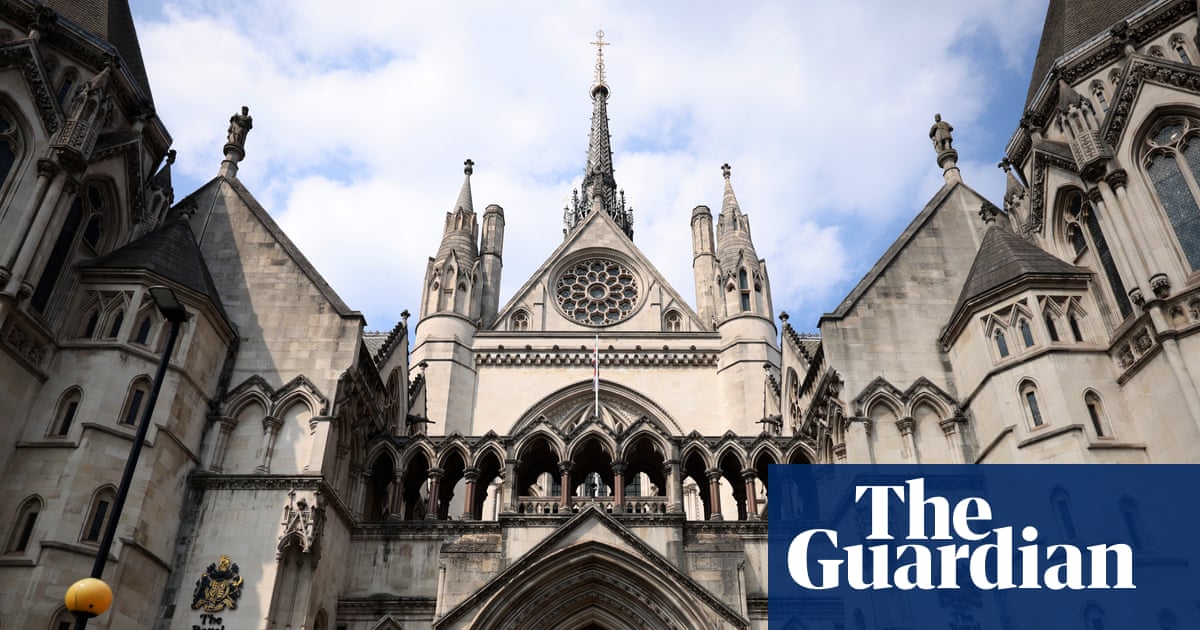
The case reached the Divisional Court, with Lord Justice Holgate and Mr Justice Wall sitting. It was a rolled-up hearing, which means the court dealt with permission and the substantive challenge together.
The judgment refuses permission on the ground built on the fake citation. It calls the explanation offered in Dhillon's witness statement 'unsatisfactory'. But it also says the error did not affect the outcome of the challenge.
The court was direct about that point. It asked whether the flawed explanation mattered for the challenge and answered: 'Our firm answer is no.'
A ground of challenge must be arguable to proceed. The court held that ground 5 did not meet that threshold. It focused instead on whether the legal propositions Dhillon drew from the authorities were wrong. Several were uncontroversial, and the court rejected the criticisms of the rest.
The court also rejected the wider challenge. It granted permission on two grounds about how the CPS handled the representations, then dismissed them. It found that the CPS had taken the relevant material into account and weighed it.
The practical result is that the prosecution continues. The trial was listed for 6 November 2026 in the Youth Court. The judgment does not order a stay, and it does not rule that the decision to charge was unlawful.
That outcome shapes how the case should be read. The court treated the fake citation as an error in the written record, not as a reason to stop the prosecution. The criticism was aimed at the explanation, not at the decision to prosecute.
Did AI really produce the fake case?
The judgment never mentions artificial intelligence. It records only that the decision does not exist and that Dhillon said the citation was an error.
The Guardian, which reported the case on 3 November, says it understands the reference came from an AI response generated during an internet search. That is the newspaper's account, attributed to its reporting rather than to the court.
The CPS did not confirm that an AI tool produced the citation. A spokesperson said the service 'identified an error had occurred from conducting legal research using the internet'. The spokesperson also said case law must be cited from trusted legal sources.
The distinction matters. A general search engine's AI summary is not a legal database. It generates fluent text, including plausible-looking citations, without checking that the case exists.
Many search engines now place generated summaries above ordinary links. Those summaries are built to answer a question, not to supply a verified list of authorities. A citation can be assembled from patterns in the model's training data.
Legal research services work differently in principle. They retrieve documents from a defined corpus and link the answer to a source. That does not make them infallible, but it gives a checker something concrete to open.
The Bar Standards Board set out the mechanism in guidance that took effect in May 2026. It says generative systems produce the most likely sequence of text, and legal references usually look like numbers, letters and names. False citations are therefore a predictable failure mode, not a rare glitch.
The board adds that fake citations are 'indicative of a more general risk of accuracy'. A system can invent a supporting authority and still produce an answer that reads as confident and complete.
For a reader, the warning is simple. A citation in a document is not evidence that the case exists. It has to be checked against a maintained source.
Has the CPS made this mistake before?
Yes. In a separate extradition appeal, the High Court found that two authorities relied on by the CPS were non-existent. Mr Justice Sweeting dismissed appeals by two people fighting extradition to Romania, but he set out the error in his ruling.
Legal Cheek reported the ruling in July 2026. The CPS apologised and said the errors were likely to have originated from the use of AI, while arguing that human error was the operative cause.
The service said it had reviewed nearly 80 other cases handled by the same lawyer. None raised similar issues. Sweeting J accepted that the errors were caught before the hearing and had no impact on the judgment.
He also warned about the wider trend. 'It would be naive to assume that there will not be an increasing use of artificial intelligence in legal work in future,' he said. He added that the episode 'highlights the risks of its use without appropriate oversight particularly for legal research'.
The CPS told the court that the operative cause was 'human error in the failure to verify the authorities'. That framing locates the failure in a checking step, not in the tool. The same step is required whether the draft came from a chatbot or a colleague.
The Guardian says it is only the second known case in which the CPS has cited nonexistent authorities. The earlier citations appeared in grounds of opposition and a further document drafted by junior counsel. The latest appeared in the prosecutor's own written record.
Both episodes prompted an internal review and an assurance that other cases had been checked. The earlier one also produced an apology. Neither produced a published finding that AI alone caused the error.
How common are AI hallucinations in UK courts?
A public tracker maintained by Matthew Lee, a barrister at Doughty Street Chambers, lists the LYC judgment as its 101st entry. The Guardian cites the same figure.
The tracker is not a prevalence study. It includes confirmed, suspected and disputed AI-related errors, and it warns that inclusion is not proof of an AI hallucination. Some entries may involve no AI at all.
Most reported cases involve people who are not legally qualified and are representing themselves, the Guardian reports. Employment tribunals feature heavily. Published judgments capture only a fraction of first-instance decisions.
Its value lies in the detail. Each entry links to a judgment and quotes the court's response, so a reader can see what was decided rather than rely on a headline count.
Even so, the pattern is broader than one prosecutor. Errors are surfacing in tribunals, appeals and the High Court. The judicial guidance notes that unrepresented litigants often lack the skills to check citations, even when a chatbot is their only source of advice.
Lee told the Guardian that the known cases may be the 'tip of the iceberg'. He also warned that AI is creating more work for barristers, who must check the authenticity of authorities in papers prepared by others.
Brian Flanagan, an associate professor at Maynooth University who studies AI in courts, called the LYC citation 'a serious failure'. He said the fake authority had been used to argue for the prosecution of a child.
The courts have been warning about this for more than a year. In June 2025, the Guardian reports, Dame Victoria Sharp warned that AI misuse had 'serious implications for the administration of justice and public confidence'. She said lawyers could face sanctions, including contempt proceedings.
In October 2025 the judiciary issued refreshed guidance for judicial office holders. It tells judges they may ask what checks were carried out if a document appears to have been prepared with an AI chatbot.
The guidance also reminds representatives that they are responsible for the material they put before a court. The duty to verify does not move to the tool, the search engine or the client.
What do the rules require?
The CPS published its AI vision in June 2025. It commits the service to a 'Human in the Loop' model and says outputs must be verified by an appropriately qualified person.
The policy adds that individuals are responsible for each use and output, just as they would be without AI. It also promises training, evaluation and transparency about which tools are used.
A CPS spokesperson told the Guardian that the service has a strict AI policy. It limits use so that AI is not used to make legal decisions, the spokesperson said, and requires human checks for accuracy.
The Bar Standards Board's May 2026 guidance goes further on research. It says barristers should verify references and conclusions through independent alternative sources. Legal-specific tools may be more reliable than general chatbots, but the board says their assurances should not be relied on in full.
It also reminds barristers of their confidentiality duties. The board says clients must be told when AI materially affects the nature or scope of the service.
The judicial guidance adds a courtroom test. Judges can ask representatives whether they have independently verified research or citations generated with an AI chatbot.
On paper, these rules address the LYC case directly. A citation should have been checked against a trusted legal source before it entered a written record. The judgment shows that the check either did not happen or did not catch the error.
The CPS says it has since shared 'learnings', including that case law must be cited from trusted legal sources. That is a process fix. It does not by itself explain how a fabricated citation survived into the written record behind a decision confirmed by the Chief Crown Prosecutor.
Who is affected, and what happens next?
The immediate effects fall on the people in the case. LYC faces trial on 6 November. His sister is the complainant. Both are children; the court granted anonymity to the boy, and the judgment refers to his sister only as LYS.
The case also affects how prosecutions are prepared. Barristers say they now spend time checking authorities in case papers prepared by others, not only their own. That adds work to cases that are already slow.
For the public, the damage is subtler. A court system depends on the assumption that the authorities cited are real. When a state prosecutor cites an invented case, that assumption takes a hit.
Flanagan made a similar point to the Guardian. He said the power of the state is immense, so a professional failure by a state lawyer takes on a different aspect.
There are several things to watch. The CPS has not said whether it will publish its internal review. The trial is due to go ahead. The tracker will show whether similar citations keep surfacing in published judgments.
Regulators may also act. The Solicitors Regulation Authority and the Bar Standards Board can investigate individual lawyers, but no action has been reported in this case.
The larger question is whether verification can be made routine. Courts can ask for confirmation, and firms can require a second check. Neither step removes the risk while lawyers use general-purpose search tools for legal research.
A practical check is straightforward. Open the neutral citation in the official court database, confirm the parties and the date, and read the passage relied on. If the case cannot be found, the argument built on it cannot stand.
That check takes minutes when the source is available. The LYC case shows what happens when it is skipped in a document that carries the state's authority.
The LYC judgment does not answer that question. It records an error, rejects the challenge and leaves the prosecution on foot. The lesson is narrower and harder to ignore: a citation is a claim that must be proved, not a sentence that sounds right.