What did Epic confirm about SteamOS support?
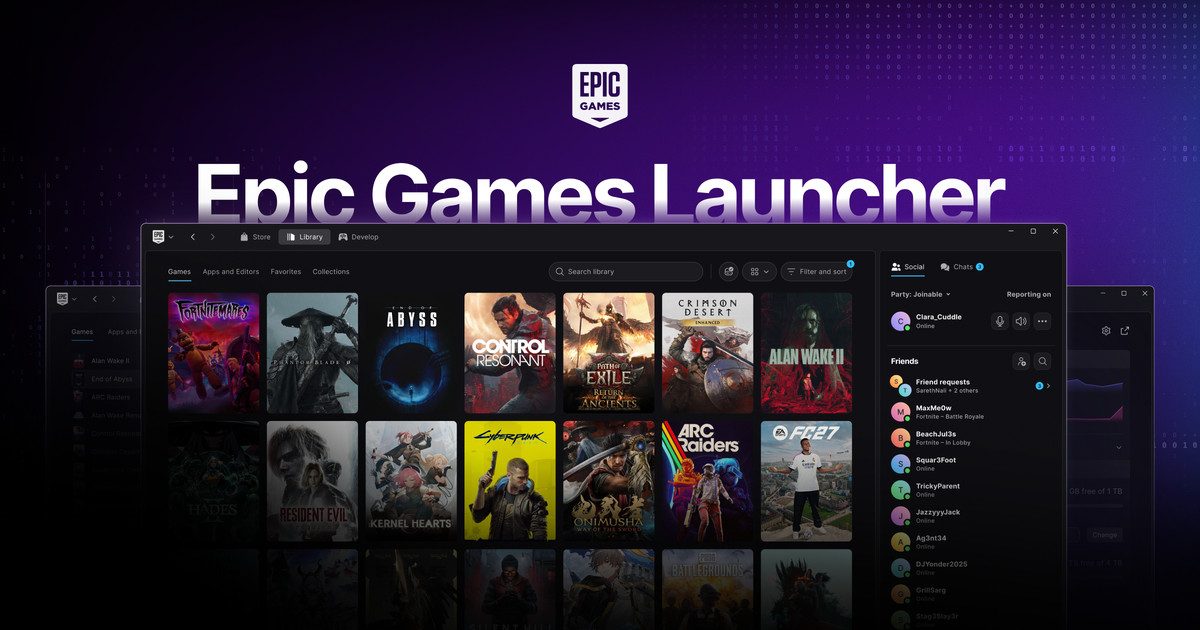
Epic Games has confirmed that its rebuilt launcher will support SteamOS, resolving months of uncertainty about whether Valve's Linux-based system was on the roadmap. The confirmation came from Jake Jones, Epic's communications director, in comments to GamingOnLinux published on November 6. The Verge and TechPowerUp covered the exchange in the following days.
The question that prompted the answer was about packaging. GamingOnLinux asked why the preview's AppImage had been replaced by .deb downloads, and Jones replied with a list of distributions Epic intends to support. He said the company plans to “support as many Linux distributions as possible, including Fedora, SteamOS, Cachy, Omarchy, and more.”
TechPowerUp said it appeared to be the first time Epic had explicitly named SteamOS, which runs on the Steam Deck and Valve's Steam Machine. That detail matters because Epic previously offered Linux support without saying which distributions would be officially tested. A named target is a stronger commitment than a general statement about Linux.
The commitment covers the storefront application, not every game sold through it. Epic can ship a launcher that installs and updates games on SteamOS while a particular title remains unavailable because of anti-cheat or compatibility limits. That separation is the key to reading the announcement correctly.
The timeline explains the attention. Epic first said a native Linux launcher was coming in August 2026, according to TechPowerUp, and the preview arrived on October 14. Until this week, SteamOS users had no clear answer about official support. They still do not have a package, but they now have a stated intention.
Epic's wording leaves room for change. “As many distributions as possible” is a goal rather than a schedule, and the company has not published dates for SteamOS or Fedora packages. The Verge noted that Epic had said in October it was investigating Fortnite compatibility with SteamOS.
The confirmation also clarifies what Epic means by Linux support. The company is not promising that every title will run, nor that every distribution will be certified. It is promising a launcher that can be installed and supported on a named set of systems.
Why does SteamOS support matter for Steam Deck owners?
SteamOS is the operating system Valve ships on the Steam Deck, and it has become the most visible Linux gaming platform. Epic's library has been reachable on the device through third-party tools such as Heroic Games Launcher, which wraps Epic's services in an unofficial client. An official launcher would remove that dependency for players who already own Epic games.
The benefit is narrower than “Fortnite on Deck.” Many games sold through the Epic store are Windows builds. Epic's preview runs them through a compatibility layer and downloads GE-Proton, a community-built variant of Valve's Proton, according to TechPowerUp. Native Linux versions remain the exception rather than the rule.
That makes the launcher a distribution milestone rather than a compatibility breakthrough. It gives SteamOS users a supported way to install and update their Epic libraries. It does not change how each game runs. Players will still need to check per-title Linux support before buying.
Epic says purchases, installed games, cloud saves, and progress carry over to the new launcher. That matters for Deck owners who have used Heroic or other wrappers and worried about losing access. An official client also gives Epic a direct relationship with players on a platform it does not control.
The move fits a broader shift among storefronts. GOG announced in early November that a new Galaxy client with Linux support is planned for 2027, TechPowerUp reported. Two major stores publicly targeting Linux within days of each other suggests SteamOS is becoming a market worth supporting.
Valve benefits indirectly. Every official launcher that works on SteamOS makes the platform more credible as a general-purpose PC gaming system, not just a handheld accessory. Epic benefits by meeting players where they already are, even though its store still competes with Steam for the same purchases.
Unofficial clients also carry a maintenance risk. A wrapper depends on Epic's web services and can break when authentication or download endpoints change. Official support does not guarantee stability, but it moves that maintenance burden from volunteers to Epic.
The practical change for a Deck owner is modest but real. Instead of installing a wrapper and hoping an update does not break it, they would download Epic's client and sign in. The library, entitlements, and cloud saves should follow the account rather than the wrapper.
What does the Linux preview support right now?
The current Linux preview is not a universal installer. Epic's FAQ says the launcher supports Ubuntu 22.04 LTS or newer and Debian 12 or newer, and that Fedora support is coming soon. Other distributions may work but are not officially tested or supported. SteamOS is not on the tested list today.
The package format has already changed once. GamingOnLinux reported that the preview launched with an AppImage, then replaced it with a .deb package for Debian and Ubuntu. An AppImage is a single executable file that can run across distributions; a .deb is built for Debian-based systems. The switch narrowed the audience, which is why the question arose.
Jones said Epic is still evaluating formats and will “restore AppImage this month.” Until that happens, Linux users on distributions without Debian packaging have to rely on community conversions or wait. Epic's own FAQ calls Fedora support “coming soon,” without a date.
Epic lists modest hardware requirements for Linux: a 64-bit x86-64 processor running at 2GHz or faster with two cores, 4GB of RAM, and 2GB of storage. The launcher needs an internet connection for setup and online features, though offline mode works for eligible installed games. The same page says the preview targets the same hardware as the legacy client.
Epic publishes its own performance figures on the preview page. It lists a 5.47-second cold start, a 0.36-second switch from the background to the library, and a library it claims is 30 times faster. These are company benchmarks rather than independent measurements, so they describe design targets for now.
The preview is still incomplete. Epic says some social features and account management options from the legacy launcher are missing, and that installing the preview automatically uninstalls the old client. Players who rely on those features may want to wait for parity.
Why can't Fortnite run on a Steam Deck yet?
Fortnite is the question most Steam Deck owners will ask, and the answer is still no. Epic is rebuilding Easy Anti-Cheat for Linux as EAC Linux v2, a project it described in a blog post on October 14. Epic says Fortnite is coming to Linux, but the anti-cheat requirements are the reason it is not available yet.
The history explains the gap. Easy Anti-Cheat has supported native Linux clients since 2014, and Epic added Wine and Proton support in 2021. That support was optional for developers, and many chose not to enable it because the Linux implementation offered weaker protection than the Windows version, according to Epic.
Epic frames anti-cheat as an economic necessity. Its blog says cheating has grown into a billion-dollar market where operators sell subscriptions and update their tools frequently. Without effective protection, those operators can drive enough players away that running a game is no longer financially viable.
The new requirements are specific. EAC Linux v2 asks for a signed kernel and signed kernel modules, TPM 2.0 enabled in the BIOS, Secure Boot, measured boot, and IOMMU on non-handheld devices. It also requires kernel lockdown in integrity mode, kexec disabled, and the BPF Linux Security Module active.
Epic's FAQ addresses the handheld directly. It says the Steam Deck “does not support the required features for our EAC v2 solution” and that Epic is talking with Valve in the hope of supporting it later. Epic has not said which specific requirement the Deck fails, only that the device cannot meet the set.
The design avoids a kernel driver, which differs from Epic's Windows approach. Instead of loading a kernel module, EAC Linux v2 uses a systemd service that runs only while a protected game is active, plus eBPF programs and existing kernel security features. Epic says the service installs on first launch of a protected game and stops when the game exits.
Epic says players can keep a separate boot entry that meets the requirements and use it only for protected games. It also says an accidental launch without the requirements does not trigger a ban; the player sees an error message instead. That reduces the fear factor, but it does not make the setup simpler.
Epic plans to pilot EAC Linux v2 in Fortnite before offering it to other developers. If the pilot works, other multiplayer titles could follow. For now, the launcher and the anti-cheat are separate deliverables, and the launcher is much closer to release.
What are the trade-offs of Epic's anti-cheat approach?
The trade-off is control. Kernel lockdown in integrity mode restricts what even root can do, including loading unsigned modules and writing to physical memory. Kexec, which lets a running system load a new kernel, must be disabled. Secure Boot must be on, and the kernel must be signed by a key Epic recognises.
Epic publishes the list of well-known keys it will accept. It includes certificates from Canonical, Fedora, Universal Blue, Debian, openSUSE, SUSE, Rocky Linux, Microsoft's UEFI CA, and AlmaLinux. Distributions that want support must have their keys added to the list. Epic says it will maintain the list at first and aims to make it open source.
Custom kernels and out-of-tree drivers are affected too. Nvidia's driver is the example Epic gives, and it must be signed by a recognised organisation. Players who enroll their own Secure Boot keys can still do so, but the blog says all enrolled MOKs must be well-known for EAC to run.
That is a real constraint for enthusiasts who compile their own kernels or run distributions outside the list. Epic tries to soften it by allowing a separate boot entry, so a machine can switch between an anti-cheat-compatible configuration and a user-controlled one. The cost is complexity, because players must know which boot path they are using before launching a protected game.
Epic frames the requirements as using security features that distributions already support. It says the more distributions that meet the requirements by default, the fewer players will need to change their setup. For players, the practical question is how much system lockdown they will accept for access to one game and its anti-cheat.
Epic also describes anti-cheat as an ongoing job rather than a finished product. It says the goal is to raise the cost of developing and maintaining cheats, and that a cheat working on the system would not mean the system failed. Regular updates are part of the design.
Epic's approach avoids a kernel module, but it still changes the machine's security posture during play. Measured boot, TPM attestation, and lockdown are not neutral settings. Players will have to decide whether Fortnite is worth maintaining a second boot configuration.
What should SteamOS users watch next?
The next concrete milestone is the AppImage. Jones said Epic will restore it this month, which would give Linux users a distribution-independent option again. Fedora support is also listed as coming soon, and Epic says it is still evaluating packaging formats. Neither step automatically produces a SteamOS package.
SteamOS users should watch for a package that actually targets their system, not just a mention in a support list. TechPowerUp notes that Epic has not explained how the launcher will work in SteamOS's Game Mode, and that Windows games will still need a compatibility layer. Controller navigation and desktop-mode installation remain open questions.
The Fortnite question depends on Valve and Epic finding a path for EAC Linux v2 on the Deck. Epic says it hopes to support the device in the future, but it has not given a date. The Fortnite pilot will show whether the requirements work in practice and whether players accept the configuration burden.
When a package arrives, the useful tests will be controller-only navigation, the install and update flow, cloud-save sync, and whether GE-Proton is fetched automatically. Those details decide whether the launcher feels native on a handheld or merely tolerated.
Epic has not said which format a SteamOS build would use. Jones said the company is testing packaging options, and GamingOnLinux suggested that a Flatpak release would make installation easier for SteamOS users. A Flatpak could install through the desktop software centre, which GamingOnLinux said would simplify the process.
Beyond Epic, GOG's 2027 Linux client points to a more competitive launcher market on Linux. For players, the practical test is simple: can they install their library, update games, and play without switching to another device or an unofficial wrapper? Epic has moved closer to yes, but it has not arrived.