What did the FCC approve?
The Federal Communications Commission approved Amazon's purchase of Globalstar on 27 October 2026. The order was issued jointly by the Space Bureau, the Office of Engineering and Technology and the Office of International Affairs. It transfers Globalstar's space station and earth station licences to Amazon. It also covers domestic and international section 214 authorisations and an experimental licence.
The approval covers more than spectrum. Globalstar's licences include gateway earth stations at six US sites and market access for the French-licensed HIBLEO-X satellites.
The most valuable part is spectrum. The FCC approved Amazon's acquisition of roughly 25 megahertz of Globalstar's internationally harmonised mobile-satellite service spectrum. Globalstar uses the 1.6/2.4 GHz bands for emergency communications, asset tracking, and maritime and aviation links.
The commission said the deal would expand direct-to-device competition and improve coverage in unserved areas. It found no material public-interest harm. It also found that the companies do not compete for the same customers today. Globalstar sells mobile-satellite connectivity, while Amazon Leo sells fixed broadband. It cited stronger emergency communications and growth in industrial and enterprise data services.
One formal condition applies: Amazon must keep complying with two letters of agreement signed in 1999 and 2004. Those agreements involve the Department of War, the Department of Justice and the FBI. The FCC said they cover national security, law enforcement and foreign policy. Amazon is 100% US-owned, the order notes, with no reportable foreign ownership. The commission also sent a courtesy copy of the application to the committee that reviews foreign participation in US telecoms.
The order denied a petition from Yippy, a former Globalstar customer in a private contract dispute. The FCC said a licence transfer is not the right forum for that fight. Globalstar will become a wholly owned Amazon subsidiary and an affiliate of Kuiper Systems LLC.
The FCC described the purchase as $11.5 billion. CNBC reported the deal as worth about $11.6 billion. Amazon announced the agreement on 14 April 2026. The company expects it to close in 2027. The order took effect on adoption, and parties have 30 days to seek reconsideration.
Why does Amazon need Globalstar's spectrum?
Amazon Leo is a broadband network. It operates in the Ka-, Ku- and V-bands and serves homes and businesses through fixed terminals and earth stations in motion. Those frequencies suit dishes and gateways. They cannot close a link to an ordinary smartphone. Leo is the renamed Project Kuiper.
A phone needs a low-band link that can reach a satellite without a dish, and Amazon's high-band capacity does not provide one.
The FCC made that point directly. Amazon holds no L-band, S-band or other spectrum with the propagation characteristics for a satellite-to-phone link without specialised hardware. Its high-band authorisation supports gateway traffic, not handsets.
Mobile-satellite spectrum is scarce and tightly held. In April 2026, the FCC reaffirmed that existing MSS licensees hold exclusive rights to the direct-to-device bands. Amazon cannot build a phone-facing service on unlicensed airwaves or borrow a rival's licence. Buying Globalstar is the shortest route into the market.
Scale is the argument for letting Amazon own the spectrum. The FCC has approved 7,736 Amazon satellites to date. It has authorised Globalstar to launch up to 26. Amazon argues that a large fleet with narrow spot beams can serve far more devices from the same allocation. The FCC accepted that a bigger, modern constellation could use the band more intensively. On paper, Amazon's authorised fleet is nearly 300 times larger than Globalstar's.
The order also notes a technical difference: Amazon's satellites can relay traffic between themselves through a laser mesh. Globalstar's older satellites use a bent-pipe design that sends every signal down to a ground gateway. The FCC expects the newer architecture to waste less capacity.
Amazon has already filed for the constellation it wants to pair with that spectrum. In July 2026 it asked the FCC for authority to launch up to 5,105 direct-to-device satellites. Deployment is scheduled to begin in 2028. The application was still pending when the Globalstar order was adopted.
The broadband side is moving, but slowly: Amazon says it has launched nearly 400 Leo satellites across 14 missions. It has committed more than $10 billion to the programme. The FCC order says Amazon expects commercial service by the end of 2026. Amazon calls Leo the third-largest constellation in orbit.
What changes for iPhone satellite features?
Globalstar provides the capacity behind Apple's satellite features. It has supported Emergency SOS via satellite since the iPhone 14. It also supports Messages, Find My and Roadside Assistance via satellite on supported devices.
Apple is not a small customer: Globalstar's 2025 annual report put Apple at about 63% of total revenue, the FCC order notes. Globalstar reported about 811,000 mobile-satellite subscribers worldwide as of 30 June 2026. The FCC order says it serves more than 780,000 end-user devices in more than 120 countries.
Apple also owns 20% of Globalstar. It secured the stake in 2024 and paid $400 million for 400,000 Class B shares, according to PCMag. Amazon will take over that equity and voting interest as part of the merger. Apple will become a wholesale customer of a company that is buying its former stake.
Amazon has committed to keep the service running. In April, the two companies announced that Amazon Leo would power satellite services for supported iPhone and Apple Watch models. The listed features include Emergency SOS, Messages, Find My and Roadside Assistance.
Amazon told the FCC it expects to serve Apple with more features and improved service. It has not published prices, dates or a device list. PCMag noted that it is unclear when the new services will arrive or what they will cost.
The next hardware step is Globalstar's C-3 system. The FCC granted it US market access on 19 October, eight days before approving the Amazon deal. C-3 is designed as 48 satellites in 12 orbital planes, with four per plane. They would orbit at 1,414 km and a 52-degree inclination. The system would use 1610-1618.725 MHz for earth-to-space links and 2483.5-2500 MHz for space-to-earth links. Globalstar says launches begin in 2027. C-3 also includes six in-orbit spares and about 90 six-metre ground station antennas. MDA Space builds the satellites in Canada, and Globalstar will control them from Louisiana and Toulouse.
The risk is transition: C-3 satellites are not yet in orbit. Amazon's own direct-to-device fleet is years away. Apple's service therefore depends on a small fleet of older satellites and a merger that has not closed.
How does this compare with Starlink and AST SpaceMobile?
The FCC frames the deal as a competition measure. It noted that it has already authorised SpaceX to build a 15,000-satellite direct-to-device constellation. It has also authorised AST SpaceMobile to deploy 248 satellites. SpaceX and AST SpaceMobile won those authorisations earlier in 2026.
SpaceX's Starlink network had more than 10,000 satellites in July 2026, CNBC reported. Its Starlink Mobile service works with T-Mobile in the US and uses spectrum acquired from EchoStar. Amazon Leo had roughly 400 satellites at the same point. Amazon calls it the third-largest constellation.
SpaceX took a different route into the market. It acquired wireless spectrum licences from EchoStar and launched a service through T-Mobile, rather than buying a satellite operator.
Starlink Mobile is adding data for selected apps and video calling, PCMag reported. Amazon's plan goes further on paper. It says its system will support voice, text and data for devices that comply with 3GPP NTN standards, without extra equipment. Those claims are untested at scale. Amazon has not published field tests or third-party measurements.
Spectrum is the binding constraint: Globalstar's 25 MHz is a narrow slice compared with terrestrial mobile holdings. It can carry many messages and some voice traffic. It cannot match the capacity of a cell network. Amazon argues that a dense constellation and spot beams multiply what the slice can carry.
The FCC is preparing to release more spectrum. At its 29 October 2026 open meeting, it planned votes on two items. One would propose an auction of the 1675-1695 MHz and 2020-2025 MHz bands. The other would seek to open roughly 500 MHz for direct-to-device use. More supply would help every operator, including Amazon.
For now, the market has three tiers. Starlink has the largest fleet and an operating phone service. AST SpaceMobile has a 248-satellite authorisation. Amazon has spectrum, capital and a launch programme, but no consumer direct-to-device service.
What are the limitations and open questions?
The deal is not complete: the FCC has approved the licence transfer, but Amazon expects closing in 2027. Until then, Globalstar remains a separate company, and the commercial terms of the combination are not final.
Amazon's direct-to-device constellation is still an application. The 5,105-satellite system has not been licensed. Its 2028 deployment date depends on FCC action, manufacturing and launches. The order treats the application as pending, not approved.
Amazon's launch record is behind its original plan. Before the July 2026 deadline, the FCC granted a waiver of a requirement to deploy 1,600 first-generation satellites. Amazon must still launch all 3,232 planned satellites by July 2029. The Verge described the timeline as stalled.
The technology is unproven in daily use. Amazon told the FCC that current mobile-satellite services often need a clear view of the sky. Signals struggle with foliage, buildings and bad weather. Amazon says its satellites will improve coverage in those conditions. It has not shown results from an operational direct-to-device network. The FCC credited Amazon's projections from its filings and investments, not from measured service.
Consumers have few details. There is no price, no launch date for new features, and no device list beyond supported iPhone and Apple Watch models. Mobile operators that might partner with Amazon have no announced terms.
The order sets no service-level or price conditions. The only formal condition is continued compliance with the 1999 and 2004 letters of agreement. Those agreements tie the licences to national security and law-enforcement commitments. The FCC will police them after the transfer. The order also rejected arguments that the deal needed to wait for a separate national security review.
Who is affected?
Globalstar's existing customers come first: the company serves about 811,000 mobile-satellite subscribers, including IoT, tracking, maritime, aviation and government users. Those services must keep running through the ownership change. The FCC treated continuity as part of its public-interest finding. It also credited Amazon's claim that the deal would support first responders and government users.
Apple and iPhone owners are second: satellite emergency features have become a selling point for recent iPhones. A change of partner puts feature and pricing decisions in new hands. Apple has not said whether terms will change. The FCC order notes that the features work on iPhone 14 and newer models.
Mobile network operators are third: Amazon says it will work with carriers to extend coverage, rather than sell only to consumers. That makes it a potential wholesale supplier to operators that compete with Starlink's T-Mobile partnership.
Rural and remote communities are the stated beneficiaries. The FCC found the deal likely to improve coverage in unserved and underserved areas. Capacity is limited, so the first consumer benefits are likely to be messaging and emergency calls.
Rivals face a better-funded competitor. SpaceX and AST SpaceMobile have a head start in orbit, but Amazon brings spectrum that is hard to replicate. The deal also gives Amazon a direct relationship with Apple, Globalstar's largest customer.
What happens next?
Three dates matter: the first is the closing, expected in 2027. Until then, Globalstar operates independently and Apple's service continues under existing contracts.
The second is Globalstar's C-3 launch campaign. Globalstar says the first launches are due in 2027. Those satellites are the bridge between today's service and Amazon's larger direct-to-device fleet. The company says C-3 is purpose-built for direct-to-device links.
The third is Amazon's direct-to-device deployment, scheduled for 2028. Before that, the FCC must grant the 5,105-satellite application. Amazon also needs to hit its broadband milestones, including 3,232 satellites by July 2029.
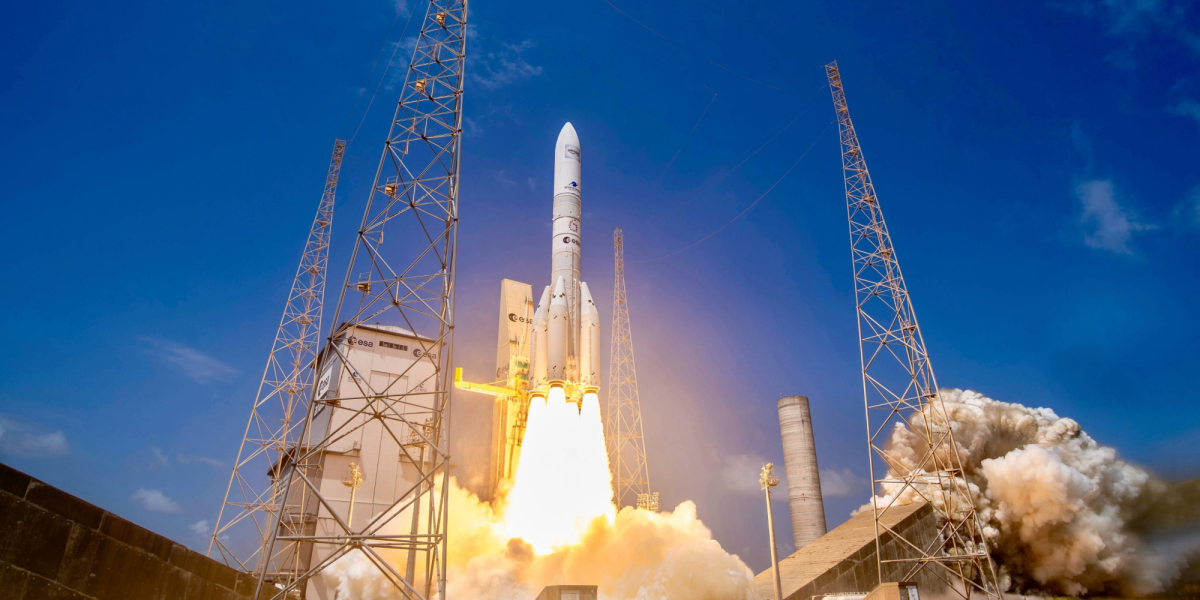
Watch Amazon's launch cadence. The company has scheduled 40 Leo satellites on the first Vulcan flight for 13 November 2026, pending range approval. It has 36 more on an Ariane 6 mission no earlier than 23 November. Amazon says the Vulcan flight will carry its largest Leo payload so far. Each launch adds capacity to the broadband network that will share ground systems with the direct-to-device service.
Watch the FCC's spectrum decisions: the 29 October meeting covers new auctions and up to 500 MHz for direct-to-device use. Rules that favour incumbents or new entrants will shape how quickly Amazon's 25 MHz becomes a consumer product.
Watch Apple: the company has said nothing beyond the April agreement. A statement on feature plans, device support or pricing would show whether the partnership survives the ownership change intact.
Finally, watch the 30-day reconsideration window: any party can ask the FCC to revisit the order. A challenge could add delay, even if the deal ultimately closes.