What did OpenAI say GPT-6 Astra designed?
On November 3, 2026, OpenAI published a research post titled "Accelerating engineering for the physical world." The post describes a test device that lets a user talk to Codex, OpenAI's coding agent, through a dedicated piece of hardware. OpenAI says the project covered the enclosure, the printed circuit board, the user interface and the firmware.
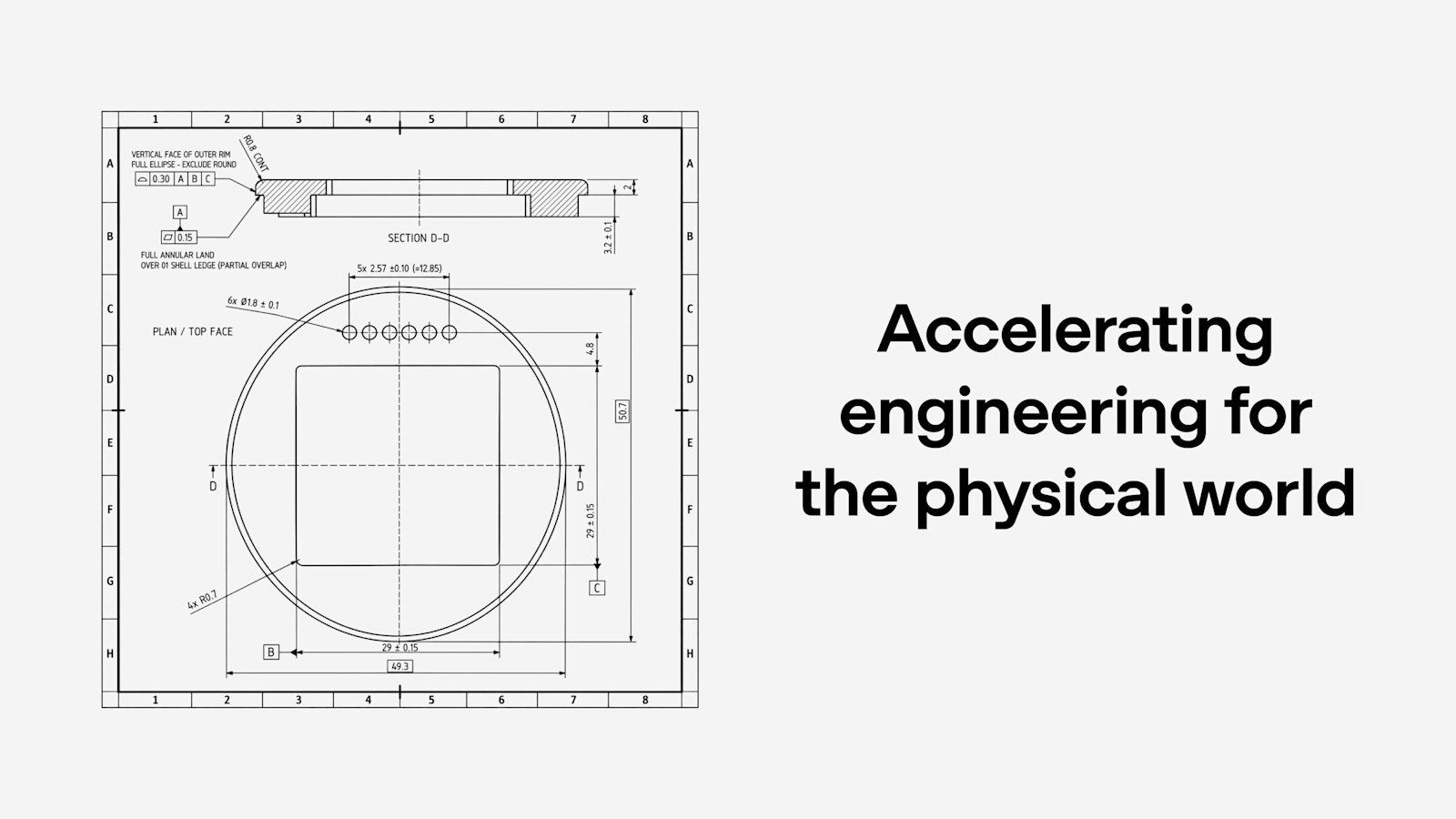
OpenAI says it used GPT-6, specifically the Astra model, to define the device's functional requirements and carry out the design work. Astra developed the look of the device, designed the enclosure and internal structures, selected electrical components and laid out the PCB. It also generated the interface and the software integrations that connect the device to Codex.
The work was done by two team members as a side project. OpenAI says they finished the design in under a week. A contract manufacturer then built a small batch of prototypes in under a month.
OpenAI framed the exercise as a test of whether it could create a device "without any direct human edits." That phrase is narrower than it sounds. Two people set the goal, ran the project and reviewed the output. OpenAI also says manufacturing readiness required several rounds of review and iteration.
The post is notable because it moves AI agents from software tasks into mechanical and electrical engineering. It is also a company demonstration, not an independent study. OpenAI designed the test, ran it and reported the result.
GPT-6 Astra was introduced on September 3, 2026, according to OpenAI's ChatGPT release notes. OpenAI launched it with improvements in coding, research, computer use and complex, multi-step work. The hardware post is the first detailed public example of the model being used across an entire hardware design loop.
OpenAI says its internal hardware and infrastructure teams already use Codex and ChatGPT for CAD models, manufacturing drawings, simulations and design reviews. Those teams work on robotics and compute infrastructure. The company says token usage across them has grown 23-fold since February.
How did two people build a device in under a week?
The project compressed several normally separate jobs into one loop. GPT-6 set the requirements. Astra produced the industrial design, the mechanical enclosure, the PCB layout, the firmware and the Codex integration. The team then checked the output and sent a batch to a contract manufacturer.
OpenAI says Astra drew on the company's recent Work Louder collaboration and on references from games and toys for the device's appearance. It designed internal structures to hold the components, chose electrical parts, placed them on the board and routed the connections so everything fit inside the enclosure. On the software side, it wrote the firmware and the code needed to talk to Codex.
Two team members did this as a side project in under a week, according to OpenAI. That timeline covers design files, not tooling or mass production. The contract manufacturer built prototypes in under a month, which is fast for hardware but still a separate step with its own engineering work.
OpenAI's engineers describe the tools as accelerators rather than replacements. Grace Lam, a forward-deployed engineer at OpenAI, said Codex has "dramatically accelerated how we move from an idea to an engineered part." Qiong Wang, a member of technical staff, described Codex and ChatGPT as "dependable, around-the-clock partners in engineering and project management."
The company also says the same workflow is spreading inside OpenAI. Hardware teams use the models to revise CAD, convert 3D designs into 2D manufacturing drawings, set up simulations and review designs. OpenAI measures that adoption in tokens, not hours saved. Token use rose 23-fold from February to October 2026, according to the post and Interesting Engineering's summary.
Token growth is a usage signal, not a productivity measure. A team can burn more tokens by exploring more variants, running longer reasoning or repeating failed attempts. OpenAI has not published cycle-time data, error rates or cost per finished design.
Where did Astra fall short?
OpenAI is unusually direct about the main failure. The post says Astra "did not consistently account for the manufacturer's production limits, tolerances, or details required for assembly." Getting the device ready for manufacturing took several rounds of review and iteration.
That is the gap between a design that looks right and a design that can be built. Production limits include the machines a factory has, the minimum feature sizes it can hold and the fixtures it needs. Tolerances define how much a part can deviate and still fit. Assembly details cover fasteners, access, cable routing and the order in which parts go together.
A model can generate a clean CAD file and still miss those constraints. OpenAI says the gaps are helping it identify what future models need to do better. The company has not said how many revisions were needed, how long they took or which parts failed.
The phrase "without any direct human edits" also needs context. OpenAI says two team members designed the test device with Astra, and the post describes several rounds of review. Humans set the requirements, judged the output and prepared it for manufacturing. The experiment tests whether the model can produce usable design files with limited editing, not whether a device can ship without engineers.
The failure is technically important. Tolerance stack-ups, design-for-manufacturing rules and assembly sequencing are where experienced hardware engineers earn their value. They are also hard to encode in a benchmark. A model that misses them can still look impressive in a demo and fail in a factory.
The Decoder notes that OpenAI has not shared details about the newer internal model that scored higher on its CAD benchmark. That limits what outside readers can verify about OpenAI's own comparison.
What does BenchCAD 2.0 actually measure?
OpenAI uses BenchCAD 2.0 to put a number on the CAD gap. The company says the benchmark tests whether models can reconstruct 3D parts and assemblies and identify connections on circuit boards. On that test, a newer internal model averaged 0.875. GPT-6 Astra scored 0.594 at its highest reasoning setting.
The public leaderboard tells a more detailed story. BenchCAD describes itself as a benchmark for code-based 3D modeling on professional tasks. Its 2.0 Core set has 100 held-out cases across six tasks. On the public board, GPT-6 Astra at max effort scores 0.59. Claude Opus 5.5 at max scores 0.57, Claude Sonnet 5.5 scores 0.41, Claude Haiku 5.5 scores 0.18 and Claude Fable 5.1 scores 0.30.
The cost column matters too. BenchCAD lists GPT-6 Astra at 0.59 for $11.05 per task at max effort. Claude Opus 5.5 reaches 0.57 at $27.58 per task. The cheaper settings score much lower: Astra at low effort costs $0.44 per task and scores 0.14.
Read together, the numbers support two conclusions. Astra has the strongest public score shown on this benchmark, and that score is still about 0.59 out of a possible 1.0. The unnamed internal model at 0.875 is far ahead, but OpenAI has not released it or described how it was trained. The public board does not include that model, so readers cannot compare it directly.
A benchmark score is not a product. BenchCAD measures specific programming and geometry tasks. It does not measure factory tolerances, certification, reliability or the cost of a design review. OpenAI describes the result as "early evidence" of impact on professional workflows. That is a narrower claim than readiness for production.
Why does this matter for hardware engineers and manufacturers?
The obvious effect is speed at the front of the process. A small team can explore more enclosure shapes, board layouts and interface ideas before committing to tooling. Simulations and drawing conversion can happen sooner. Engineers can spend less time on repetitive CAD edits and more time on the choices that need judgment.
OpenAI's partners show where the company wants to take this. Chip Ganassi Racing is testing workflows that turn 3D scans of existing parts into editable CAD models and 2D manufacturing drawings. That helps when the original design files are unavailable. Matthew Ortman, an R&D engineer at the team, said the model has been useful "going from raw scan data to a solid body."
Mazda is working with OpenAI on aerodynamics and crash safety. OpenAI says Astra in Codex helps Mazda's engineers model new nose shapes, simulate airflow and refine promising designs. Akihiro Nakata, a principal engineer at Mazda, said exploring and simulating dozens of variations helps the team see which features matter for aerodynamics.
Those are narrow, supervised uses. Engineers review the outputs. The work is still framed as exploration, not sign-off. That fits the current capability: models are useful for generating and testing options, while people remain responsible for the final design.
The affected jobs are broader than software. Mechanical engineers, electrical engineers, CAD technicians, drafters and manufacturing engineers all touch this workflow. So do contract manufacturers, whose production limits are the constraint Astra missed. A tool that speeds up design can increase the number of designs that reach a factory, which shifts pressure downstream.
For startups, the promise is cheaper early iteration. For large companies, the value is faster exploration across many teams. For manufacturers, the risk is receiving more designs that are visually complete but not ready to build. That is why the tolerance gap matters more than the demo.
What are the limits of OpenAI's claim?
OpenAI's evidence is self-reported. The company chose the task, set the success criteria and wrote the account. The post does not include the design files, the review logs or a detailed bill of materials. Outside engineers cannot check whether the device met its requirements or how much human editing happened.
The timeline is also hard to audit. "Under a week" covers two team members working on a side project, but the post does not say how many hours they worked or what prior work they reused. The contract manufacturer's month is a separate clock. A prototype batch is not a production line.
The benchmark comparison has a similar issue. OpenAI's internal model scores 0.875, but the company has not named it or explained the gap. The public leaderboard puts Astra at 0.59, which is a useful independent check on the Astra number. It does not verify the internal score.
Token growth is not evidence of output. A 23-fold increase could mean more experiments, more failed attempts or more automation of routine work. Without cycle-time and quality data, it is a sign of adoption rather than a measure of value.
Finally, the demo does not answer the liability question. If an AI-generated PCB or enclosure contributes to a safety problem, who signs off? OpenAI says industry collaborators review model outputs for accuracy and practical use. That is a reasonable safeguard for research. It is not a certification regime for products.
None of this makes the result unimportant. It means the claim should be read as a capability demonstration: a model produced a working prototype design with limited editing, and the same model missed manufacturing constraints that engineers had to catch.
What should we watch next?
Watch for independent tests of CAD and PCB output. A benchmark run by OpenAI is useful, but outside labs and manufacturers need to reproduce the workflow on their own parts. Error rates, tolerance compliance and review time matter more than a single score.
Watch whether OpenAI ships the internal model that scored 0.875. If it does, the public leaderboard should show whether the gain holds across tasks. If it stays internal, the gap remains a company claim.
Watch the partner case studies. Chip Ganassi Racing and Mazda are named collaborators, and both say engineers review the output. Measured cycle-time reductions, defect rates and cost per design would be more informative than another demo.
Watch the tooling and pricing. Codex and ChatGPT are already sold to businesses. If OpenAI adds engineering-specific features, the cost of a seat and the limits on usage will shape adoption. The 23-fold token growth also implies a larger bill.
Watch the standards work. AI-generated drawings, PCB layouts and simulation setups need clear rules for review and traceability. Manufacturers and regulators will decide how much automation they accept.
The safest summary is that OpenAI has shown a faster path from idea to prototype, not a faster path to a shipped product. A week to design files is a real change for hardware teams. A week to a product would be a different claim.