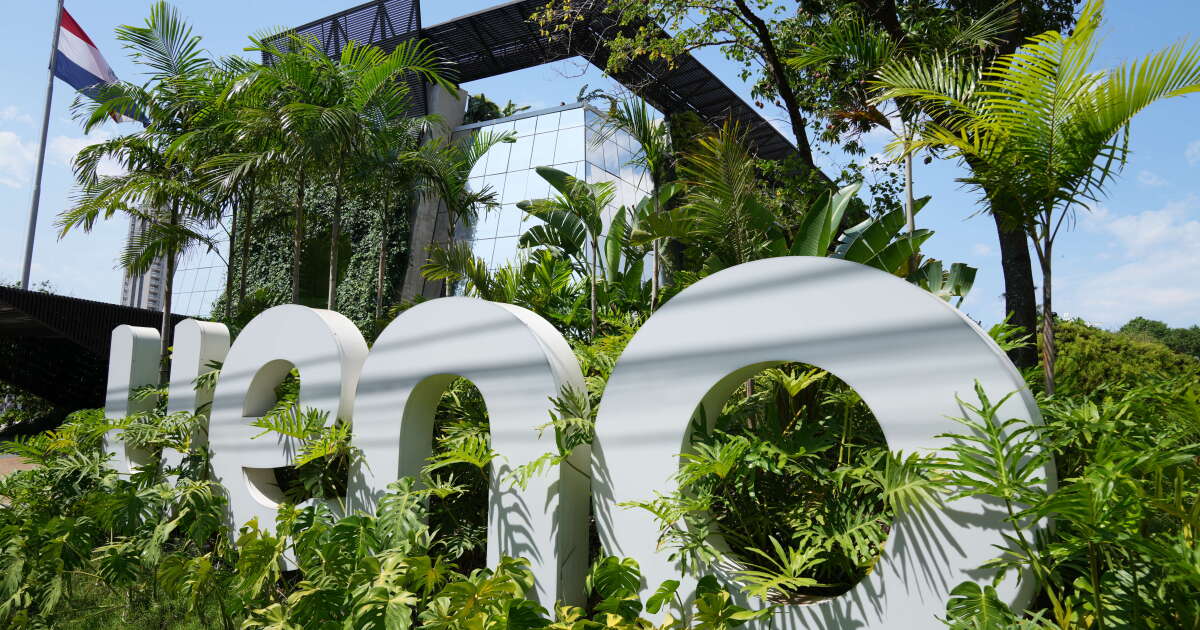
What happened at Ueno Bank?
At about 3am on Tuesday 3 November, the Central Bank of Paraguay announced its decision. Its board had unanimously ordered Ueno Bank into resolution the previous day. The bank's app went blank shortly afterwards, and cards, transfers and branch services stopped working.
Ueno was not a traditional lender. It began as a finance company in the 1970s and was bought by the conglomerate Grupo Vázquez in 2021. At the end of 2023 it received authorisation to operate as a digital bank. It grew quickly by offering cash-back on groceries, sponsoring the national football team and putting its name on the main stadium. By this week it claimed about 3 million customers, or roughly 60% of Paraguay's adults, and more than 70 locations. It was Paraguay's fifth-largest bank by assets, the Wall Street Journal reported.
The trigger was capital. The central bank said Ueno's solvency ratio had fallen below half the legal minimum after adjustments to its financial statements. Investigators found poorly documented loans to companies linked to the bank's owners. They also found expenses that had been counted as assets. The resolution is being handled under Paraguay's 2003 deposit-guarantee and bank-resolution law. That law lets regulators move deposits to stronger banks before liquidating what remains.
Prosecutors moved quickly. Police detained eight senior executives, including founder Miguel Vázquez and bank president Juan Manuel Gustale. Prosecutors charged 27 officials and business associates with breach of trust and attempted fraud. A judge ordered six of the eight jailed pending trial and two under house arrest. Lawyers for the executives said they needed time to review the allegations. One argued that boards do not decide individual loans. The central bank insists the problems are confined to Ueno and the wider system is sound.
Why did Paraguay's president resign?
Peña's connection to Ueno is at the centre of the political case. He held a stake in Ueno Holding until 2025 and sold his shares in April 2025, according to DW. He has described the holding as an investment and denies any management role or wrongdoing. Impeachment papers also cite two loans he received from the bank. They cite his appointment of Carlos Carvallo, who had chaired Financiera Ueno, to run the central bank. The papers note that the central bank approved Ueno's conversion into a bank 83 days after Carvallo took office.
Public money made the relationship more sensitive. Ueno held $800 million to $850 million in public deposits, about a quarter of its total. That money included funds from the state pension and health fund and the operators of Paraguay's hydroelectric dams. The IPS pension fund alone had about $380 million at the bank, the Associated Press reported. Central bank inspectors had flagged risky lending to owner-linked companies in June 2026. AP reported that nearly $39 million went to three such companies in a single day in September 2025. Peña dismissed the warnings as a smear campaign.
The political break came fast. Thirty-five opposition and ruling-party lawmakers filed an impeachment motion. It accused Peña of conflicts of interest, manipulating regulatory oversight, diverting pension funds and covering up the central bank's role. On Thursday the Chamber of Deputies voted 78-0 to send the charges to the Senate. Even Horacio Cartes, the former president and Colorado Party leader who had mentored Peña, endorsed removal. "We will not stand on the side of the theft of public, private and pensioners' funds," Cartes wrote.
Peña announced his resignation in a video posted to X while lawmakers debated the charges. "I have decided to submit my resignation as president of the republic," he said. He added that he was acting for "the stability of our country, social peace and the need to preserve our democratic institutions." He also apologised "if I have failed them at any point" but did not admit responsibility. Outside Congress, thousands of protesters demanded his removal and the return of their savings.
How much money is frozen, and who is protected?
Depositors are dealing with two different numbers. The first is the amount of public money exposed: up to $850 million, according to AP. That is about a quarter of Ueno's deposits. The second is the guarantee available to individuals. Paraguay's deposit-insurance regime covers up to 75 minimum monthly wages per depositor per institution. That equals ₲228.3 million, or about $37,000 at current exchange rates. The central bank estimates the guarantee covers the full balances of about 97% of Ueno's clients.
Payouts began on Thursday for the smallest accounts. Under a law rushed through Congress on Wednesday, the guarantee fund must repay depositors within five business days. Customers with no debts to the bank and balances of up to about $1,600 were first in line. About 280,000 people who banked only with Ueno were given new accounts at other institutions, AP reported. Larger depositors, including pension funds and companies, face a longer wait. Receivers must value the bank's assets and pursue recovery.
The human costs extend beyond account holders. Ueno and its parent group employed about 7,000 people, according to AP. Hundreds protested outside the Labour Ministry over unpaid wages and severance. On Wednesday, a rush to open accounts at other banks crashed their mobile apps. The guaraní fell nearly 4% against the dollar on Thursday. That brought its loss for the week to nearly 7%, according to central bank data cited by NPR.
The macro backdrop makes the shock sharper. Paraguay had recently won investment-grade credit ratings. It had been marketed as a stable, low-tax destination for foreign capital. Carvallo resigned at Peña's request, and Pedro Acosta Bernal became interim central bank president. He insisted that "the banking system is sound." Whether investors accept that distinction will depend on how quickly deposits are repaid and how far the investigation reaches.
Who is running Paraguay now?
Paraguay's leadership is in limbo. Peña announced his resignation on Thursday, but Congress has not formally accepted it. A joint session convened to decide whether to accept it adjourned without a decision after several lawmakers walked out, CNN reported. The Senate opened an impeachment trial on Thursday night. It rejected Peña's request for a 72-hour extension to prepare his defence and summoned him to appear on Friday, according to Reuters.
The distinction matters legally. If Congress accepts the resignation, Peña would retain immunity and eligibility for a lifetime Senate seat, opponents argue. If the Senate convicts him, he can be prosecuted. The chamber needs a two-thirds majority to remove him. Prosecutors have already opened three criminal cases against Peña and former officials, CNN reported. Peña says he will defend himself. "I will do so with arguments and evidence, with respect for the Constitution and the institutions of the Republic," he said.
Vice President Pedro Alliana is next in line and would serve out Peña's term through August 2028. He had been seeking the Colorado Party's 2028 presidential nomination but suspended that campaign as the crisis broke. As of early Friday he had not been sworn in, because the resignation remained unaccepted. Lawmakers would need to choose a new vice president if he takes over.
The result is a leadership vacuum at the centre of a financial rescue. The Senate trial is the decisive process, but its timing is uncertain. Peña's legal team has said he will appear, and the government has denied rumours that he left the country. Peña remains in office in the meantime, pending the Senate process. The same president who is fighting removal is still formally responsible for the response to the bank failure.
Why does a digital bank failure matter beyond Paraguay?
Paraguay's crisis is a case study in how quickly a licensed digital bank can become politically important. Ueno went from a rebranded finance company to a household name in less than five years. It used aggressive customer acquisition and state deposits to reach roughly 60% of adults. Its licence was granted at the end of 2023, under the same administration that later supervised it. The bank's reach made a resolution unavoidable once capital fell below the legal floor.
The deeper problem is institutional. Ueno's growth depended on public deposits from pension and health funds. It also depended on a central bank governor who had previously run the lender's predecessor. Those links are now the core of the impeachment case. The episode echoes a familiar pattern in emerging markets. Rapid financial innovation outpaces supervisory capacity, and political connections lower the cost of risk-taking until losses become public. Paraguay's deposit-insurance fund can absorb small accounts. The fiscal and political cost of the public deposits is another matter.
The regional and international stakes are limited but real. Paraguay is a small, open economy and a close US ally. Peña was one of the few Latin American leaders to attend President Donald Trump's second inauguration, and Washington has called him a "strategic partner." A prolonged leadership crisis could complicate trade and investment discussions. So far, the central bank says the damage is contained to Ueno.
The political lesson may travel further than the financial one. A bank failure has produced an impeachment vote, a resignation announcement and street protests in a country praised for stability. That makes Ueno a test of whether Paraguay's institutions can punish wrongdoing without destabilising the economy. It is also a test of whether voters will trust the guarantee fund while the courts sort out responsibility.
What should depositors and investors watch next?
Four things matter in the next few weeks. The first is the Senate. A two-thirds vote to convict would remove Peña and clear the way for Alliana. A rejection, or a decision to accept the resignation, would produce a different legal outcome. The second is the deposit payout. Small savers should receive money quickly, but pension funds and corporate depositors will wait for asset recoveries. The speed of those payments will shape public confidence in the guarantee fund.
The third is the criminal investigation. Prosecutors have charged 27 people and detained senior executives, but Peña has not been convicted of anything. The attorney general's cases will determine whether the crisis ends with individual accountability. They could also lead to a broader reckoning at the central bank and the finance ministry. The fourth is regulation. Paraguay's digital-banking rules, deposit-insurance limits and resolution powers will all be reviewed. The central bank's leadership has already changed.
Investors should watch the guaraní, sovereign bond spreads and any rating action. Paraguay's investment-grade status was a recent achievement. A prolonged political crisis or a larger fiscal cost for the guarantee fund could test it. The central bank has tried to separate Ueno from the rest of the system. Other banks' apps recovered after the initial rush. But confidence is the scarce commodity in a bank run, and official assurances are not the same as deposits back in customers' accounts.
For ordinary Paraguayans, the practical questions are simpler. When can they withdraw their money? What will the guarantee cover? Who will be held responsible? The answers depend on courts and Congress, not on the bank's app. The next week should clarify whether Peña's resignation ends the crisis or merely changes its venue.
What remains uncertain?
Several facts are still moving. Peña's resignation has not been accepted, so his legal status may change again. The Senate trial began on Friday, and a final vote has not been scheduled. Alliana had not been sworn in by early Friday. The lower house has impeached Peña, but impeachment is a charge, not a conviction. The two-thirds threshold in the Senate is high.
The money figures also carry caveats. Public deposits are reported at $800 million to $850 million. Ueno's total deposit base has not been published in full. The "about a quarter" share implies a larger balance sheet without giving an exact figure. The IPS exposure is reported as about $355 million by DW and about $380 million by AP. The guarantee is quoted as about $36,000 to $38,000 depending on the exchange rate. The legal limit is fixed in guaraníes.
Responsibility is contested. Peña says he was an investor who sold his shares and denies wrongdoing. The bank has said he was never a shareholder or investor, AP reported. Other reports say he held a stake in Ueno Holding until 2025. Those characterisations will be tested in court and in Congress. Prosecutors have charged executives, but no court has established the full scale of the losses.
Finally, the recovery number is unknown. Resolution allows regulators to transfer deposits and sell assets. The value of Ueno's loan book depends on loans that were poorly documented and may not be repaid. The guarantee fund covers most small savers. It does not make the public deposits whole by itself. Until receivers publish a recovery estimate, claims about the final cost are estimates, not facts.