What did the Philippines agree to buy?
The Department of Education has completed a competitive tender for 172,654 MacBook Neo laptops, Education Secretary Sonny Angara said on 3 November 2026. The order is worth about P7.4 billion, or roughly P43,000 per unit.
Public school teachers will receive 169,008 of the laptops. The remaining 3,646 are for administrative officers. Deliveries are scheduled from November 2026 to March 2027, with cluster launches across Luzon, Visayas and Mindanao beginning this month.
The Presidential Communications Office framed the purchase as part of a wider effort to modernise public education. Palace Press Officer Claire Castro said the laptops would help teachers prepare lessons and reduce their personal spending on equipment, according to Daily Tribune.
The package includes a five-year warranty, productivity software, delivery and logistics, and professional development. DepEd says the warranty is the longest it has secured for a laptop purchase; its previous standard was one year.
Apple chief executive John Ternus mentioned the order on the company's quarterly earnings call on 2 November. He said: "We recently secured our biggest education deal ever for Mac, with the Department of Education in the Philippines." He rounded the figure to 170,000 units.
The purchase sits inside the DepEd Computerization Program. DepEd has also awarded contracts for 62,717 Windows-based teacher laptops, so the government is building a mixed fleet rather than a single-platform estate.
Taken together, the program has contracted 231,725 laptops for teachers: 169,008 MacBook Neos and 62,717 Windows machines. The new order adds 3,646 Macs for administrative staff, which is why the full MacBook Neo package reaches 172,654 units.
Why is this Apple's biggest education deal for Mac?
Macs have long been a small, premium slice of school computing. Chromebooks and low-cost Windows machines dominate many education markets, especially in public school systems that buy in bulk. A national order of this size is unusual for Apple.
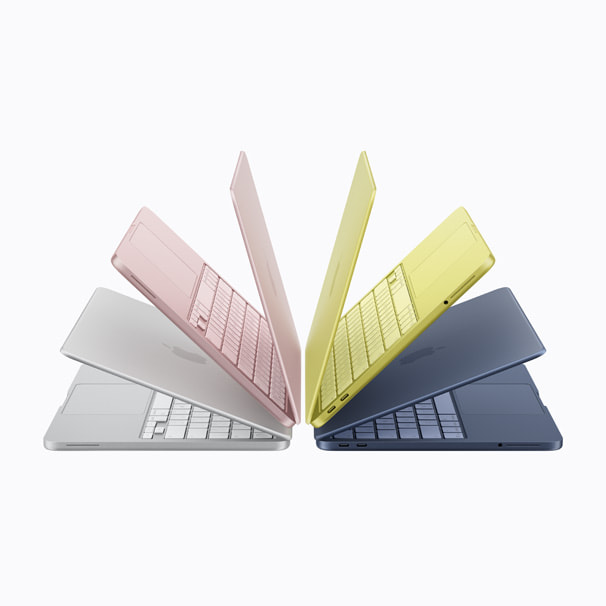
The device at the centre of the deal is also new. Apple announced the MacBook Neo on 4 March 2026 as its most affordable laptop, with a starting price of P39,990 and an education price of P33,990. It has a 13-inch Liquid Retina display, an A18 Pro chip and a fanless aluminium body.
Apple positions the Neo for everyday work: documents, browsing, video calls and on-device AI features. The company says it runs up to 16 hours on a charge and weighs 2.7 pounds. Those are Apple's claims, not independent test results.
The Neo is also unusual in Apple's line-up. It is the company's cheapest laptop, sold in four colours with an aluminium case, a 1080p webcam and a fanless design. Apple says it is the lowest-carbon MacBook it has made, with 60% recycled content.
For Apple, the Philippine order is a reference customer. It shows that the Neo can win a national tender, not just retail buyers. Apple reported $114.5 billion in revenue for the quarter ended 26 September 2026, and education is a strategic market rather than a large share of sales.
Announcing the order on an earnings call, rather than only in a press release, served that strategy. It let Apple present the deal to investors as evidence that a cheaper Mac can widen its addressable market in education.
Apple has not disclosed the contract value or the margin on the deal. The "biggest ever for Mac" description is the company's own, and it refers to Mac education sales, not to every Apple education sale.
How much is the Philippines paying per MacBook Neo?
DepEd puts the unit price at about P43,000. Officials compare that with a suggested retail price of P49,900, and say the discount is about P6,900 per laptop. Daily Tribune reported that the gap works out to an estimated P1.19 billion across the order.
The P6,900 figure comes from officials. Apple's current Philippine price of P49,990 implies a slightly larger gap of P6,990. The difference is small, but it shows why exact comparisons depend on which list price is used.
Apple's Philippine online store currently lists the base 256GB MacBook Neo at P49,990. Its education store lists the same starting model at P45,990. Measured against those prices, P43,000 is below both.
The comparison is not exact. The DepEd price covers a five-year warranty, delivery, software and training, while Apple's list prices cover the hardware alone. The department describes the figure as a package; it has not published a hardware-only price.
The department says the order went through competitive bidding, and Angara welcomed Apple's participation. The published reports do not include the bid documents or a line-by-line cost breakdown, so the package terms are known only in outline.
Timing also matters. At launch in March, Apple advertised P39,990 for consumers and P33,990 for education. Its current pages show higher figures. That makes the DepEd price look better against today's list than against the launch list.
The order is large relative to the program. The 2026 national budget set aside P10.68 billion for the DepEd Computerization Program. For 2027, DepEd is seeking P13 billion to buy more than 267,000 laptops, after the House of Representatives proposed less.
The 2026 allocation is already in place. The 2027 request is still in Congress, so the next tranche depends on the Senate's decision.
The arithmetic is simple. A total of 172,654 units at about P43,000 comes to roughly P7.42 billion, which matches the P7.4 billion figure reported by Rappler.
Will every public school teacher get one?
No. The Philippines has roughly 900,000 public school teachers. The 169,008 MacBook Neos reserved for teachers cover about 19% of them.
Add the 62,717 Windows-based teacher laptops already contracted, and the program covers about 231,725 teachers. That is roughly one in four, not the whole workforce.
Angara said teachers have long bought their own laptops or maintained outdated equipment. The order is meant to shift that cost to the state, at least for the teachers who receive a unit.
The Alliance of Concerned Teachers says the order is not enough. Its chairperson, Ruby Bernardo, argued that the procurement should not be presented as fulfilling the promise of a laptop for every teacher.
"Our educators are subsidizing the government's failure to provide even the most basic tools for their work," Bernardo said, according to The Philippine Star. She also warned that schools should not have to "raffle off a handful of devices" among staff.
President Ferdinand Marcos Jr. promised laptops for every public school teacher in his 2025 State of the Nation Address. The new order is a step toward that goal, not the finish line.
DepEd has not said which schools will receive the first units. That leaves open questions about how the department will choose recipients and whether remote schools will wait longer.
Because the first units will arrive in cluster launches, the allocation will become public quickly. It is too early to tell whether large schools, remote schools or particular grade levels will be first.
Scrutiny is heightened by history. A 2023 Rappler investigation found that laptops intended for public school teachers were being sold in retail and online stores. Lawmakers subsequently sought a congressional probe into the resale.
Is the MacBook Neo suited to five years of teaching work?
On paper, the Neo covers the basics well. The 13-inch screen has a 2408-by-1506 resolution and 500 nits of brightness. The fanless design is silent, and the long battery claim is useful for classrooms with few power outlets.
Apple says the A18 Pro is up to 50% faster than a best-selling PC with an Intel Core Ultra 5 for everyday tasks, and up to three times faster for some on-device AI jobs. Those benchmarks were run by Apple on pre-production units and should be treated as vendor claims.
macOS Tahoe also includes Apple Intelligence features such as Writing Tools and Live Translation. Those tools may help with lesson planning, but they are not a substitute for training or subject knowledge.
The main limits are memory and storage. The base model has 8GB of unified memory and a 256GB SSD. That is enough for documents, browsing and video calls, but it may leave little room for five years of files, apps and operating-system updates.
For a teacher who mostly uses a browser, a learning-management system and office documents, 8GB is workable. For someone editing video, running virtual labs or keeping dozens of tabs open, it will feel tight sooner.
The five-year warranty may matter more than the chip. A laptop that fails in year three is a classroom problem, not a spec-sheet problem. The warranty's coverage, service network and replacement terms will determine whether the promise holds.
The specifications, as published by Apple, are:
- •Display: 13-inch Liquid Retina, 2408 by 1506 pixels, 500 nits, 1 billion colours.
- •Chip: A18 Pro with a 6-core CPU, 5-core GPU and 16-core Neural Engine.
- •Memory and storage: 8GB unified memory and 256GB SSD in the base model, with a 512GB option.
- •Battery and weight: up to 16 hours of battery life, according to Apple; 2.7 pounds; fanless.
- •Ports and wireless: two USB-C ports, a headphone jack, Wi-Fi 6E and Bluetooth 6.
What are the risks in the rollout?
Software is the bigger question. macOS runs Microsoft Word, Excel and major browsers, and Apple's materials highlight those apps. But some school systems and legacy tools are Windows-only. The mixed Mac and Windows fleet suggests DepEd is hedging rather than standardising.
The five-year warranty is a meaningful improvement over the usual one year. It does not answer every support question. The announcements do not describe repair turnaround, loaner devices or how schools will log faults.
Training is part of the package. DepEd and Apple plan a framework called GuroXL with the National Educators Academy of the Philippines, leading to Apple Teacher certifications. Training helps, but research on classroom technology repeatedly finds that devices alone rarely change teaching practice.
Logistics are the next test. DepEd must move 172,654 laptops from suppliers to schools across three island groups in five months, during the school year. The package covers delivery and logistics, but not connectivity. Schools with weak internet will still struggle with cloud services, updates and online training.
Asset management is another gap. A fleet this size needs enrolment, tagging, warranty tracking and replacement rules. The public announcements do not describe how those tasks will be handled.
ACT's demands go beyond the sticker price. The group wants devices that are reasonably priced, functional, durable and suited to teachers' actual work, plus continuing training and reliable support.
The announcements do not include metrics for the rollout. Useful ones would include on-time delivery, training completion, repair turnaround and whether teachers stop using personal devices for school work.
Fiscal risk is real. DepEd's 2027 request for P13 billion was trimmed in the House version of the budget, which could slow the next batch. If memory and storage costs keep rising, the next tranche could also cost more per unit.
The peso cost of imported electronics is another variable. Exchange rates and component prices can raise or lower the cost of later batches, even when the model does not change.
What happens next for DepEd and Apple?
The first cluster and mega-cluster launches are due in November, with deliveries continuing through March 2027. The pace of those handovers will show whether the timetable is realistic.
The first 90 days will be the tell. If the November launches deliver units to identifiable schools, the program will have a visible start. If they are photo opportunities with units held back, the March deadline will look fragile.
Watch for the school-level allocation list. It will reveal whether the department prioritises large schools, remote schools or particular grade levels, and whether the rollout is spread evenly across regions.
Watch the warranty data. A five-year warranty is only useful if repairs are fast and schools receive working replacements without long gaps.
Watch the 2027 budget. The Senate's version of the spending plan will shape whether DepEd can buy another 267,000 laptops, and at what price.
Watch Apple. If the Neo wins more public-sector orders, the company may talk about education more often on earnings calls. If it does not, this deal may remain a one-off.
For Apple, the test is whether the deal becomes a template. A second national tender, in the Philippines or elsewhere, would show that the Neo's price and package model travel. A single order is still a win, but a narrower one.
If deliveries slip past March, the next school year could start without the devices in classrooms. That would weaken the case for another tranche.
For teachers, the practical question is simpler. Does the laptop replace a personal purchase and reduce unpaid evening work? The procurement answers the first part for 169,008 teachers. The second part depends on training, support and time.