What did Toyota and Waymo announce?
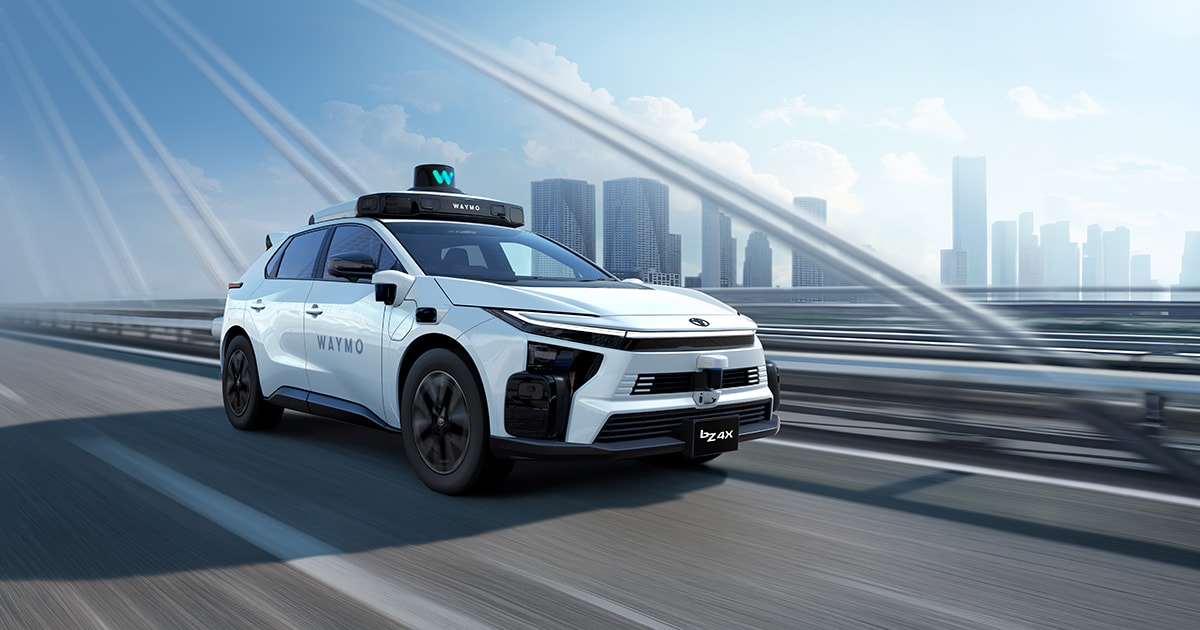
Toyota and Waymo announced a new phase of their partnership on 30 October 2026. Toyota will build a custom version of its bZ4X electric SUV for Waymo's driverless ride-hailing service. The cars will be assembled at Toyota's Takaoka plant in Toyota City, Aichi Prefecture, Japan. Waymo's self-driving hardware will be fitted there too.
The companies will begin "initial operations to test and validate" the fleet in Japan in 2027. They plan to deploy it in the United Kingdom and other Waymo markets "in the following years". The work builds on a preliminary agreement the two firms signed in April 2025.
Toyota described the project as a milestone. It calls the service Japan's first fully autonomous ride-hailing service to use high-volume, domestically manufactured vehicles. The cars are designed for Level 4 automation. That means they can operate without a person at the wheel inside defined conditions.
The announcement did not include a fleet size, the first Japanese city, or fare details. Toyota executive vice president Hiroki Nakajima said initial operations would involve a small number of vehicles. Reuters reported that the companies would not say where in Japan the fleet would operate.
"Safety technology makes the biggest difference when it reaches as many people as possible," Nakajima said. Waymo co-CEO Dmitri Dolgov gave a simpler reason. "We chose Toyota because of our respect for the legendary safety, reliability, and quality of their vehicles," he said.
Toyota listed rear legroom, automatic doors, a power liftgate, and ambient lighting as rider features. The design is meant to make entry and exit easier, including for passengers with limited mobility.
The deal is not a new AI model or a new self-driving system. It is an agreement about who builds the cars, where they are built, and how Waymo's existing technology reaches new markets.
Why does Waymo need Toyota to build its robotaxis?
Waymo's core product is the Waymo Driver, an AI system that controls the car. The company says it now serves more than 500,000 trips a week across 15 US cities. By the end of June 2026, its vehicles had driven 270 million autonomous miles on public roads.
That scale depends on cars. Waymo does not mass-produce vehicles itself. It buys them from automakers and integrates its sensors and computers. Hyundai signed a similar multi-year deal in October 2024. It covers Ioniq 5 SUVs built at Hyundai's Georgia plant for the Waymo One fleet.
Toyota adds a partner with factories in many countries and a long record in mass production. Dolgov cited safety, reliability, and quality when explaining the choice. Toyota said the Takaoka plant will handle everything from assembling the base vehicle to fitting Waymo's hardware under one roof.
The arrangement is narrower than the April 2025 plan. At that time, the companies said they would develop a new autonomous vehicle platform together. Friday's announcement casts Toyota as the vehicle supplier and Waymo as the technology provider. TechCrunch described it as "more like a conventional vehicle supplier deal".
That shift matters for anyone waiting for robotaxis. Building a self-driving system is one problem. Building, cleaning, charging, and repairing a fleet at scale is another. Robotaxis need durable hardware, fast servicing, and predictable production. A high-volume carmaker helps with all three.
The partnership also gives Waymo right-hand-drive vehicles for Japan and the UK. Dolgov told Reuters the company would start with those markets. "We'll start with the right-hand drive markets in Japan and the UK," he said. He added that Waymo had no other countries, timelines, or specifics to share.
For Waymo, the Toyota deal follows a pattern. The technology is developed in-house; the vehicles come from partners. That keeps Waymo focused on software, operations, and safety validation while automakers handle metal, wiring, and factory capacity.
Waymo's service also depends on local operations and support staff. Each new city needs local partners. In Tokyo, that role belongs to Nihon Kotsu and GO. In London, Waymo named Moove as its fleet partner.
When will Toyota-built robotaxis reach Japan and the UK?
Japan is the first market named in the deal. Waymo has tested vehicles in Tokyo since 2025, with trained crews from taxi operator Nihon Kotsu supervising. In September 2026, Waymo, Nihon Kotsu, and hailing app GO agreed to prepare a commercial driverless service in Tokyo in 2027.
That plan calls for rides through the GO and Waymo apps. It starts with a small fleet and expands to about 100 vehicles. It depends on permits from national and local authorities. Waymo said the timeline is contingent on those approvals and on completing validation.
Japan already permits Level 4 operations. A 2022 amendment to the Road Traffic Act created a permission system for "specified automated operation". The rules took effect in April 2023, according to the National Police Agency. Operators still need approval for routes and vehicles.
The 30 October release does not name Tokyo or say the bZ4X will serve that Tokyo launch. Reuters reported that the companies did not disclose where in Japan the bZ4X fleet would run. Waymo is also testing Jaguar I-Pace cars in Japan. Dolgov told Reuters that a pilot with those cars is still planned for 2027.
Japan's taxi industry has struggled with driver shortages since the pandemic. A 2025 survey put the average age of taxi drivers nationally at 56.8. That was down 3.4 years from the previous year, according to The Yomiuri Shimbun. Waymo and its partners say driverless rides would complement human-driven taxis, not replace them.
Britain is less certain. Waymo said in October 2025 that it intended to offer rides with no human behind the wheel in London in 2026. It named Moove as its fleet partner and has been testing I-Pace vehicles in the city.
In August 2026, The Guardian reported that a London rollout was unlikely that year. Transport for London had not published the guidance operators must follow. No vehicles had been approved by the Driver and Vehicle Standards Agency. TfL said it had received no permit applications.
The UK requires an "automated passenger services permit" from the DVSA and consent from TfL. Uber and Wayve hold licences for paid rides with a human safety driver under different rules. Baidu's Apollo Go began testing in London in July 2026 and plans public rides in 2027, The Guardian reported.
The Guardian also reported that TfL had licensed 15 Ford Mustang Mach-E cars equipped with Wayve's software. A safety driver sits in the driver's seat. Uber and Wayve say more than 100,000 Londoners are on a waiting list.
Toyota's release says UK deployment is planned for "following years" after Japan. It gives no date. That makes regulators, not Toyota's factory, the main constraint on when British riders see a Toyota-built Waymo.
How safe are Waymo's driverless cars?
Waymo publishes its own safety comparisons, and those numbers shape its regulatory case. In September 2026, the company said its driver had covered 270 million autonomous miles through the end of June.
Across five metropolitan areas, Waymo reported 82% fewer injury-causing crashes than a human benchmark. It reported 95% fewer crashes involving serious injury or worse, which it describes as 20 times fewer. It also reported 93% fewer injury-causing crashes involving pedestrians.
Those figures are company analyses, not an independent audit. Waymo publishes its methodology and says a formal safety review comes before deployment. Regulators in Japan and the UK will make their own judgments.
Dolgov repeated the claim on 30 October. He said Waymo is "up to 20x safer than human drivers when it comes to serious crash injuries". The phrase "up to" matters. It refers to the most severe crashes, not every crash.
For riders, the practical questions are different. They include how a car handles road works, how remote assistance works, and what happens after a collision. Waymo says its Tokyo testing has been supervised by trained Nihon Kotsu crews.
Safety claims carry commercial weight. A robotaxi service that regulators trust can expand. One involved in a serious, high-profile crash can face suspensions. That is why Waymo ties each new market to its safety data and validation work.
The figures compare Waymo cars with human drivers in the same cities. They do not prove that a Toyota-built fleet will perform the same way in Tokyo or London. New cities bring different roads, weather, and traffic patterns.
The data covers Atlanta, Austin, Los Angeles, Phoenix, and San Francisco. Tokyo and London are not included, because Waymo does not yet run public driverless services there.
Waymo also says its driver has covered billions of miles in simulation. Simulation helps test rare events, but it cannot fully replace real-world experience. Regulators will look at both.
What does Toyota get from the deal?
Toyota gets a role in a business that goes beyond the driver assistance it has emphasised publicly. Its public materials highlight Toyota Safety Sense and safety work across vehicles and infrastructure. The Waymo deal adds a Level 4 fleet business without requiring Toyota to build the whole system.
Toyota also gets influence over vehicle design. Waymo's hardware needs power, cooling, cleaning, and redundancy. Designing those systems into the bZ4X from the start is easier than retrofitting them to an existing car.
Toyota is pursuing its own automation in parallel. In August 2026, Toyota said it would equip passenger vehicles in 2028 with new automation. The system would let drivers use "only minimal handling", according to Kyodo News. That is a system for retail cars that still expects a driver, not a driverless taxi.
The two tracks could complement each other. Data and safety insights from Waymo's fleet may inform Toyota's consumer systems. The companies said they will explore that work with Woven by Toyota, Toyota's software and mobility unit.
Toyota and Waymo also said they will keep exploring self-driving technology for personally owned Toyota vehicles. That is the more consequential idea. A Toyota you could buy with Waymo technology would reach far more people than a taxi fleet.
No product, price, or launch date for such a car has been announced. For now, the personal-vehicle idea is a statement of intent, not a plan with a timetable.
Toyota's manufacturing role also gives it a say in how quickly Waymo can add vehicles. The Takaoka line will shape supply, not just design.
Toyota's scale also matters for parts and servicing. A robotaxi fleet needs replacement sensors, body panels, and trained technicians. A global automaker can supply those through existing networks.
What is still unknown about the deal?
The biggest gaps are commercial. Toyota has not said how many bZ4Xs it will build, what they will cost, or when production starts. Waymo has not said which Japanese city will host the first fleet or how fares will be set.
Technical details are thin too. Toyota has not published range, charging speed, or sensor layout for the robotaxi version. The bZ4X is an electric SUV, but a taxi's daily duty cycle differs from a private car's.
The UK plan is vaguer still. "Following years" could mean 2028, 2029, or later. It depends on permits, vehicle certification, and TfL consent. Waymo's London plans have already slipped once.
It is also unclear how the bZ4X fits with Waymo's other vehicles. Waymo is testing I-Pace cars in Japan and has a supply deal with Hyundai for Ioniq 5s. Whether the bZ4X replaces, supplements, or only seeds new markets has not been explained.
The announcement did not address liability in a crash, data sharing, or how much control Waymo will have over local operations. Those questions will be settled market by market, through permits and contracts.
The companies also have not said how many jobs the service would create or change. Waymo and its partners say robotaxis can help with labour shortages. Drivers and local officials will want more detail.
For riders, the most important unknown is availability. A 2027 test fleet in Japan is not the same as a public service in London. The gap between the two could be years.
What to watch next
The first checkpoint is Japan's permit process. Waymo's Tokyo plan needs approvals before a 2027 launch. Watch for vehicle certification, route approvals, and the first public rides.
The second is the UK. TfL's guidance and the DVSA's permit decisions will show whether London opens in 2027 or later. Waymo's Munich plan, announced for late 2027, is another test of its European timeline.
The third is Toyota's factory. If bZ4X production for Waymo begins at Takaoka, that will be the clearest sign. It would show the partnership is moving from announcement to volume.
The fourth is competition. Tesla showed its two-seat Cybercab in Tokyo in September 2026. Baidu is testing in London. Nissan, Uber, and Wayve plan a Tokyo pilot by late 2026, subject to talks with regulators. Japan and the UK are becoming contested markets, not just test beds.
The fifth is price. Robotaxi fares, vehicle costs, and utilisation will determine whether the business works without subsidies. None of the companies has published those numbers.
For now, the Toyota deal is a supply agreement with a long horizon. It says more about how Waymo plans to scale than about a new AI model. The AI is already driving. The next contest is who builds, permits, and operates the cars.
Alphabet's earnings calls and Toyota's production plans will offer the next hard data points. Until then, the deal is a promise about capacity, not proof of it.
Riders in Tokyo and London should watch for concrete dates from regulators, not company targets. Permits have moved more slowly than the companies hoped.