What is Australia's AI copyright opt-out plan?
Australia has not passed a new copyright law for artificial intelligence. It is consulting on options, and the clearest picture of those options comes from leaked government documents reported by ABC News in September 2026.
The documents set out two models. Under the first, an AI company could train on copyrighted material after signing a minimum number of deals with rights holders. It would not have to pay every creator whose work was used. Under the second, companies would pay a new central body, or separate organisations representing different groups of creators, which would distribute the money.
Both models share one feature: creators would have to opt out. That reverses the current default, under which a company generally needs permission or a licence before using copyright material. The government has confirmed it is consulting creators, media organisations and AI companies. It has not published draft legislation.
Australia ruled out a broad text and data mining exception in late 2025. Ministers now talk about giving AI developers legal certainty while preserving control and payment for creators. The reported options are an attempt to reconcile those goals.
The Attorney-General's Department describes the divide in its own submission to the inquiry. Creative and media groups see room for voluntary direct or collective licensing under existing law. Some technology companies say it is "practically infeasible" to strike deals for the volumes needed, and that legal risk cannot be reduced to an acceptable level.
AI companies are lobbying openly. Anthropic, maker of Claude, has asked for a "narrow form of conditional approval" and suggested that rights holders signal objections through robots.txt files. OpenAI told the same parliamentary inquiry that "Copyright policy is part of that investment environment."
The attorney general, Michelle Rowland, has said there are "no plans to weaken copyright protections". Critics say an opt-out model does exactly that, because the default becomes use rather than permission.
Why do First Nations artists call AI 'Temu slop'?
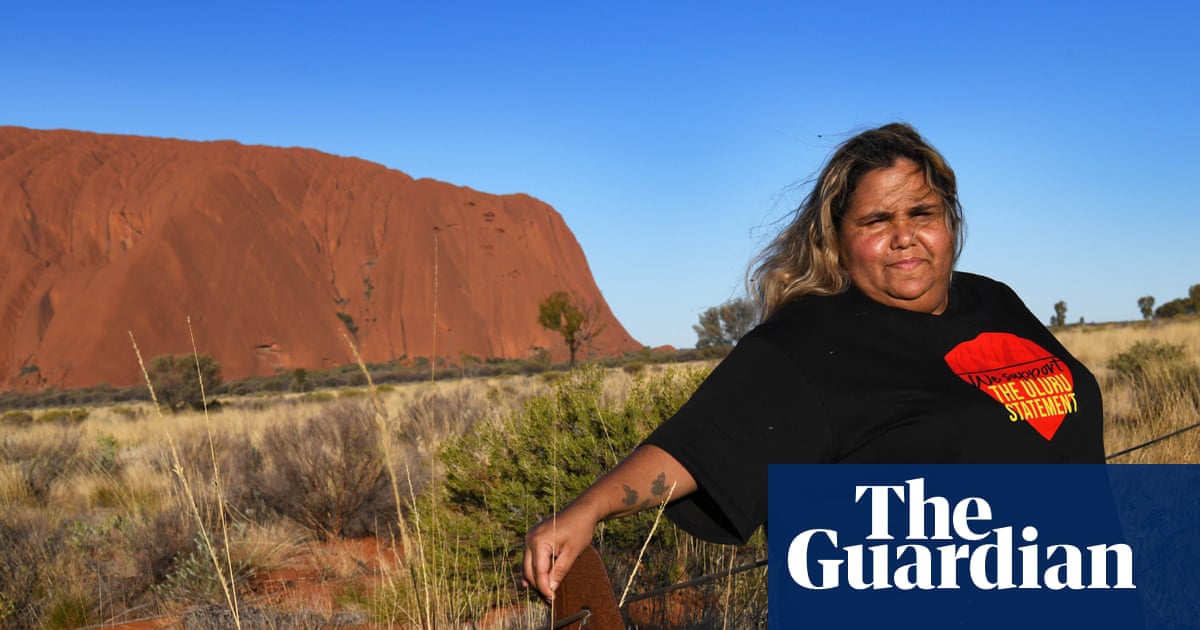
Sally Scales, a Pitjantjatjara artist and chair of the National Gallery of Australia's First Nations advisory group, used the phrase in an interview with Guardian Australia published on 1 November 2026. She said AI was turning First Nations art into "Temu slop".
Her concern is not only copying. It is the loss of authority. "It's a theft of the agency of the artist," she said. She added that "the artist's family lineage is not there, the lived experience is not there."
Guardian Australia reported that searches on Temu, Shein and Amazon return many works described as Aboriginal paintings, along with coasters and stubby holders bearing Aboriginal-style designs. Most carry no attribution to an artist.
The National Association for the Visual Arts (NAVA) told the joint select committee that AI-generated "Aboriginal-style" images imitate community-specific techniques, stories, motifs and mark-making. NAVA warned this was "spreading misinformation, causing cultural and economic harm and competing with work by First Nations artists."
NAVA also cited the Wuthathi and Meriam lawyer Terri Janke, who has documented AI scraping Indigenous art centre websites, removing artists' names and altering their work. Janke is an international authority on Indigenous cultural and intellectual property (ICIP).
ICIP is broader than copyright. It can cover songs, paintings and other cultural knowledge, including material that is sacred. Some of it is commercially valuable. Copyright can protect a particular photograph or canvas. It is a poorer fit for knowledge held collectively and passed down.
That creates a poor fit with a statute built around individual authors and limited terms. Kathy Bowrey, a professor at UNSW Law, told the Guardian that one in five creators already had problems with infringement before AI. For First Nations artists, she said, the problems are compounded by a "lack of control over ownership and respect for Aboriginal culture."
Bowrey described a common pattern. A corporate client pays once to use an artwork, then uses AI to make derivative works and use the faces of the artists without consent. "The corporate client can pay you once and then make unauthorised Aboriginal derivative work," she said. The artist loses repeat business and then competes with a machine.
NAVA's 2025 survey of more than 890 visual artists found that more than 80% believed AI posed risks to their income, practice and moral rights. Seventy-three percent supported compensation when creative work is used in AI training.
How would an opt-out model affect artists and rights holders?
The practical effect of an opt-out system is a shift in who does the work. Today, a company that wants to use a protected work must usually find the owner and agree terms. Under opt-out, the owner must find out that the work is being used and then object.
That is hard at dataset scale. Rights holders often do not know whether their work was included in training data. Even when they do, objecting may require technical measures that change as crawlers change.
SBS made this point in its submission to the inquiry. It said "Robots.txt mechanisms are routinely ignored or bypassed", and that blocking evolving training bots increases the burden on rights holders. SBS argued the onus should sit with AI companies.
Musicians have made similar arguments. Holly Rankin, who performs as Jack River, told ABC News that the government had promised creators control. She said AI companies seem capable of "everything except for licensing content correctly."
Music industry groups have focused on the property question. Annabelle Herd, chief executive of the Australian Recording Industry Association, called the plan an acquisition of property. Chris Maund of Mushroom Records said existing licensing works and pointed to AI deals already struck with streaming services.
Maund also raised a cross-border problem. If Australia permits training that other countries restrict, an AI company could train here and avoid the copyright laws that apply outside Australia. That would weaken protections for rights holders elsewhere, not just at home.
The two reported options try to solve different problems. Minimum-deal models aim to seed a licensing market without forcing every company to negotiate with every creator. Central-fund models aim to pay people who would never sign an individual deal. The reporting does not set out how rates would be set, how works would be identified, or how foreign rights holders would be treated.
Some creators have proposed alternatives. Bowrey and Oliver Bown, both at UNSW, have drafted a framework called Copyright Plus. It would require AI companies to disclose training sources, give creators a right to say no, impose a levy to pay creative workers, and speed up takedowns of fake or unauthorised content. They presented it to the federal government in October 2026.
NAVA's asks point in a similar direction: consent, payment, transparency about training data, and specific protection for ICIP. The dispute is not whether AI can learn from public material. It is what counts as permission.
Could the plan breach Australia's Constitution?
A separate legal question has emerged in the final weeks of the inquiry. Paragraph 31 of section 51 of the Constitution gives the Commonwealth power to make laws for "the acquisition of property on just terms". If a law takes property, the owner is generally entitled to compensation.
Nationals senator Ross Cadell, a member of the parliamentary committee on AI, raised the issue at a hearing with attorney-general's department officials on 30 October 2026. He warned that Australia could be liable to rights holders around the world. "We could be liable for 'just terms' compensation for acquiring that property for every rights holder on Earth," he said.
Anne Twomey, professor emerita of law at the University of Sydney, said the concern was "potentially" real depending on how legislation was drafted. She noted that no legislative proposal had been released. The High Court has considered property acquisition in cases involving video games, cigarette plain packaging and cassette tapes, with different outcomes.
The department said it was "extremely alive" to the issue, according to Guardian Australia. Officials did not directly answer questions about liability to foreign rights holders.
Industry groups see a clear risk. Herd said the proposal was "clearly an acquisition of property" and a path to a constitutional challenge. Cadell called the potential exposure "the biggest compensation rights case in history".
The argument is untested. A court would need a law to review, and the government has not introduced one. The risk may shape drafting: a scheme that pays rights holders, or that preserves a permission requirement, would be harder to characterise as an acquisition.
The legal characterisation matters. A law that requires AI companies to pay a levy into a fund may be treated as a licensing scheme. A law that removes the need for permission may be treated as taking something from rights holders. The details of the scheme will determine how it is characterised.
What has the government promised?
The political standard was set by Prime Minister Anthony Albanese in a speech at the University of Sydney on 15 July 2026. He said Australian writers, musicians, artists and journalists must retain ownership and control of their work.
"No company should use Australian books, music, art or news to build or train AI without the artist's control," he said. "Anything less, is theft."
The same speech announced Australian Standards for AI, including rules for large data centres. Albanese said he would seek agreement from premiers and chief ministers at National Cabinet, with legislation planned for early next year. The copyright work is being led by the attorney general, alongside the broader standards package.
Rowland's office has repeated the commitment. A spokesperson said any future copyright changes should deliver "meaningful control and fair compensation". The government says it is consulting creators, media organisations and AI companies on a range of options.
The inquiry gives that consultation a public record. The Joint Select Committee on Artificial Intelligence was appointed on 20 August 2026. Submissions closed on 14 September, and the committee must report by 30 November 2026.
The committee's terms of reference include data sovereignty and sovereign AI capability, so the copyright question sits beside broader questions about where models are trained and who controls the data. Its hearings ran through September and October, with a session in Canberra on 30 October.
Corporate submissions show the pressure from both sides. OpenAI, which met ministers alongside Anthropic executives in September, framed copyright as part of Australia's investment environment. The September meetings included Anthropic's special international envoy, Jeffrey Bleich, and OpenAI's vice president of global policy, Ann O'Leary, according to ABC News.
Anthropic accepted that a broad exception had been ruled out, but argued for conditional approval and do-not-crawl signals. Public broadcasters pushed back. The ABC warned that unregulated AI services could accelerate the "cannibalisation" of Australian news. SBS questioned whether robots.txt can work at all.
What happens next?
The committee's report is due by 30 November 2026. It is not binding, but it will frame the government's final choice. Draft copyright laws are expected by the end of the year, with parliamentary consideration in 2027, according to Guardian Australia.
Three details will matter most. The first is the default: permission first, or use first with an opt-out. The second is the money: direct deals, a central fund, or a levy. The third is ICIP: whether Indigenous cultural knowledge gets protection that ordinary copyright does not provide.
The constitutional question will shape all three. A scheme that pays rights holders broadly may reduce legal risk. A scheme that relies on unpaid use and individual objections may invite challenges from Australian and foreign rights holders.
Timing is a fourth factor. If the committee reports on 30 November and the government introduces a bill soon after, the opt-out debate could run alongside the broader AI standards legislation announced in July. That would give critics more chances to amend the model, and give AI companies more chances to lobby.
The politics are already visible. Albanese's Sydney seat of Grayndler is home to more than 3,000 cultural and creative businesses, and 10% of its workers are in cultural fields, compared with 4.2% nationally, Guardian Australia reported. Local artists have criticised the proposal, and an independent candidate, Hannah Ferguson, is challenging the prime minister at the next election.
For Scales, the test is narrower. Her objection is about authority as much as money. She said AI-generated work is not made by anyone with the connection, so the family lineage and lived experience are missing. The policy debate will decide whether that distinction has legal force.
The next signals are the committee report, the draft bill and the first court challenge, if there is one. Until then, the government's promise of control and its reported opt-out options remain in tension.