What would Proposition 45 change about environmental review?
The California Environmental Quality Act, known as CEQA, dates from 1970. It requires state and local agencies to study a project's environmental effects before approving it. Agencies must consider alternatives, take public comment and respond to it. People who believe the process was mishandled can sue.
Proposition 45 would create a separate track for projects it calls essential. The ballot text, which names the measure the Building an Affordable California Act, lists eight categories. They are housing, clean energy, water, public health, public safety, broadband internet access, education facilities and transportation. An applicant could choose the new procedures or stay with the old ones.
The deadlines are the measure's core. A local agency would have 365 business days to certify an environmental impact report. It would have 180 business days for a negative declaration and 90 business days for other environmental documents. Those limits are maximums, not targets, and an applicant can agree to extend them.
Public review would also shrink. A draft environmental impact report would get 45 days of comment, while a negative declaration would get 20. Comments arriving outside those windows would be excluded from the administrative record. The measure would bar agencies from reopening a comment period at a later hearing.
The measure would change who writes the alternatives. Today agencies develop and compare options that reduce harm. Under Prop 45, the applicant would draft a single alternative for the agency to consider. Tribal consultation would be limited to tribes on the federal recognition list that are culturally affiliated with the area.
Courts would face new limits too. A challenge would have to be filed within 30 days and resolved within 270 days, including appeals. A judge could not rescind an approval. The judge could pause only the part of a project that failed review, with a narrow exception for clear public safety harm.
The Legislative Analyst's Office estimates initial costs in the high tens of millions of dollars a year. The figure could exceed $100 million. Applicant and litigant fees would cover some of that. The analyst says longer-term effects are uncertain and could be larger.
Why data centers became the flashpoint
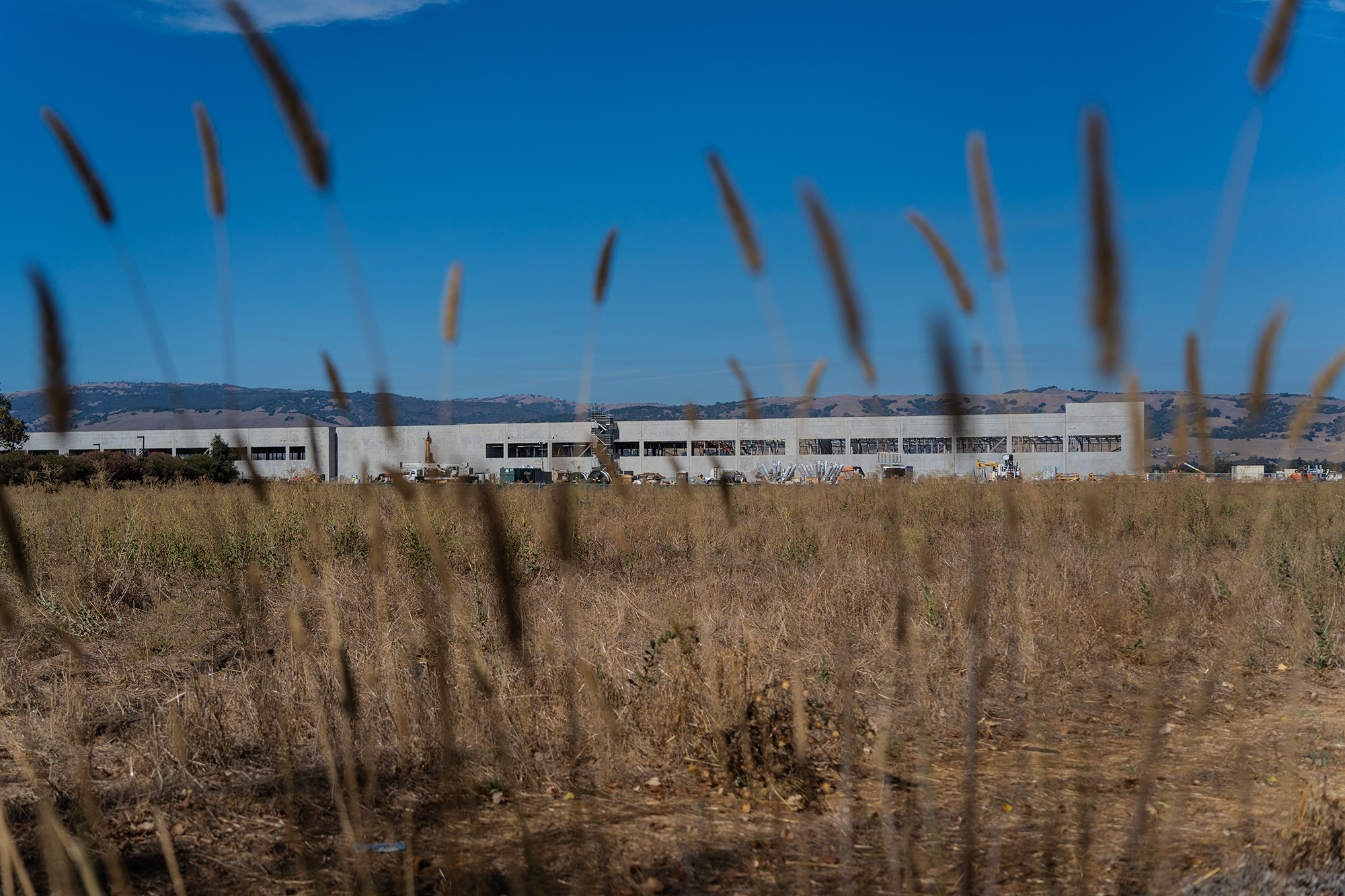
The measure never uses the phrase data center. That absence has not kept the two apart. California is one of the busiest markets for AI computing, and new campuses face growing resistance over water, power and land.
The demand is global and measurable. The International Energy Agency says data centres used about 415 terawatt-hours in 2024, or roughly 1.5% of the world's electricity. It expects that figure to more than double to around 945 terawatt-hours by 2030. The United States accounts for the largest share of growth.
Local governments have moved faster than the state. CalMatters counted at least 26 cities and counties that have proposed or passed moratoriums, bans or strict limits. Coachella banned large-scale AI data centers on 26 August, becoming the second California city to do so. Monterey Park voters approved a ban in June.
Bay Area cities have taken a softer route. San Francisco issued a 45-day urgency moratorium after the state laws passed, according to Holland & Knight. Oakland paused approvals, while San Jose and Santa Clara drafted standards.
Sacramento also acted. On 21 September, Governor Gavin Newsom signed seven data center bills. They cover energy reporting, water disclosures, rate structures and land use. SB 887 is the environmental piece, and it is the one most exposed to Prop 45.
SB 887 defines data centers for CEQA purposes. It removes the categorical exemptions that let some projects avoid review. Every data center must now go through at least an initial study. The law also lets the Governor certify qualifying projects for faster court review, but only under strict conditions.
Those conditions include paying for grid interconnection and avoiding a net increase in fossil fuel use. A project would also need at least four hours of zero-carbon storage at peak demand, plus an enforceable community benefits agreement. Mayer Brown, a law firm tracking the rules, calls them among the most rigorous in California.
That is the backdrop for the Prop 45 fight. The measure is promoted as a housing and infrastructure fix. Depending on how courts read it, it could give data centers a separate path through rules the state just wrote.
Would data centers really qualify for the fast track?
Supporters say no, and they point to the text. The official proponent, attorney Kurt Oneto, argues that data centers do not appear among the eight eligible categories. The measure expressly excludes high-speed rail, Delta conveyance, nuclear power, jails and new oil and gas production.
Oneto also argues that the broadband definition is borrowed from Government Code section 53167. In his reading, the two provisions must be interpreted together, and the older statute does not reach data centers. He rejects the ancillary argument.
The Yes campaign points to another authority. On 20 October it released an opinion from the Office of Legislative Counsel, the legislature's nonpartisan legal office. The opinion concluded that the broadband definition does not include a data center.
The Data Center Coalition said it had reviewed the measure and concluded that data centers are neither eligible nor covered. CalMatters reported that the coalition backs the measure and that its director of government affairs, Khara Boender, disputed the loophole claim.
Opponents read the same words differently. The definition covers mass-market retail service that transmits data to and from substantially all internet endpoints. It also covers capabilities incidental to and enabling that service. A hyperscale campus that serves cloud and content traffic might fit, they argue.
The ancillary clause is the second opening. An essential project includes related infrastructure needed to serve it, such as electric and telecommunications facilities. Opponents say a developer could present a data center as part of a qualifying broadband project.
Legal scholars have made the case in print. UC Davis law professor emeritus Richard Frank and attorney Matthew McKerley argued in the Daily Journal. In their view, a data center with broadband transmission infrastructure could squeeze into the definition. UCLA's Julia Stein told CalMatters the measure is a blunt instrument because of how far its secondary umbrella reaches.
Earthjustice attorney Fernando Gaytan put the worry plainly. He said developers could find a way to shoehorn projects into the essential category. Communities, he added, get cut out of the conversation. The measure's silence on data centers, while naming other exclusions, is what opponents see as evidence of intent.
Neither side has a court ruling. The Legislative Counsel opinion is advice, not binding precedent. If Prop 45 passes, the meaning of broadband and ancillary would likely be settled by litigation rather than by the campaign.
What a fast-tracked data center would actually get
First, one clarification. Prop 45 would not exempt an eligible project from CEQA. The text says the chapter does not exempt essential projects from environmental review. It changes the procedure and the clock.
Agencies would keep the power to approve or reject a project. The measure says it does not predetermine any outcome and does not reduce a public agency's authority. Agencies could still charge fees to cover the cost of processing applications.
For a data center that qualified, the practical gains would be speed and certainty. An EIR would have a 365-business-day ceiling. Comment would be capped at 45 days. The applicant would control the single alternative. Tribal consultation would be narrower.
The judicial changes matter more. A project approval could be challenged only within 30 days. The case would have to finish within 270 days, with a possible 90-day extension. A court could not vacate the approval, and could order changes only to the part of the project that failed review.
The measure also reaches backward. An application filed before the effective date can be withdrawn and resubmitted. Applicants can use the new process only if the project has not received final approval. That matters for projects already in the pipeline.
The supersession clause is where the SB 887 conflict lives. Prop 45 says its provisions control over conflicting environmental review requirements. Opponents argue that would let a qualifying data center skip the conditions SB 887 attaches to fast judicial review. Supporters say the clause never applies because data centers are not eligible.
Local governments would carry the risk. Earthjustice's Nina Robertson told CalMatters that ambiguity in the ballot text would trigger immediate litigation over permitting authority. Cities and counties, she said, would pay the legal bills.
The measure does preserve one backstop. A court could halt a specific part of a project for a public safety impact that cannot be mitigated. The evidence would have to be clear and convincing. That is narrower than the current power to stop a project that skipped CEQA.
Who is paying for the campaign
The yes campaign reported more than $40 million in contributions, and opponents reported more than $31 million in spending, according to CalMatters. Exact totals depend on the filing date.
The yes ledger includes large checks from a utility and a developer. PG&E gave $3.05 million, and warehouse and data center developer Prologis gave $500,000, according to CalMatters. The California Chamber of Commerce sponsored the measure.
Inside Climate News found $2 million in donations from three data center builders. It also reported two $500,000 donations from California Resources Corp. The outlet describes the company as the state's largest oil and gas producer. One gift went to Prop 45 campaigns and the other to a chamber-linked business committee. The company has a data center under environmental review at its Elk Hills oil field.
That detail cuts both ways. Oil and gas facilities are expressly excluded from Prop 45. A data center at an oil field is not.
Support is not only corporate. The California and Hawaii chapter of the NAACP backs the measure. Its president, Rick Callender, argued in September that delays on housing, clean energy and health facilities fall hardest on working families.
The No side disputes the affordability pitch. Inside Climate News noted that the measure contains no requirement to reduce housing costs or utility bills. The campaign's spokesperson, Woody Little, called housing a smokescreen for other projects.
The opposition is a coalition of labor, health, environmental and environmental justice groups. CalMatters names the California Labor Federation and the Western Center on Law & Poverty. Inside Climate News puts the coalition at more than 550 organizations.
What the polls show before election day
The Public Policy Institute of California surveyed 1,086 likely voters from 16 to 22 October. It found 46% yes and 50% no, with a margin of error of 3.8 points. The rest were undecided.
That is a sharp fall from the summer. PPIC found 73% support in July, when the question described the measure in general terms. By October, support had fallen to 46%.
The numbers fit a familiar pattern in ballot measure politics. Voters like streamlining in principle but grow cautious when specific protections are at stake. The Yes side's late push has focused on housing costs. The No side has focused on water, air and tribal rights.
Turnout is likely to decide it. A 50-46 split is inside the range where a few points of differential turnout can flip the result. The measure needs a simple majority.
What to watch after election day
If Prop 45 passes, the first fight will be over its scope. Data center developers, cities and environmental groups will test whether the broadband and ancillary language reaches a computing campus. The answer will come from courts, not from the campaign.
The second fight will be over pending projects. The withdrawal-and-resubmission provision gives applicants an incentive to restart applications. Local governments that passed moratoriums will argue those bans still control land use, even if CEQA review speeds up.
SB 887 will not disappear. It remains in statute. A court would have to resolve any conflict with Prop 45. The Newsom administration would also have to decide how to apply both laws to the same project. That is an administrative choice with litigation risk either way.
If Prop 45 fails, CEQA stays as it is, and the seven data center laws become the main framework. Local moratoriums are likely to keep spreading. The underlying pressure, AI demand for power and land, does not depend on the vote.
Either way, the measure has already changed the debate. A technical fight over review deadlines became a proxy for who gets to decide where AI infrastructure goes. The count on 3 November will not settle that question.