What are the charges in the $129 million AI impersonation case?
Federal prosecutors in Manhattan unsealed an indictment on Thursday. Three foreign nationals are accused of using artificial intelligence to impersonate corporate executives and law firm attorneys. The U.S. Attorney's Office for the Southern District of New York says the scheme stole more than $129 million.
The defendants are Jacob Soall, 41, Sharon Hazan, 54, and Guy Sheetrit, 42. Prosecutors say the alleged fraud ran from July 2024 to February 2026. All three were arrested in Europe between June and September, and extradition requests are pending.
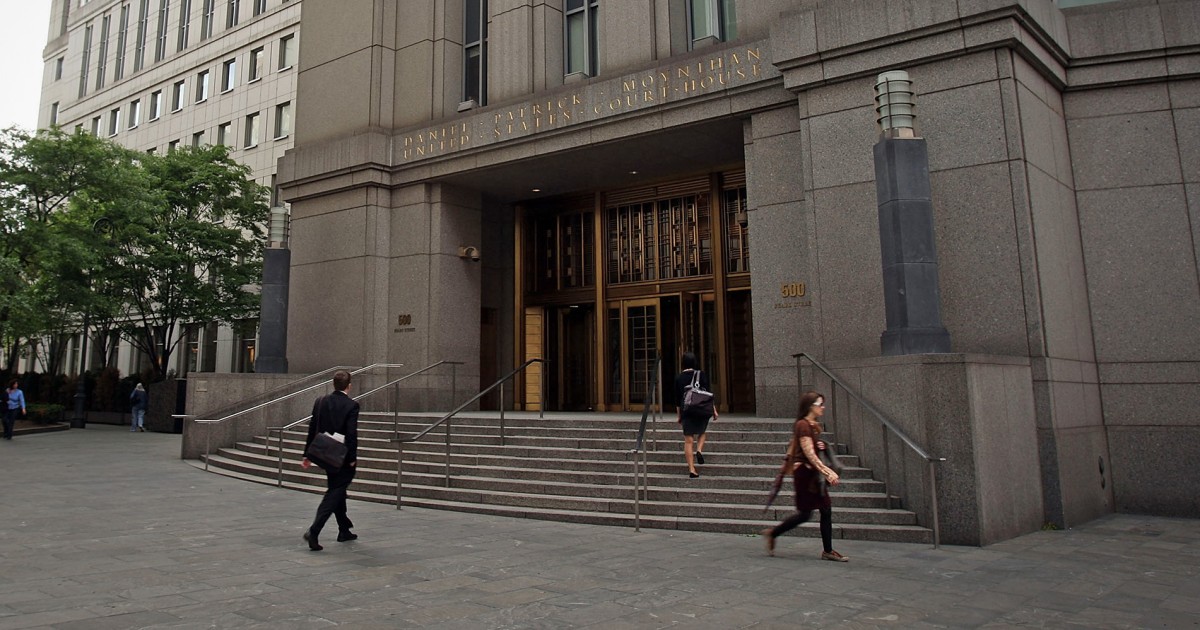
The case was investigated by FBI New York and the U.S. Attorney's Office for the Southern District of New York. The indictment was returned in Manhattan federal court.
The alleged transfers moved through US banks and overseas accounts. That cross-border flow supports federal wire fraud charges. Manhattan prosecutors routinely handle large financial fraud cases with international victims.
Each defendant faces seven charges. The counts include conspiracy to commit wire fraud, wire fraud and money laundering conspiracy. They also include two counts of aggravated identity theft and two counts of money laundering. Most counts carry a maximum sentence of 20 years, CBS News reported. The aggravated identity theft counts carry a two-year maximum, according to the U.S. attorney's office.
None of the men has been convicted in this case. Lawyers for Soall and Sheetrit did not respond to requests for comment, CBS News reported. It was not clear whether Hazan had an attorney.
How did the alleged AI voice and video scam work?
Prosecutors describe a staged sequence that began with an email. The message appeared to come from the target company's chief executive. It asked an accounting employee for help with a confidential financial transaction, often an acquisition.
The employee was then invited to a voice or video call. On that call, the defendants allegedly used AI to mimic the chief executive's voice and sometimes image. The fake executive then referred the employee to an attorney at a large international law firm.
That attorney was also part of the conspiracy, according to the indictment. Soall, who used the nickname “Rocky Balboa,” impersonated British attorneys. Prosecutors say he followed a handwritten script titled “Lawyer Call” to sound credible.
The fake attorney told the employee to wire money to a bank account controlled by the group. The funds were then converted into cryptocurrency. Prosecutors say that step was meant to conceal the source, ownership and control of the stolen money.
The alleged scheme did not require breaking into a company's network. It relied on authority, urgency and a believable voice. Security teams call this business email compromise, but added voice and video make the usual verification steps less reliable.
The two-step structure is central to the allegations. A chief executive asking for secrecy is unusual but plausible. A lawyer confirming the deal adds a second authority figure. An employee who hesitates to challenge a direct order may still defer to a lawyer.
The indictment says the group targeted employees who could authorize large transfers. Those employees were typically in accounting departments, according to the U.S. attorney's office. They were chosen for their access rather than their seniority.
Prosecutors say the group impersonated at least seven executives, Courthouse News reported. Each defendant played a different role. Soall handled the lawyer calls, while Hazan and Sheetrit are accused of laundering the proceeds. That division of labour let one person manage the executive impersonation and another manage the money.
Who were the victims and how much was stolen?
Prosecutors did not name the victim companies. The indictment lists losses at organizations in several US states and the United Kingdom. ABC News reported these figures from the charging document:
- •$11,578,474 from a financial technology company headquartered in the United Kingdom.
- •$5,242,747 from a pet food company headquartered in Florida.
- •$4,829,580 from a hospital system headquartered in Missouri.
- •$4,639,918 from a mutual fund company headquartered in Massachusetts.
- •$2,968,497 from a hospital system headquartered in California.
- •$2,684,580 from a bank headquartered in Rhode Island.
What do the listed losses reveal about the scheme?
The six disclosed figures add up to about $31.9 million. NBC News also listed an investment bank in New York among the victims. The indictment says other companies lost money, bringing the total above $129 million.
The gap between attempts and losses matters. CBS News reported that the group targeted thousands of companies worldwide. The indictment lists completed thefts at a smaller set of organizations. Prosecutors describe the listed losses as examples rather than the full total.
The victim mix is revealing. Hospitals, banks and a mutual fund company handle routine, high-value payments. A single wire can be irreversible once it leaves the bank. Fraudsters therefore need one convincing call, not a long campaign inside a network.
The amounts also suggest a preference for targets large enough to absorb a seven-figure loss without immediate collapse. A pet food company and a regional bank sit alongside hospital systems and a UK fintech. The common thread is a finance department that can move money quickly.
Why does the Justice Department call this “SI-enabled crime”?
The press release describes the case as an “SI-enabled” fraud scheme. The abbreviation stands for super intelligence. NBC News notes that SI is the White House's preferred term for artificial intelligence. Courthouse News describes it as President Donald Trump's preferred term.
“SI technology offers tremendous potential,” U.S. Attorney Jamie McDonald said in the release. “But the public should recognize that there are some who seek to use this emerging technology to pursue criminal goals,” he added. He warned of “the emerging threat of SI-enabled crime,” according to the release.
The release's title uses the phrase “scheme to use super intelligence to defraud.” That phrasing is more dramatic than the conduct described. The alleged tools mimicked voices and images, which commercial services can do. No reporting suggests the group built or used an autonomous system.
The wording is notable. Researchers generally use superintelligence to describe hypothetical systems that exceed human capability. Voice cloning tools sold today do not meet that definition. They imitate a specific person's speech from samples, without general reasoning.
Terminology can shape policy. A label that sounds like an existential risk may pull attention toward long-term safety debates. A label like AI-enabled fraud points instead to ordinary law enforcement and accounting controls. The same facts can support either framing.
The case also tests whether existing statutes are enough. Prosecutors charged wire fraud, identity theft and money laundering rather than a new AI offence. That approach avoids waiting for Congress to pass AI-specific criminal law.
The indictment alleges conduct that would be illegal without any AI. Impersonating an executive to obtain money is ordinary fraud. The technology changes the scale and the credibility of the deception, not its legal character.
What do the arrests and extradition mean for the case?
Soall was arrested in Spain in June. Hazan was arrested in Spain in August. Sheetrit was arrested in the United Kingdom in September.
All three remain outside the United States unless extraditions proceed. No trial date has been announced. Extradition can take months or longer, especially when a defendant contests the request.
Extradition from Spain and the United Kingdom requires approval from courts in those countries. Those proceedings are separate from the US case and can be contested. They often move slowly, which means the Manhattan case may sit idle for months.
Soall is described as living in Marbella, Spain, with ties to the United Kingdom. Hazan is from Israel. Sheetrit is from Israel and the United Arab Emirates.
Hazan used nicknames including “Superman Cash,” “Impossible Mission,” “Fat Boy” and “Ron,” NBC News reported. Soall also used the alias “Seba Clarke.”
Hazan has a prior federal conviction in Manhattan. He was convicted of conspiracy to commit bank fraud in 2008, according to the U.S. attorney's office.
Prosecutors say Hazan described himself as a veteran money launderer. They allege he claimed to have laundered more than $400 million in three years. He also allegedly called himself “number one all over the world” among professional launderers.
The reporting does not say whether any money has been recovered. It also does not identify the co-conspirators mentioned in the indictment. Those gaps matter because restitution for victims depends on assets that investigators can trace and seize.
The indictment refers to co-conspirators without naming them. Prosecutors sometimes leave such references vague while an investigation continues. Additional charges or defendants could follow, but no reporting suggests that has happened.
How can finance teams defend against AI voice fraud?
The practical lesson is that a familiar voice is no longer proof of identity. Finance teams should verify payment requests through a second channel. Calling a known number, not one supplied by the caller, is the simplest control.
Wire transfers above a set threshold should require two approvals. At least one approver should see the original request. Changes to vendor bank details deserve separate verification with a known contact.
Employees should treat secrecy and urgency as warning signs. Confidential deals are a common pretext because they discourage staff from asking colleagues. A request that bypasses normal process should trigger a review, not a rush.
Executives who travel frequently create openings for this kind of request. Staff may assume a call is legitimate because the real executive is hard to reach. A shared calendar and a known deputy can close that gap.
Training should include accounting staff, executive assistants and anyone who can authorize payments. Tabletop exercises can show how a fake executive call sounds. Procedures should be written down and tested before an incident.
Law firms are attractive props because clients already trust them. A caller who claims to represent a firm handling an acquisition sounds routine. Firms should tell clients that they will never request wire transfers by unsolicited call. Clients should confirm through the firm's published number.
Deepfake detection software can help, but it is not a reliable gate. Compression, lighting and call quality affect the result. A process control works even when the voice is perfect.
FBI Assistant Director in Charge James C. Barnacle Jr. said the bureau would keep adapting. “As criminals continue to weaponize emerging technologies, the FBI remains committed to rapidly adapting our capabilities,” he said. He added that the bureau aims to disrupt those who harm businesses in its communities.
The threat is not theoretical for large companies. A PYMNTS Intelligence report in April examined deepfake exposure. It found that 58% of companies with more than $1 billion in revenue had encountered AI-generated documents or deepfake attacks last year. That was 11 percentage points more than smaller businesses.
Controls should also cover outbound communication. A fraudster who cannot reach the chief executive may still spoof the executive's email address. Domain monitoring, message authentication and staff skepticism remain useful complements to payment checks.
What happens next in the AI impersonation case?
The immediate next step is extradition. Once in New York, the defendants would be arraigned and a trial schedule would follow. Those proceedings could take a year or more.
Prosecutors may also seek forfeiture of assets. The indictment alleges cryptocurrency conversions, which can be traced on public ledgers but also moved quickly. Whether victims recover anything will depend on what remains.
The case fits a pattern in the same courthouse. Courthouse News noted an earlier AI-related prosecution. A North Carolina man used AI-generated songs and bots to generate more than $8 million in royalties. He was sentenced to 18 months in prison.
For companies, the lesson is that fraud controls must assume synthetic media. Voice verification alone is weak. A payment process that requires independent confirmation is stronger.
For policymakers, the case offers a concrete example of harm. It involves no exotic model and no novel legal theory. The alleged tools were AI services used to imitate real people.
Three signals are worth watching. The first is whether the defendants are extradited and arraigned in New York. The second is whether prosecutors name additional defendants. The third is whether any seized assets are returned to victims.
Civil litigation is another possibility. Victims could pursue the defendants or the banks that handled the transfers. The cited reporting does not describe any such cases.
The charges remain allegations. A grand jury found probable cause, but guilt must be proven beyond a reasonable doubt. Readers should treat the loss figures as prosecutors' claims until they are tested in court.
The most important open question is whether the scheme was unusual or part of a wider pattern. Fraud investigators have warned for years that voice cloning would reach finance departments. This indictment suggests that warning has become operational reality.