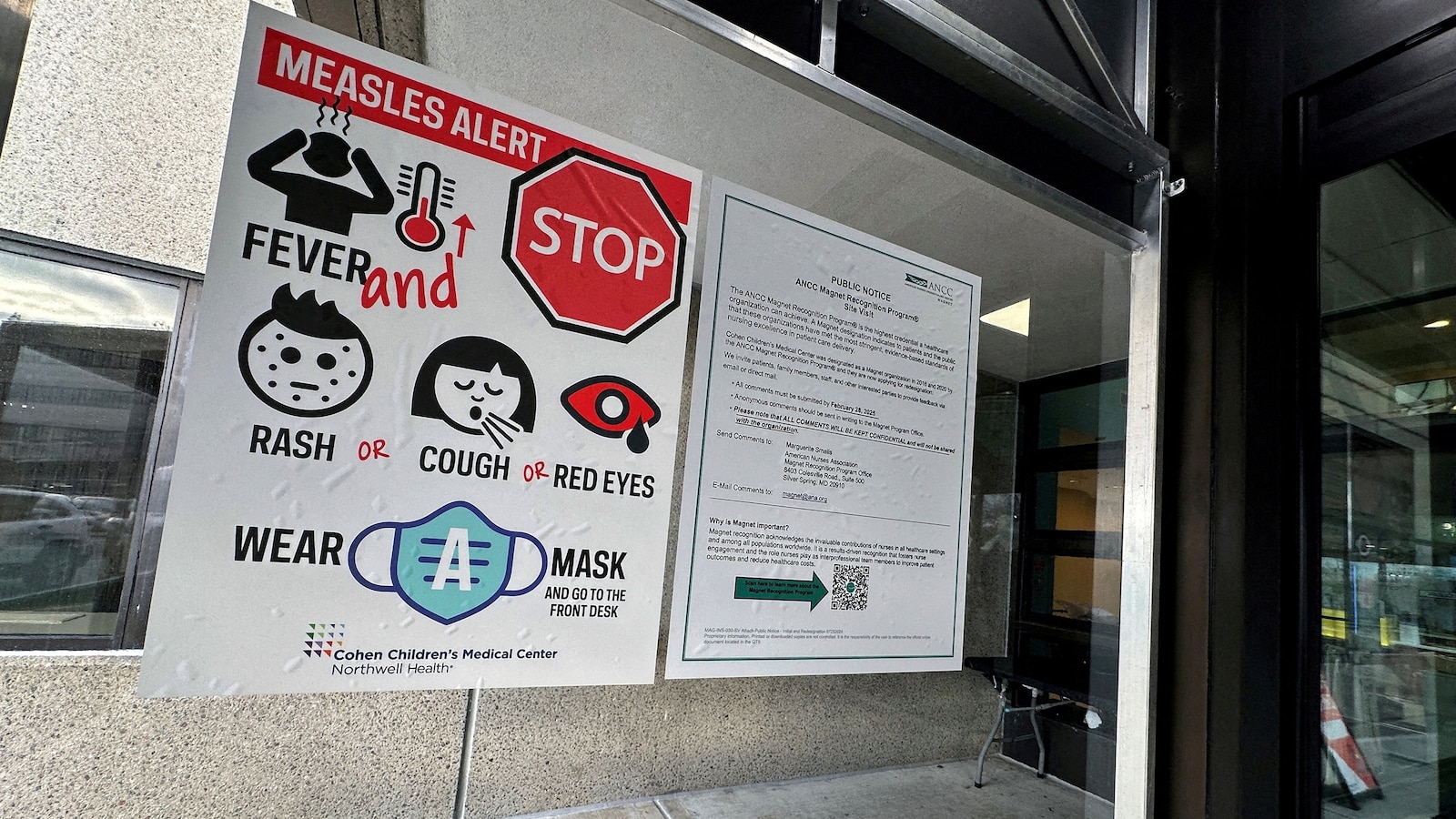
What happened in Wisconsin?
Wisconsin's health department reported on November 5 that an infant had died from measles. The coroner listed measles as the immediate cause. It was the first measles death in the state since 1990.
The infant lived in Grant County, in the southwest corner of Wisconsin, according to the Milwaukee Journal Sentinel. The newspaper reported that the child was too young to be vaccinated. DHS withheld other details to protect the family's privacy.
The death is the most visible result of an outbreak that began in early July. Cases have clustered in Grant, Lafayette and Iowa counties. As of November 3, the state had recorded 431 cases in 13 counties and nine hospitalizations.
DHS says that is the highest case count in Wisconsin in more than 35 years. The department also warns that the official total probably misses cases. Not everyone who gets sick seeks care or gets tested.
The state has tried to slow the spread with vaccines. Since August 1, DHS has delivered 2,000 MMR doses to local health departments in communities with confirmed cases. Providers in Wisconsin have administered more than 42,000 doses in the same period.
"My heart is broken for the family," said DHS Secretary Kirsten Johnson. She said that "any death of a child is a tragedy and even more so when it is related to a vaccine-preventable disease."
Two doses of the MMR vaccine are about 97% effective at preventing measles, according to DHS. The first routine dose is recommended at 12 to 15 months. Infants younger than that depend on the immunity of the people around them.
That dependence is the central problem in this outbreak. Measles spreads easily, and infants cannot be fully protected on their own. When community coverage slips, the youngest children face the consequences first.
How many people have died from measles in 2026?
State health departments have reported at least eight measles deaths in the US this year. The tally includes six in Pennsylvania, one in New York and one in Wisconsin, according to ABC News. CIDRAP, a health news service at the University of Minnesota, also put the total at eight or more.
Pennsylvania confirmed its sixth death on November 4. The patient was an unvaccinated resident of Jefferson County. The state's six deaths include three people from Lancaster County, two from Jefferson County and one from Mifflin County.
The same release put Pennsylvania's 2026 case count at 1,467 across 45 counties. Only five of those cases, less than 1%, were in vaccinated people. State officials were still investigating a reported death in Franklin County.
That Franklin County case shows how hard counting can be. A coroner there reported that a 39-year-old woman died from a probable cardiac event tied to possible measles complications. The state said the death did not fit its definition, the Philadelphia Inquirer reported.
New York's death involved a 7-month-old in Lewis County, announced on November 2. It was New York's first measles death in 30 years, and the child was unvaccinated.
State Health Commissioner James V. McDonald said New York had 48 cases in all of 2025. "We're well beyond 200 cases already this year," he said.
The CDC's official page reports a smaller number. As of November 5, it listed 5,182 confirmed cases and four deaths. The agency says the death figure is subject to change. It also says the data include confirmed cases only.
So the gap is four deaths: eight reported by states, four recorded by the CDC. That gap is not a rounding error; it reflects different definitions and a dispute over who decides what counts.
Why is the CDC's death count lower than the states'?
Pennsylvania defines a measles-associated death as one in a person with a lab-confirmed infection who dies within 30 days of symptoms. The state makes an exception when another cause is clear, such as a car crash.
The CDC waits for its National Center for Health Statistics to verify that measles was listed as the underlying cause. That review can take time and can exclude deaths that a state links to measles complications.
There is no agreed national definition of a measles death. The CDC says it is working on one. That detail comes from an October analysis in The Conversation by Philip Broadbent of the University of Glasgow.
The dispute became political. The Conversation reported that the CDC first included Pennsylvania's first two deaths, then removed them. That happened after US Health Secretary Robert F. Kennedy Jr. questioned whether measles caused them. Leaving out a state's deaths is a departure from usual practice, the analysis said.
Pennsylvania Governor Josh Shapiro has criticized Kennedy's actions and rhetoric. Andrew Pavia of the Infectious Diseases Society of America said the dispute is confusing the public. It is also undermining trust in the CDC, according to the same analysis.
The practical effects are real: death counts shape how seriously the public takes an outbreak. They influence how many staff and vaccines are sent to affected communities. They also give health officials a way to measure whether the response is working.
Local coverage gaps make the argument sharper. In Lancaster County, 88% of pupils were vaccinated against measles last school year, according to The Conversation. The statewide figure was 97%.
When official numbers conflict, it is harder to explain risk in the places where risk is highest. That is the cost of the dispute, paid in public confidence rather than in courtrooms.
Why is the US measles outbreak so large?
The US has recorded 5,182 confirmed cases in 47 jurisdictions this year. The CDC counts 43 outbreaks and says 96% of cases, or 4,993, are outbreak-associated. Of those, 3,608 belong to outbreaks that began in 2026.
That is more than double the 2,289 cases reported in all of 2025, according to the BBC.
Measles is unusually contagious: the CDC says about 9 out of 10 susceptible people exposed to the virus will develop measles. That is why outbreaks grow quickly in under-vaccinated communities.
Controlling the virus requires very high coverage, and the CDC says community immunity generally needs more than 95% vaccination. National MMR coverage among kindergarteners fell to 92.4% in the 2025-2026 school year.
That average hides local gaps: in Lancaster County, Pennsylvania, 88% of pupils were vaccinated last school year. The statewide figure was 97%. A school or neighborhood can sit well below the national number.
The outbreaks are concentrated by state. Pennsylvania accounts for 1,467 cases, Wisconsin has 431 and New York has more than 200. Each state has its own clusters, often in communities with lower vaccination rates.
Most cases are not isolated imports; the CDC says 96% are tied to outbreaks, and most of those began this year. That points to sustained transmission inside the country, not just infections arriving from abroad.
Case counts also depend on testing and reporting. Wisconsin's health department says its numbers may understate spread. If that is true nationally, the 5,182 figure is a floor, not a ceiling.
The pattern is not a single outbreak but many, linked by low coverage and easy travel. That makes the national total harder to suppress than a single cluster would be.
Who is most at risk from measles?
Infants are the clearest example: the routine first dose is not given until 12 to 15 months. A 7-month-old in New York and the infant in Wisconsin were both too young for that schedule.
Children under 5 and adults over 20 face higher risks of complications, according to the CDC. Pregnant people and people with weakened immune systems are also vulnerable.
The complications are serious: about 1 in 5 unvaccinated people who get measles are hospitalized. As many as 1 in 20 children develop pneumonia. About 1 in 1,000 children develop encephalitis, which can cause brain damage.
The CDC says 1 to 3 of every 1,000 reported cases end in death. Applied to 5,182 cases, that range would be roughly 5 to 15 deaths. The eight reported deaths fall inside that range, though the rate varies by age and access to care.
Vaccination protects the individual and the community, and two MMR doses are about 97% effective. High coverage helps shield infants who are too young to be vaccinated and people who cannot receive the vaccine.
Adults are not exempt: Pennsylvania's deaths include a young mother as well as infants, according to CIDRAP. The state said its sixth patient was unvaccinated. The virus does not respect the idea that measles is only a childhood problem.
Measles can also weaken the immune system after infection. CIDRAP noted that complications include immune suppression, lung injury and brain damage. The damage can outlast the rash.
That is why the pediatric deaths matter beyond their families. Each one shows where herd immunity has broken down. Each one also shows who pays when coverage falls.
Is the US about to lose its measles elimination status?
The US declared measles eliminated in 2000, meaning there is no continuous transmission of the virus for at least a year. It does not mean measles has disappeared.
The wider region has already lost that label. In November 2025, PAHO announced that the Americas were no longer free of endemic measles transmission. Canada lost its national status at the same meeting.
PAHO Director Jarbas Barbosa called the loss a setback but said it was reversible. The UK lost its status in 2018 and regained it in 2021, according to The Conversation.
The US review was postponed; PAHO had planned to review the US and Mexico in April 2026. It moved the review to November 2026. As of August, the US still held its status while awaiting the review, STAT News reported.
The review looks at whether transmission chains have persisted for more than a year. It is a formal judgment about the country's measles program, not a new assessment of the virus itself.
Losing the label would not change how measles spreads. It would mark a symbolic and practical failure. It would confirm that the country's progress has reversed.
The label is part of a regional system. PAHO's commission reviews the status of countries across the Americas. Canada's loss showed that the process can change a country's standing.
The US is not starting from zero; it has a long history of high coverage and a vaccine that works. The question is whether the current outbreaks are contained before the review becomes a verdict.
A country can lose the status and regain it later, as the UK did between 2018 and 2021. That took three years.
For families, the practical advice does not depend on the label. Check vaccination records. Stay home if exposed. Call ahead before visiting a clinic, so staff can limit exposure.
What should readers watch next?
Three numbers matter in the coming weeks. The first is the CDC's death count, which the agency says is subject to change. The second is Pennsylvania's review of the Franklin County death. The third is PAHO's November decision.
Vaccination is the other number to watch. Wisconsin has delivered 2,000 doses to local health departments, and providers have given more than 42,000. Pennsylvania gave more than three times as many MMR doses in Lancaster County by mid-July as in all of 2025.
School coverage data will show whether those campaigns are closing local gaps. Lancaster County's 88% rate is below the 95% threshold. National kindergarten coverage is 92.4%.
Officials also face a communication problem, because conflicting state and federal counts make the risk harder to explain. A shared national definition would make the numbers easier to compare.
A national definition would not settle every disputed case. It would give states and the CDC a common yardstick. The Conversation's analysis recommends agreeing on the definition in advance. It also recommends publishing basic details for each counted death, such as the state and age group. That would let outsiders reconcile the totals without reopening the political argument.
Watch the gap between reported and confirmed deaths. If it narrows, the federal count is catching up. If it widens, the dispute over definitions will matter even more.
The outbreak's direction is still uncertain: cases could fall as vaccination campaigns reach affected communities. They could also keep spreading where coverage remains low.
For now, the Wisconsin infant's death is the most recent reminder. Measles is preventable, but only when enough people are protected. The US is no longer close to that margin in every community.
The next official update will not settle the larger argument. It will add one more data point to an outbreak that has already produced more questions than answers.