What did South Korea announce on 2 November 2026?
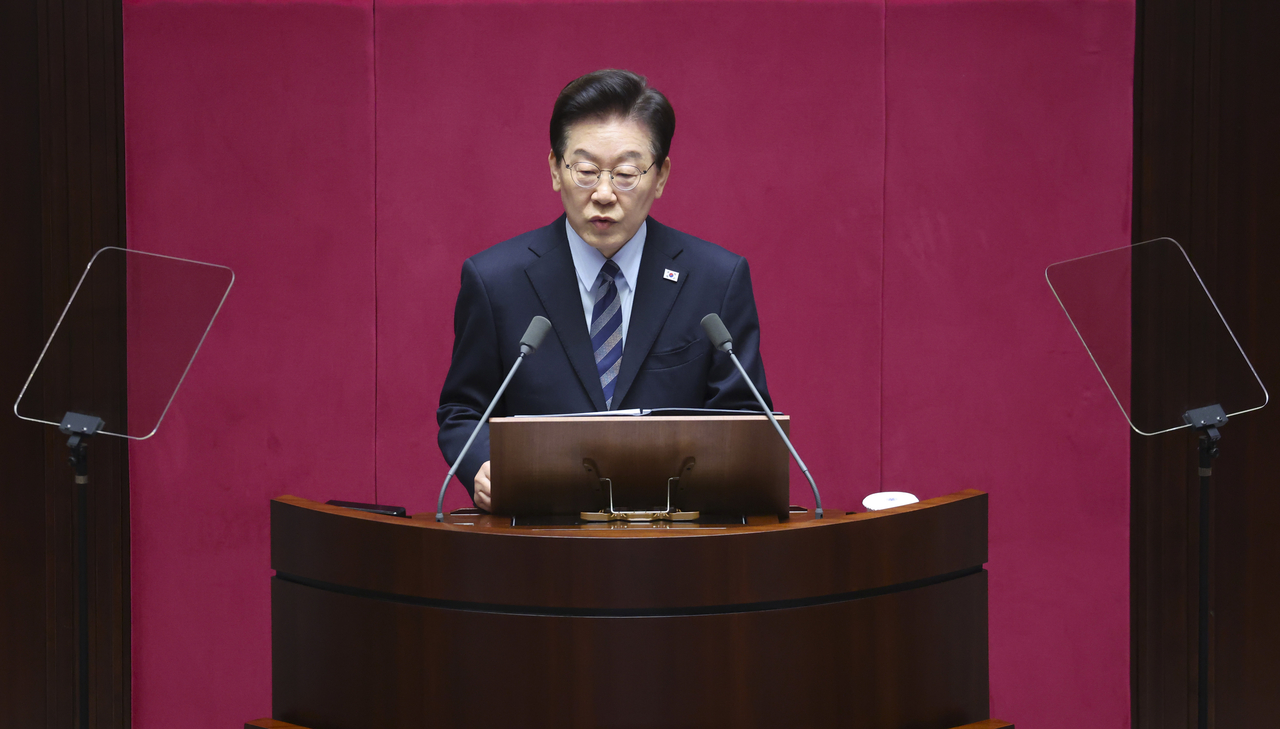
President Lee Jae Myung used his annual budget speech to put artificial intelligence at the center of South Korea's next spending plan. He told the National Assembly that the government would invest 21.3 trillion won, about $16 billion, in AI and three flagship industrial projects in 2027. That is nearly double this year's allocation, according to Korea.net, the government's English-language portal.
The AI and megaproject line sits inside a proposed record 820.9 trillion won budget for 2027. Total spending would rise 12.8 percent, the fastest annual increase in the country's history. Lee asked lawmakers to approve the bill by the statutory deadline of 2 December.
The government submitted the proposal in September. The speech was therefore a push for passage, not a new plan. It also framed the case for borrowing at a time when opposition lawmakers are attacking the government's debt record.
Within the package, 4.7 trillion won is earmarked for frontier AI development. The stated goal is a homegrown model that can compete with leading systems. "We will invest 21.3 trillion won ... in AI and the three megaprojects of semiconductors, physical AI and AI data centres," Lee said, according to DW.
The money is not a single research grant. It is industrial policy: infrastructure, risk capital and procurement intended to keep Samsung, SK hynix and their suppliers at the center of the AI supply chain.
The room reflected the stakes. Opposition lawmakers jeered Lee's debt figures, and most of the People Power Party walked out after he finished. The budget still has to clear a divided Assembly.
What are South Korea's three megaprojects?
Lee introduced the three megaprojects at a public briefing on 29 June 2026. They cover semiconductors, AI data centers and physical AI. Physical AI refers to robots and autonomous machines that act in factories, warehouses and defense settings.
The semiconductor plan is the largest. It envisages an 800 trillion won belt in the Honam region, with four memory fabrication plants for Samsung and SK hynix around Gwangju and South Jeolla. A further 81 trillion won is earmarked for an advanced packaging hub in Chungcheong.
The 2027 budget puts 2 trillion won into expanding chip production capacity. That includes accelerating fabrication plants near Seoul and developing the southwestern cluster. The government also allocates 3.4 trillion won to protect its "super-gap" in semiconductors.
For data centers, the blueprint calls for 550 trillion won of investment and 8.4 gigawatts of capacity by 2029. The target rises to 18.4 gigawatts by 2035. The 2027 budget adds 2.1 trillion won for power, water and industrial infrastructure.
Physical AI receives 500 billion won for trials in manufacturing, defense and other sectors. The government calls the next three years a "golden time" to become a leading physical AI power. The program is small compared with the chip and data center lines.
These figures are not all state spending. The 21.3 trillion won is the government's 2027 contribution. Samsung Group has announced 2.655 quadrillion won of domestic investment, and SK Group pledged 1.1 quadrillion won, including about 400 trillion won for Honam.
The government aims to complete the second semiconductor cluster within Lee's five-year term. A presidential committee chaired by Lee is meant to oversee delivery once the Semiconductor Special Act takes effect. Gwangju and South Jeolla are set to merge into a single special city, The Korea Herald reported.
How is the 21.3 trillion won broken down?
The 21.3 trillion won line combines support for AI with the three megaprojects. It is not a single fund, and the components overlap. Korea.net, the government's English-language portal, describes it as a 97.2 percent jump over 2026.
The clearest item is 4.7 trillion won for frontier AI. Other visible lines include 3.4 trillion won for semiconductor competitiveness, 2 trillion won for production capacity, 500 billion won for physical AI trials and 2.1 trillion won for power, water and industrial infrastructure.
Those items should not be added together to reach 21.3 trillion won. Some are sub-components, and some sit outside the AI line.
A further 8 trillion won is for high-tech talent and AI capacity for young people. The budget also proposes a 162.3 trillion won Future Response Fund. That fund is not an AI program; it spreads 45.4 trillion won in 2027 across youth, growth engines, regions, and education.
The government also points to 41.4 trillion won for post-semiconductor and advanced strategic sectors. A separate 15 trillion won is for 10 next-generation sectors, including nuclear fusion, small modular reactors, quantum computing, aerospace and biotechnology.
The dollar figures move with the exchange rate. Yonhap put the total budget at $614.5 billion, while The Korea Herald used $610 billion. The government's own English portal measures the package in won.
For scale, the AI and megaproject line equals about 2.6 percent of total spending. Defense, at 73.3 trillion won, is more than three times larger. The frontier AI allocation is about 0.6 percent of the budget.
How does the 2027 AI budget compare with this year?
The AI and megaproject line nearly doubles from 2026, a 97.2 percent increase. The total budget grows 12.8 percent. AI is therefore taking a larger share of a larger pie.
The comparison that matters most is with the chip cycle. The government expects revenue to jump 30.4 percent to 880.8 trillion won. It projects a managed deficit of 0.1 percent of GDP, down from 3.9 percent, and a debt-to-GDP ratio of 48.3 percent, down from 51.6 percent.
Those forecasts rely on a semiconductor boom. South Korea's exports reached $930 billion from January to October. DW reports that the country is on track to pass $1 trillion this year, a mark reached only by the United States, China and Germany.
Private investment is far larger than the public line. Samsung's 2.655 quadrillion won plan and SK's 1.1 quadrillion won pledge dwarf the annual budget line. The government's 21.3 trillion won is meant to de-risk those projects, not replace them.
The budget also shifts money toward regions and young people. Regional development gets 33 trillion won, more than double this year. Youth programs rise 53.5 percent to 43.3 trillion won.
The defense comparison is useful. Defense spending rises 8.2 percent to 73.3 trillion won, including nuclear-powered submarines and the KF-21 fighter. AI and the megaprojects get less than a third of that, even after the increase.
The government is also spending on physical AI trials and on AI in defense. Lee said the military would build integrated manned and unmanned systems based on AI, robots and drones.
One number to keep in mind: 21.3 trillion won is about $16 billion. That is large for a single budget line in Korea. It is also smaller than the corporate pledges that surround it, which is why Seoul frames its role as a catalyst.
Why is Seoul betting on AI now?
The immediate reason is memory. AI accelerators need high-bandwidth memory, and Samsung and SK hynix are two of the world's largest suppliers. The AI boom has sent demand for their chips soaring, which supports exports and tax receipts.
The longer reason is growth. Lee argues that Korea's potential growth rate is the economy's "basic physical strength". He wants AI to raise it, and he wants the gains to spread beyond Seoul and a handful of industries.
He calls the problem "K-shaped growth". Gains concentrate among certain industries, companies and regions while others fall behind. The budget's regional and youth lines are meant to address that gap.
Regulation is moving in parallel. The AI Basic Act and its Enforcement Decree took effect on 22 January 2026. The law requires advance notice for high-impact AI, safety measures, impact assessments and explanations for affected people. Failure to give advance notice can draw a fine of up to 30 million won.
High-impact AI covers sensitive domains, including energy supply, drinking water, healthcare, recruitment, loan assessments and transport. The government is offering a grace period. MSIT, the science ministry, is deferring most investigations and fines in 2026 except in serious cases.
The sovereign model is the most visible bet. The 4.7 trillion won program is meant to produce a Korean model with world-leading performance. Reuters reported that it is due to start in March 2027.
Speed is the stated theme. At the June launch, Lee said: "Only a race for speed is the way to survive." He described semiconductors, physical AI and AI data centers as "the three pillars of a great leap forward".
There is also a security dimension. The defense budget rises 8.2 percent to 73.3 trillion won. Lee wants AI, robots and drones integrated into the military, and the physical AI trials include defense uses.
The bet is not only about building models. It is about owning the stack: memory chips, data centers, power, robots and the software that connects them. That is why the budget mixes industrial, energy and defense spending.
What could go wrong?
The first risk is parliamentary. The People Power Party interrupted Lee's speech with shouts of "That makes no sense" over his debt claims. Lawmakers held placards reading "1,400 trillion won in national debt. 162 trillion won future debt-pile fund", according to Korea JoongAng Daily.
Most opposition lawmakers walked out after the speech. Lee's approval rating fell to 39 percent in Gallup Korea's latest poll, with the Democratic Party at 37 percent and the People Power Party at 28 percent. A weaker president has less room to defend a record budget.
The second risk is revenue. A 30.4 percent jump in tax receipts is a big assumption. Fitch Ratings warned in September that deficits would widen again as "revenue growth normalizes once the current semiconductor-driven tax surge fades".
The third is the chip cycle. Memory prices are volatile. If the boom cools, both tax revenue and corporate investment could slow at the same time. That would hit the budget and the megaprojects together.
The fourth is execution. Lee said: "The key is execution and speed." Building four fabs, 8.4 gigawatts of data centers and a frontier model program requires permits, power, water and skilled workers. The 2.1 trillion won infrastructure line shows utilities are already a constraint.
The fifth is the model program. Frontier AI requires talent, compute and data. Korea has strong chip and manufacturing firms, but it is competing with US and Chinese labs. The returns on a state-backed model are uncertain.
The sixth is fiscal credibility. The government says new bond issuance will mostly refinance existing debt. Opposition lawmakers dispute that. The debt ratio is forecast to fall, but only if the revenue forecast holds.
There is also a timing risk. The data center target of 8.4 gigawatts by 2029 is three years away. The government's support package includes power and water, which suggests those inputs are not automatic.
The plan also depends on Samsung and SK hynix. If their profits fall, the corporate pledges behind the megaprojects become harder to sustain.
The government has tried to answer the debt criticism. Lee said most bond proceeds would repay existing debt, leaving little net increase. The opposition's placards show that argument has not convinced everyone.
None of this means the plan will fail. It means the 21.3 trillion won is a proposal, not a settled fact. The Assembly can cut, redirect or delay it.
What happens next?
The National Assembly has until 2 December to pass the budget. Committees will review the AI line, the Future Response Fund and the revenue assumptions. Lee has asked for bipartisan support, but the opposition has signalled a fight over debt.
If the bill passes, the frontier AI program is due to begin in March 2027. The data center and fab plans will move on longer timetables. The second semiconductor cluster is meant to be completed within Lee's five-year term.
Three indicators will show whether the bet is working. Monthly export figures will reveal whether the chip boom is holding. Tax receipts will show whether the revenue forecast is realistic. And the first sovereign model results will show whether Korea can build, not just fund, frontier AI.
The budget is also a test of Korea's political system. A president with a 39 percent approval rating is asking a divided Assembly to approve record spending on a technology bet. The vote will show how much of that agenda survives.
For now, the signal is clear. South Korea is treating AI as strategic infrastructure, not a consumer app market. The 2027 budget is the money behind that claim.