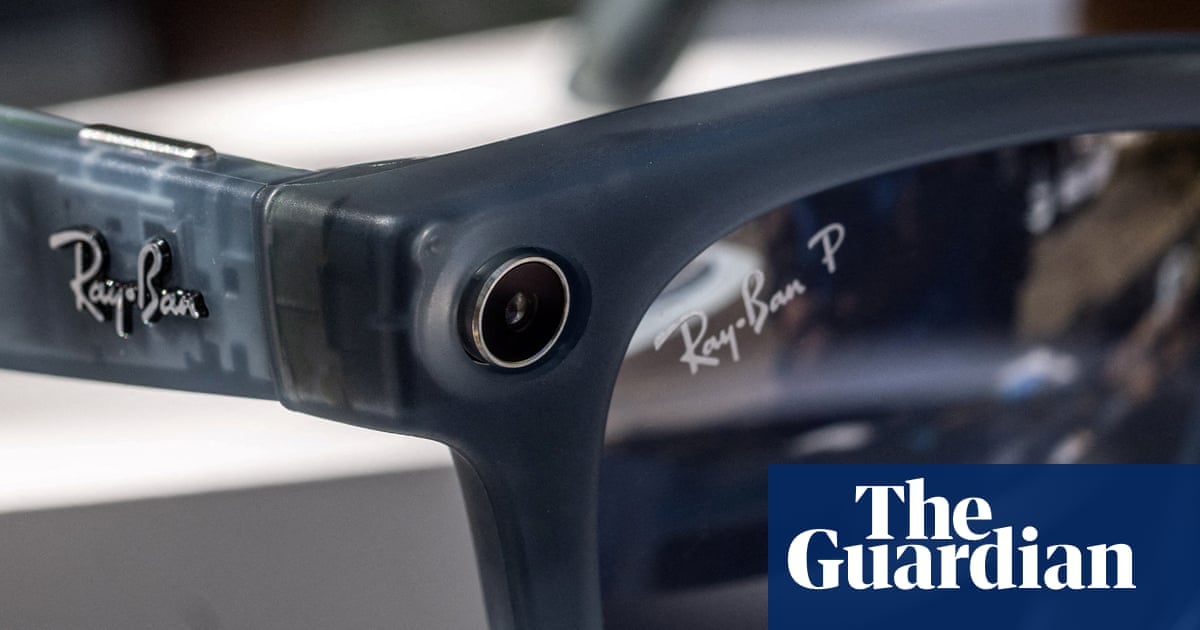
What did the UK government say about smart glasses?
On 4 November 2026, MPs met in Westminster Hall for a debate on smart glasses and violence against women and girls. Anna Sabine, the Liberal Democrats' culture spokesperson and MP for Frome and East Somerset, opened the session with a warning about what camera-equipped eyewear is doing to public space.
Satvir Kaur, the Home Office minister for safeguarding and violence against women and girls, replied for the government. She said the benefits of the devices must be weighed against their harms. She also said ministers were "already looking into options to restrict smart glasses in certain settings and restricting the sale to certain users".
Kaur added that the work was "happening at pace". She announced no policy, no timetable and no legal mechanism, according to a detailed account of the debate published by UK Fact Check. She did not name the settings or the buyers that a restriction might cover.
Sabine told MPs that women "are reporting waking up after nights out to find videos of themselves have gone viral online". She argued that the devices raise "really important questions about consent". She also urged Parliament not to "only regulate once it is too late".
According to UK Fact Check, Kaur's remarks appeared to be the first time a minister had said on the record that the government was weighing limits on who can buy the glasses. Until then, ministers had stressed that existing offences already covered some misuse.
The debate did not happen in isolation. A petition demanding an immediate ban has passed 10,000 signatures. Pubs, theatres and councils have written their own rules. And cheaper camera glasses are reaching shoppers who may never have heard of Meta's Ray-Ban Display.
What would a restriction on smart glasses actually cover?
Two ideas sit inside the minister's answer: limits on where the glasses can be worn, and limits on who can buy them. The first is familiar. The second would be a different kind of intervention, aimed at the buyer rather than the venue.
On settings, Kaur pointed to courts, where cameras are already prohibited. She said healthcare and education have their own safeguarding or professional policies. NHS England and the Department for Education are reviewing wearable technology in those settings.
On sales, the government is considering restricting purchases "to certain users". That raises immediate practical questions that the debate did not answer. How would a retailer verify who may buy a pair? Would the rule reach online orders from abroad, or second-hand listings?
Would it cover ordinary spectacles fitted with clip-on cameras, which look identical to prescription frames? Would it apply to devices bought before any law passed? None of these points was addressed.
Parliament has its own version of the problem. Filming is restricted in parts of the estate, and the Liberal Democrats wrote to Speaker Lindsay Hoyle in October asking him to act. Lord Ponsonby, the senior deputy speaker in the Lords, said a review was weighing security, privacy and accessibility.
The debate is also complicated by the range of devices covered by the phrase smart glasses. Jason O'Connell, a Reform UK member of the Senedd, was suspected in October of using his glasses as a teleprompter during a debate. There was no suggestion that they were recording, but the episode showed that eyewear can now carry displays and software as well as cameras.
Sabine has argued that enforcement is harder than it looks. The recording indicator on many pairs is a small light, and she says such lights "can be covered or disabled". Meta disputes that claim, and the disagreement matters for any rule that relies on the light doing the work.
Which UK laws already apply to camera glasses?
There is no smart-glasses offence in UK law. Instead, several older rules can apply, depending on what is recorded and what happens to the footage.
Filming is banned in court, as Kaur noted. Voyeurism offences cover some forms of secret recording. In September, Bridget Phillipson, the women and equalities minister, told the Commons that covert filming could raise serious privacy concerns and that voyeurism offences applied to some uses.
Data protection is the second route. Camera glasses capture personal data, and the Information Commissioner's Office has already taken an interest. In March, the ICO said it would write to Meta after Swedish newspapers reported that contractors in Kenya had reviewed intimate footage captured by the glasses.
The regulator said the claims were "concerning" and that it would request information on how Meta meets its obligations under UK data protection law. Meta said content was filtered to protect privacy and that media stays on the device unless users choose to share it.
Recording is not continuous by default. Users start it manually or with a voice command, according to the BBC. Meta says it sometimes asks contractors to review media that users choose to share, which is the practice that prompted the Swedish reports and the ICO's letter.
The petition behind the current pressure leans on this argument. It says the glasses breach the UK GDPR and the Data Protection Act 2018, and it asks ministers to use existing laws such as RIPA while drafting new ones. The petition closes on 9 December.
The gap is one of scale and detection. A person filmed on a bus may never know it happened. Footage can be posted, copied and deleted before anyone complains. Case-by-case enforcement depends on a victim being able to identify the wearer and prove what was recorded.
What is Norway doing about smart glasses?
Norway moved earlier and more explicitly than Britain. On 5 October, the Oslo government said it planned a temporary ban on AI glasses in selected public places while it works out permanent rules.
The Guardian reported that the bill would cover parks, beaches, museums, shopping centres, schools, daycare centres, healthcare facilities, gyms and public events. Private use would remain legal.
Torgeir Micaelsen, the minister of digital affairs, said he was "worried that new, powerful technology is being introduced where people risk being photographed, filmed or audio-recorded without knowing it". He said Norway did not want a society where people fear being recorded in places they expect to be unobserved.
The proposal is not a total ban. The government said it would open exemptions for vulnerable groups and for socially useful cases. It also said a bill would go to the Storting "as soon as possible", without giving a date.
Norway's Labour party leads a minority government, so the ban needs support from other parties. The government has also promised an expert group to design permanent regulation, which means the temporary measure is meant to hold the line rather than settle the law.
The detail is less settled than some headlines suggested. Mixed News compared the ministry's press release with its own fact box and found two different lists of places. One added shopping centres and youth clubs; the other added amusement parks and swimming pools. The release described both as places a ban may be relevant to cover.
The scope of the devices is also open. Officials listed three options: glasses with a camera and audio recording, glasses with a camera and AI features, or any body-worn device with a camera, microphone or AI. No penalty has been proposed.
How is Australia handling smart glasses?
Australia's online safety regulator has taken a design-first approach. On 31 August, the eSafety commissioner's office published advice urging manufacturers to blur faces automatically when people have not consented.
The advice also called for clear visual indicators that cannot be disabled or obscured. It said the glasses should not be able to identify members of the public. And it warned that "asking people to use a product responsibly is not an adequate safety policy".
eSafety has no power to force those changes. The attorney general is preparing a second round of privacy reforms that will address smart glasses, but the Guardian reported that the exposure draft will not include a ban.
The regulator also rejected the idea that user education is enough. It said the harms linked to covert recording "are not hypothetical", and that they were already happening. That argument puts the burden on product design rather than on the people being filmed.
Local governments have moved faster than the federal one. Brisbane banned recording devices, including smart glasses, from public pools in August. Melbourne's Yarra council barred them from playgrounds, childcare centres and gyms. Sydney and Blacktown restricted recording at pools.
In September, the public service minister, Katy Gallagher, asked the Australian Public Service for advice on banning the glasses in Commonwealth workplaces. She said the devices "can raise legitimate privacy and security concerns". Schools and hospitals run by states would set their own rules.
The attorney general, Michelle Rowland, has said the government is not pursuing a national ban but has not ruled one out. She has stressed that any rule must not unfairly discriminate against people who rely on the glasses to take part in daily life.
Price is part of the Australian story. Guardian Australia reported that Kmart's A$89 Anko camera glasses sold out nationwide, which pushed the issue from technology forums into ordinary shopping centres.
Why are smart glasses a privacy problem now?
Sales explain the urgency. EssilorLuxottica, Meta's eyewear partner, sold more than 7 million AI glasses in 2025. That was up from 2 million sold in 2023 and 2024 combined, according to results reported by CNBC.
The Guardian put cumulative sales of the Ray-Ban models at at least 9 million pairs since the start of 2023. Demand has also delayed launches: the international rollout of Ray-Ban Display slipped from early 2026 because of "unprecedented" demand in the United States.
Cheaper devices widen the pool further. A pair Meta promoted with Kylie Jenner cost £359; the Kmart model costs a fraction of that. Christmas trading will put camera glasses in front of shoppers who are not technology enthusiasts.
Reports of harm have followed the devices into public debate. The French child welfare group E-enfance told the Guardian it had received about 20 reports this year of women filmed without their knowledge, most involving Meta glasses. The charity Refuge has warned that the glasses threaten the safety of women and girls in public.
Private venues have responded without waiting for legislation. Wetherspoon's chief executive, Tim Martin, said the chain's rule against filming customers without permission means "our instinct is to say turn off the cameras". Theatres owned by ATG said wearers would be asked to remove the glasses during shows.
Not every business sees a problem. The Michelin-starred chef Tom Kerridge told the Guardian that he had no objection to the glasses and that filming is part of everyday life. Instagram's head, Adam Mosseri, said the platform would remove content that harasses people, including the pickup-style videos that helped fuel the backlash.
The design argument is central. Meta says the capture light cannot be switched off and that covering it disables the camera. Critics say lights can be taped over or defeated, and that a small blink is easy to miss in a crowded room.
AI adds a second layer. The glasses can transcribe speech, translate conversations and answer questions about what the camera sees. That turns a recording device into a device that can interpret the people around it, which is why the debate is not only about cameras.
What do Meta and accessibility groups say, and what happens next?
Meta's public position is that privacy is built in. A spokesperson said every pair has a capture LED that blinks during photos and video. The company says "it can't be turned off, and if someone covers or damages the LED, the camera is disabled".
Accessibility groups are the strongest counterweight to a broad ban. Vision Australia and some blind and low-vision users have praised the glasses as a navigation aid. Kaur acknowledged that point, saying the devices can be "hugely beneficial" to people who are visually impaired.
Some governments have stepped back rather than forward. California's governor, Gavin Newsom, vetoed Senate Bill 1130 on 30 September. The bill would have penalised people for using smart glasses to record others without permission in changing rooms, doctors' offices and similar private spaces.
The Dutch government has told parliament it will not push for binding rules on camera glasses or study a public ban, according to Mixed News. That leaves a patchwork: national proposals in Norway, design advice and local bans in Australia, a veto in California and a review in Britain.
In the UK, the next formal step is a government response to the petition, which passed the 10,000-signature threshold on 5 October. The petition closes on 9 December. A response is required, but it need not promise legislation, and ministers have given no date for a decision.
Parliament is also reviewing its own estate rules, bringing together security, privacy and accessibility teams. Norway's bill and expert group will show whether a temporary ban can be drafted quickly. Australia's privacy exposure draft will show how far a national government is willing to go.
For buyers, the practical warning is unchanged: the light is the only notice most people will get. For ministers, the harder question is whether a restriction on sales can be enforced at all in a market where camera glasses sell for A$89.