What did WA Police's facial recognition trial find?
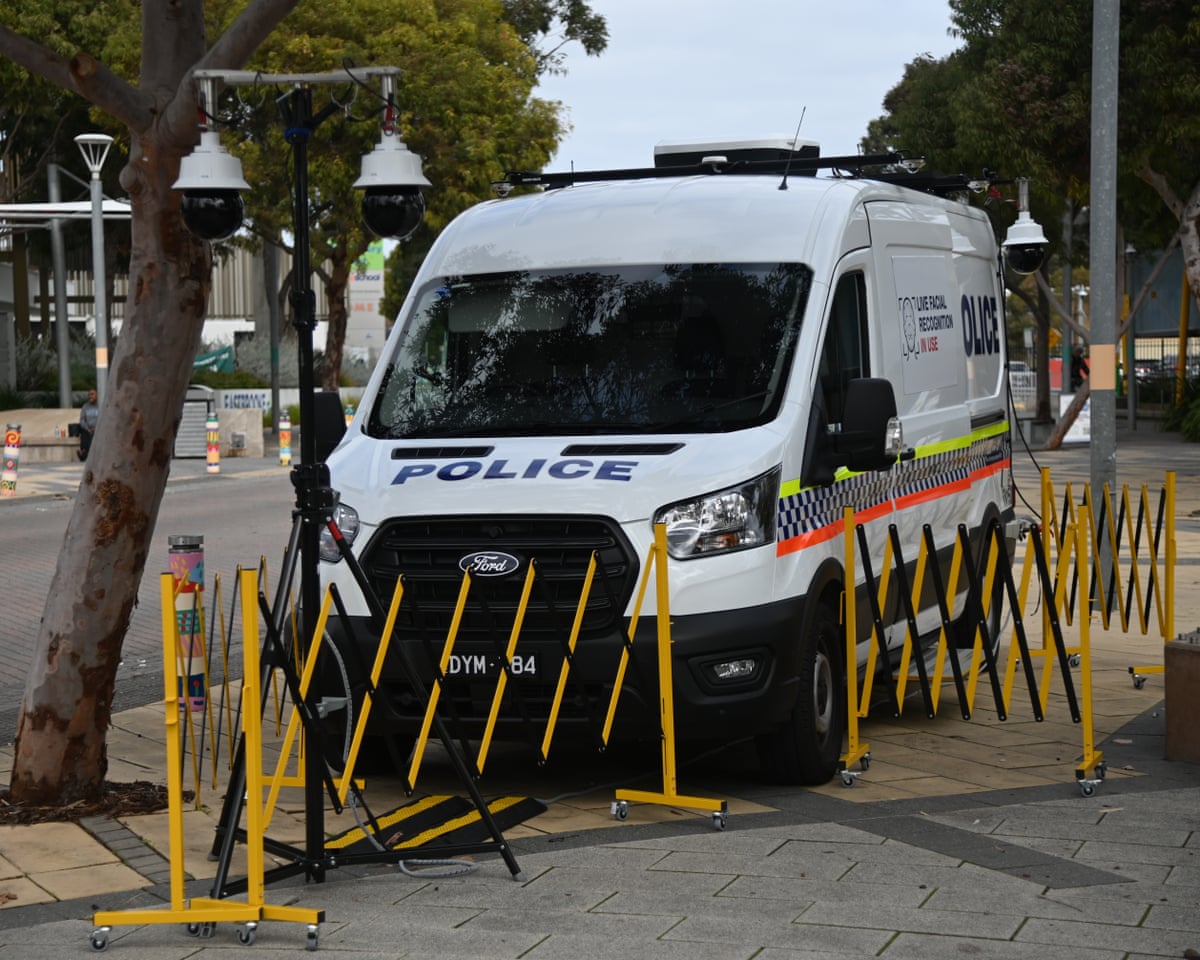
Western Australia's five-month trial of live facial recognition ended on Saturday 31 October 2026. Police reported 100 deployments across 43 metropolitan and regional locations, with cameras scanning 1,380,882 faces. The system generated 292 alerts, which police link to 122 arrests, 146 engagements with registered sex offenders and 10 welfare checks.
The force also reported nine incorrect alerts. Measured against every face scanned, that is an error rate of 0.00065%, the figure WA Police used. The trial began on 22 June and used marked vans with cameras mounted on or beside them.
The final figures sit well above the results police published at the three-month mark. In its three-month update, the state government reported 905,117 faces, 209 alerts, 79 arrests and 114 sex-offender engagements. Eight alerts were incorrect at that stage, a rate of 0.0009%.
In the first week, the ABC reported more than 130,000 faces scanned, 33 alerts and 18 arrests, with one false match. By the three-month update, police said 36 of the 79 arrests related to outstanding warrants. The final release does not separate arrests prompted by alerts from those made through conventional police work during deployments.
The trial included three operations at the Perth Royal Show. Police said those deployments scanned 223,749 faces and produced 15 alerts, three arrests and seven interactions with registered sex offenders. A September deployment in Geraldton produced six alerts, one arrest and three sex-offender engagements, according to the state government.
WA Police Commissioner Col Blanch presented the outcome as a public-safety success. The trial, he said, "focused on using modern technology responsibly to identify people who presented a risk" while letting most people go about their day. He also acknowledged that the system was not perfect.
How does the WA Police live facial recognition system work?
The system is supplied by NEC and uses its NeoFace m40 product, according to the ABC. The Conversation identified the software as NeoFace Watch. Cameras on or near marked police vans scan faces in public areas and compare them with an alert list held by officers nearby.
That list contained about 4,000 people, the ABC reported. It included people with outstanding arrest warrants, reportable offenders, people subject to exclusion orders and missing persons. Police also said it covered people who might pose a risk to themselves or others.
WA Police says faces that do not match are pixelated in real time and deleted immediately. The force says it does not store images of people who are not on the list. Every alert is reviewed by an officer, and police policy says an algorithmic match alone cannot justify an arrest.
Before a deployment, an authorising superintendent must record why the operation is necessary and proportionate. That record must also explain the location and the categories of people on the alert list, according to The Conversation. Deployment dates are published in advance, and the vans carry signs saying live facial recognition is in use.
The trial was overt by design. Police and reporters described it as Australia's first use of live facial recognition by a police force in public spaces. Other state police commissioners were watching the results closely, Blanch said when the trial was announced.
Overt deployment means the vans are marked and signposted, unlike covert camera networks. The OIC warned that a shift to covert use, fixed widespread cameras or more deployments would significantly increase privacy risks. It described this as "scope creep" and said it is a real risk for biometric projects.
How accurate was the facial recognition trial?
The accuracy dispute turns on the denominator. Police divide nine false alerts by 1,380,882 scans and report a 0.00065% error rate. Measured against the 292 alerts, the same nine errors represent about 3.1% of alerts.
Neither figure is wrong. They answer different questions. The police figure describes how often a scan produced an incorrect match. The alert-based figure describes how often an alert sent officers toward the wrong person. Early in the trial, The Conversation calculated a 3% to 6% alert-based error rate from the figures then available.
Blanch said officers spoke to every person who was wrongly flagged. "No one was arrested. No one made a complaint," he told reporters on Sunday. He described nine errors as "a very, very, very low number" but added: "It's not zero."
The published results do not say how many people the system missed. False negatives, where a person on the list is not detected, are not disclosed. Nor is there a breakdown of false matches by age, sex, skin tone or ethnicity.
After the earlier update, Blanch attributed the eight incorrect alerts to factors including darker skin and lighting conditions, The Conversation reported. That explanation points to the conditions the UK study examined. Image quality, lighting and skin tone can all affect match accuracy, the ABC reported.
Police point to a 2023 study by the UK's National Physical Laboratory, which tested NEC's algorithm. The ABC reported that the study found no statistically significant differences in false positives by gender or ethnicity at default settings. It also found that accuracy worsened when settings were relaxed and real-world conditions changed.
Jake Goldenfein, an associate professor at Melbourne Law School, told the ABC that facial recognition has known accuracy problems. "Historically, these systems have performed worse for people of colour and for women, and especially worse for women of colour," he said.
Why are privacy advocates disputing the results?
Critics argue that arrests are an incomplete measure of success. The Conversation argued in September that the arrests were not new crimes solved but a known watchlist worked through more quickly. The system shortened the search. It did not resolve the underlying cases.
Bill Rowlings, chief executive of Civil Liberties Australia, said police were "severely gilding the lily" with the 0.00065% figure. He argued that the real test is how many of the 122 arrests lead to convictions. "We will only know what the incorrect rate is when the 122 people arrested have their day in court," he said. Rowlings also said the scans were carried out "with no reasonable suspicion whatsoever".
Sarah Schwartz, legal director at the Human Rights Law Centre, said each false match involves a person who may be stopped or investigated. "The consequences of those mistakes have real consequences for the people of Western Australia," she said. She questioned whether "biometric surveillance on an extraordinary scale" was proportionate in a democratic society.
Schwartz said WA Police had provided "remarkably little detail about the safeguards governing this technology". She said the public policies appeared heavily borrowed from overseas models and left questions about misuse, bias and accountability unanswered. She also raised particular concern about surveillance vans at public demonstrations.
The state's privacy regulator was not involved in designing the trial. The Office of the Information Commissioner WA said it was not invited to take part in formal consultation and did not provide input. It warned about "collective privacy harms" and the risk that public spaces become places where people feel watched.
The OIC cited a survey by the Office of the Australian Information Commissioner. It found that 45% of respondents named facial recognition as the biggest privacy risk they face, up from 27% in 2023. The same survey found that 71% viewed collection of sensitive data such as biometrics as excessive or unjustified in most situations. Comfort with police use in public-safety settings fell from 60% in 2023 to 57% in 2026.
Malcolm Crompton, a former Australian privacy commissioner, told the ABC that the trial's privacy impact assessment was "feather-light". He said a proper assessment should involve consultation by an independent assessor, not a document waved in front of the public. The PRIS Act requires a privacy impact assessment for projects that carry significant privacy risks, the OIC says.
What laws govern live facial recognition in Australia?
Australia has no national legal framework for governing biometric surveillance, according to The Conversation. The WA trial is therefore an early test of the state's Privacy and Responsible Information Sharing Act 2024. The OIC says it is the first Australian law to regulate personal information used in automated decision-making.
Under the act, agencies must assess the risks of bias, harm and discrimination before automating decisions. The OIC says it is monitoring the trial and requesting information. No independent audit of how the system performed has been published.
The Conversation argued that the trial is testing the PRIS Act in practice. It said any interference with privacy must be lawful, necessary and proportionate under international human rights law. The trial has no published success criteria, and police both run the deployments and compile the results they release.
WA Police says an officer reviews every alert before any action. Critics say that safeguard has not been independently audited. They also say the rules can change without public scrutiny because they sit in police policy rather than legislation.
WA Police completed a privacy impact assessment before the trial. The ABC reported that the form declared the trial would not "primarily or especially affect Aboriginal people". Critics say that conclusion was not supported by consultation or demographic testing.
The Conversation reported that the assessment also said funding had not been determined. That detail matters because a pilot can become permanent infrastructure without a separate funding decision. The vans have been removed from public deployment while the force conducts an internal evaluation.
Overseas, the legal ground has shifted. In 2020, a UK court found South Wales Police's use of live facial recognition unlawful. The ABC reported that the UK Home Office is considering limits that would restrict watchlists to people who have committed serious offences.
Who is affected by the watchlist and deployment sites?
The trial scanned faces at 43 metropolitan and regional locations, including the Perth Royal Show. People who were never suspected of anything were processed by the system, even if their images were deleted. The OIC says even short-term collection of sensitive biometric data is still collection.
The 1,380,882 figure counts face scans, not unique individuals. Police have not said how many distinct people were scanned, so the total does not establish how many residents and visitors passed through the system.
About 4,000 people were on the alert list. They included people accused of serious offences and people who were missing. The published results do not break down alerts by category or show how inclusion decisions were reviewed.
Hannah McGlade is a human rights lawyer and Noongar woman at Curtin University. She told the ABC that Aboriginal people are over-represented among people with outstanding warrants. McGlade named Midland and Northbridge as deployment areas with large Aboriginal populations.
WA Police said locations were chosen for policing need and did not target any group. The force has not published a demographic breakdown of alerts or arrests. The Conversation noted that without that data, the distribution of false matches across communities cannot be checked.
The Aboriginal Legal Service of WA said it was contacted two days before the launch. Its legal services director, Peter Collins, called the consultation "an exercise in tokenism". "This was a done deal from the get go," he said. He also said police had not explained whether the system was being used to identify children.
The same NEC algorithm was tested in the UK in 2023, so the Australian deployment adds evidence to an international debate about watchlists and public-space scanning.
What happens next for WA's facial recognition vans?
The vans are off the street while WA Police evaluates the trial. The force says the review will examine how the technology performed and its community impact. It will also review "the safeguards and whether all requirements were met", according to the Guardian.
No decision on permanent use has been announced. The privacy impact assessment said funding had not been determined, and no independent evaluator has been named. That leaves open whether the program expands, changes or ends.
Several tests will matter. The first is whether the evaluation is published in full, including false negatives and demographic data. The second is whether the 122 arrests produce convictions. That would test the quality of the matches, not the speed of the searches.
The third is regulation. The OIC is developing guidance on privacy impact assessments, including when an independent assessment should be required. Federal and state lawmakers have not agreed on rules for watchlists, deployment authorisations or oversight. Until they do, those rules will live in police policy.
The Conversation set out four tests for responsible governance. They include success criteria published before a trial, an independent evaluation with false-alert rates by demographic group, independent benchmarking of the system as deployed, and an external audit of data protections. None of those has been published for the WA trial.
The OIC has said it intends to work with WA Police and monitor future biometric projects. That gives the regulator a monitoring role in any expansion, but no stated power to block it. If the program becomes permanent, the funding decision will be the next public test.
Blanch has framed the trial as a responsible use of technology. Critics have described it as mass surveillance. Both sides agree on one point: the system is not perfect. The question now is who gets to decide how much imperfection is acceptable in public spaces.